

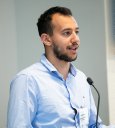
 Giannis Daras
· 4 previous affiliations
- Massachusetts Institute of TechnologySince 2024
- Postdoc · Since 2024
- The University of Texas at Austin2020–2024
- PhD student · 2020–2024
- Undergrad student · 2015–2020
- Intern · 2020
Research Overview
Giannis Daras focuses on deep generative models, inverse problems, and learning from corrupted data. His early work explored intermediate layer optimization and the interpretability of generative priors for image reconstruction. More recently, he has developed the Ambient Diffusion framework, establishing principled algorithms for training and sampling diffusion models when only noisy or incomplete observations are available.
Research Trajectory
His early research investigated the architectural design and optimization of generative adversarial networks (GANs). In 2020, he introduced a local sparse attention layer designed to preserve two-dimensional geometry in Your Local GAN: Designing Two Dimensional Local Attention Mechanisms for Generative Models, improving image generation metrics without increasing parameter counts. Building on this foundation, he addressed inverse problems—such as reconstructing blurry or incomplete images—in Intermediate Layer Optimization for Inverse Problems using Deep Generative Models. This work contributed to the research direction of Intermediate Layer Optimization for Generative Priors and the broader area of Balancing Realism and Accuracy in Generative Image Restoration. Shifting toward the interpretability and security of large-scale models, he also investigated the behavior of text-to-image systems, detailing how specific, seemingly nonsensical text prompts consistently mapped to visual concepts in Discovering the Hidden Vocabulary of DALLE-2.
Beginning in 2023, his focus shifted toward training diffusion models in environments where pristine data is unavailable. He introduced a foundational framework in Ambient Diffusion: Learning Clean Distributions from Corrupted Data, demonstrating that models could learn underlying clean distributions using only highly corrupted training samples. This approach provided a natural mechanism for mitigating data privacy risks, advancing the research direction of Understanding Training Data Memorization in Generative Models. He subsequently extended this paradigm to complex reconstruction tasks, such as MRI, in Ambient Diffusion Posterior Sampling: Solving Inverse Problems with Diffusion Models trained on Corrupted Data. To formalize the theoretical guarantees of this approach, he and his collaborators developed a framework combining Tweedie’s formula with consistency loss in Consistent Diffusion Meets Tweedie: Training Exact Ambient Diffusion Models with Noisy Data, a key contribution to the area of Learning Clean Distributions from Corrupted Observations.
In 2025, his research expanded the Ambient Diffusion framework across multiple domains and scaling laws. He explored the relationship between model memorization and image quality in Does Generation Require Memorization? Creative Diffusion Models using Ambient Diffusion, showing that memorization primarily affects fine-grained details and can be reduced by learning global structures from noisy data. He also applied these principles to structural biology in Ambient Proteins: Training Diffusion Models on Low Quality Structures, treating low-confidence AlphaFold predictions as corrupted data to generate diverse protein structures. To optimize training efficiency, he investigated data scaling dynamics in How Much is a Noisy Image Worth? Data Scaling Laws for Ambient Diffusion., establishing that mixing a small fraction of clean data with large noisy datasets achieves near-optimal performance. Concurrently, he developed the Ambient-o framework in Ambient Diffusion Omni: Training Good Models with Bad Data, which leverages low-quality and synthetic images at specific diffusion stages to improve text-to-image generation. Returning to inverse problems, he introduced Align & Invert: Solving Inverse Problems with Diffusion and Flow-based Models via Representational Alignment, a method that aligns internal diffusion features with pretrained semantic encoders to enhance reconstruction quality.
His most recent work in 2026 pushes generative modeling into iterative refinement and physical simulations. He contributed to Training Neural PDE Solvers with Partial Observations, which enables neural networks to solve partial differential equations without requiring complete training datasets. He also oversaw the development of Ambient Dataloops: Generative Models for Dataset Refinement, an iterative framework where a model partially denoises its own training data to progressively improve generation quality. Further advancing inference techniques, collaborative work explored Representation Alignment for Inverse Problems with Diffusion and Flow-Based Models, extending representational alignment to guide reconstructions when ground-truth signals are unavailable.
Current Directions
Recent work investigates the intersection of generative modeling, representation alignment, and iterative self-improvement. The most recent papers in the evidence address how diffusion and flow-based models can be guided by self-supervised visual encoders to solve complex inverse problems without ground-truth data. Additionally, his research explores "dataloops"—frameworks where generative models and their training datasets co-evolve and refine one another—and the application of ambient learning principles to physical systems, such as training neural solvers for partial differential equations using only partial observations.
Profile updated
Loading new papers…
Other researchers whose papers cluster into the same research directions — a proxy for overlapping technical interests and shared intellectual neighborhoods.
See something wrong? Report a mistake