

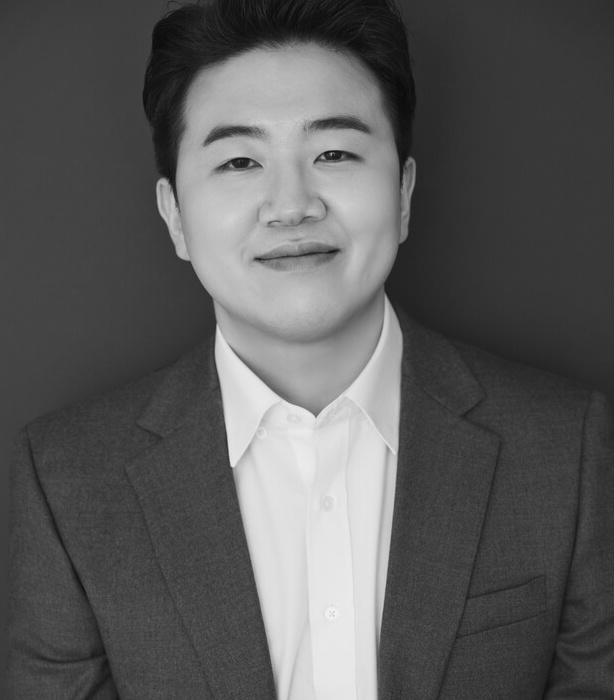
 Gi-Cheon Kang
· 2 previous affiliations
- Ajou UniversitySince 2026
- Assistant Professor · Since 2026
- Undergrad student · 2011–2018
- Seoul National University2018–2025
- Postdoc · 2025
- PhD student · 2020–2025
- MS student · 2018–2020
Research Overview
Gi-Cheon Kang focuses on the intersection of computer vision and natural language processing, with a specific emphasis on visually-grounded dialogue systems and semi-supervised learning. His work investigates how computational models can reason over complex visual scenes while maintaining conversational context, utilizing techniques such as graph learning and generative data augmentation to overcome the limitations of labeled datasets. By addressing the challenges of Multimodal Coreference Resolution in Visual Discourse, Kang’s research seeks to improve the ability of agents to interpret sequences of questions grounded in dynamic visual environments.
Research Trajectory
Kang’s early research contributions focused on the fundamental challenges of data efficiency and model adaptability. In 2020, he participated in research regarding semi-supervised continuous learning, a paradigm designed to handle real-world scenarios where labeled data is scarce and models must learn from a continuous stream of information. This work involved the development of Label Propagation Adaptive Resonance Theory for Semi-Supervised Continuous Learning, which utilized an online label propagation mechanism to perform classification. By evaluating this model on diverse visual and audio datasets, the research demonstrated how accuracy could be improved incrementally as data accumulates, establishing a methodological interest in semi-supervised frameworks that would persist throughout his subsequent work.
Beginning in 2021, Kang shifted his primary focus toward the task of Visual Dialog (VisDial), where an agent must answer a series of questions about an image by leveraging both the visual content and the preceding dialogue history. This task requires sophisticated Object Centric Attention for Visual Reasoning, as the model must identify and track specific entities across multiple conversational turns. His work in this period, such as Reasoning Visual Dialog with Sparse Graph Learning and Knowledge Transfer, explored the use of graph-based architectures to represent the relationships between visual objects and linguistic tokens. This approach moved away from treating images as uniform grids, instead focusing on semantically meaningful objects to facilitate better reasoning.
By 2022 and 2023, Kang’s research evolved to address the "data bottleneck" in visually-grounded dialogue. While traditional models relied heavily on human-annotated datasets, Kang proposed leveraging the vast amount of unlabeled imagery available on the web. This led to the development of the Generative Self-Training (GST) framework. This trajectory reflects a move toward Proposal Free Architectures for End to End Visual Grounding, where the goal is to create more flexible models that do not depend on rigid, pre-defined indices or exhaustive manual labeling.
More recently, Kang contributed to research addressing shortcut learning and visual distribution shifts in embodied models, participating in work on Disentangling Spurious Correlations in Vision-Language-Action Models via Predicting Domain-Invariant Latent Lookahead. This effort introduced a representation-learning framework supervising vision-language-action policies with domain-invariant future latents to separate task structure from domain-specific visual variations.
Current Directions
Kang’s current research is centered on refining generative approaches to semi-supervised learning within multimodal contexts. A significant portion of this work involves the use of multimodal conditional text generation to create synthetic training data. By generating synthetic dialogues for unlabeled images, Kang addresses the scarcity of high-quality VisDial data. This method, detailed in The Dialog Must Go On: Improving Visual Dialog via Generative Self-Training, incorporates out-of-distribution detection to retrieve relevant in-domain images from the web, ensuring that the synthetic data is useful for training downstream dialogue agents.
Furthermore, his work explores the complexities of Contextual Query Resolution for Conversational Search within the VisDial framework. Because human dialogue is often elliptical and relies on anaphora, a model must be able to resolve what "it" or "that" refers to in the context of an image. Kang’s recent frameworks employ perplexity-based data selection and multimodal consistency checks to ensure that the generated synthetic dialogues are both linguistically coherent and visually grounded. This focus on consistency and automated data curation represents a significant step toward scaling multimodal agents without a proportional increase in human annotation costs.
Representative Work
Label Propagation Adaptive Resonance Theory for Semi-Supervised Continuous Learning
In this 2020 study, Kang contributed to the development of the LPART model, which addresses the dual challenges of semi-supervised and continuous learning. The research focuses on scenarios where labels are rarely provided and data access is limited. The LPART model uses an online mechanism to propagate labels and improve classification accuracy over time. The work was validated across multiple modalities, including the MNIST and CIFAR-10 visual datasets and the NSynth audio dataset, demonstrating the model's versatility in handling different types of sequential data.
Reasoning Visual Dialog with Sparse Graph Learning and Knowledge Transfer
As the lead author of this 2021 paper, Kang introduced a method for improving reasoning in Visual Dialog through sparse graph learning. The approach focuses on the structural relationships between entities in an image and the context provided by the dialogue history. By employing knowledge transfer techniques, the model is better equipped to handle the complex reasoning required to answer sequential questions that depend on previous turns in the conversation.
Generative Self-training Improves Pre-training for Visual Dialog
In this 2022 work, Kang proposed the Generative Self-Training (GST) approach to enhance the pre-training of Visual Dialog models. Rather than relying solely on supervised learning from limited VisDial datasets, GST generates synthetic dialogue data for unlabeled images. The framework uses multimodal conditional text generation to create these dialogues and then trains the model on a combination of synthetic and original data. The paper also introduces perplexity-based selection to maintain the quality of the training set.
The Dialog Must Go On: Improving Visual Dialog via Generative Self-Training
Published in 2023, this work expands upon the GST framework by incorporating a pipeline for leveraging unlabeled images from the web. The process begins with out-of-distribution detection to identify images that are relevant to the target domain. Once relevant images are retrieved, the system generates synthetic dialogues and applies multimodal consistency filters. This research demonstrates that augmenting training with high-quality synthetic data significantly improves the performance of dialogue agents on standard benchmarks, providing a scalable path forward for multimodal learning.
Profile updated
Loading new papers…
Other researchers whose papers cluster into the same research directions — a proxy for overlapping technical interests and shared intellectual neighborhoods.
See something wrong? Report a mistake