

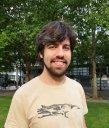
 Germán Kruszewski
· 4 previous affiliations
- NAVER Cloud (South Korea)Since 2020
- Senior Scientist · Since 2020
- Universitat Pompeu FabraSince 2023
- Postdoc · Since 2023
- Meta (United States)2017–2020
- Postdoc · 2017–2020
- University of Trento2012–2016
- PhD student · 2012–2016
Research Overview
Germán Kruszewski focuses on the alignment of generative models, distributional semantics, and open-ended evolution. His early work evaluated the foundational capabilities of neural language models and recurrent architectures for compositional reasoning. More recently, his research addresses the mathematical foundations of language model alignment, balancing precision and diversity in complex reasoning tasks.
Research Trajectory
Kruszewski’s early research concentrated on distributional semantics and the fundamental properties of neural network architectures. As the senior author on Don't count, predict! A systematic comparison of context-counting vs. context-predicting semantic vectors (2014), he led a comprehensive evaluation demonstrating that context-predicting models (neural embeddings) systematically outperformed traditional count-based distributional semantic approaches across a wide range of lexical tasks. This work engaged with the broader area of Prototypical Categories as Centroids in Vector Space, exploring how semantic representations capture human conceptual knowledge. He later investigated the internal mechanics of these architectures, serving as first author on Memorize or generalize? Searching for a compositional RNN in a haystack (2018). By evaluating thousands of random initializations, this research demonstrated that standard Recurrent Neural Networks possess a latent capacity for zero-shot compositional generalization, framing compositionality as an optimization challenge rather than a strict architectural limitation.
Moving into the 2020s, Kruszewski expanded his focus to include continual learning and the control of generative models. In the research direction of Task-Free Continual Learning in Non-Stationary Environments, he was the first author of Class-Agnostic Continual Learning of Alternating Languages and Domains (2020). This work introduced the CALM benchmark and a "plastic gates" mechanism to help models adapt to shifting data streams without explicit task boundaries, mitigating catastrophic forgetting. Concurrently, he began developing methods to steer pretrained models toward specific constraints. As second author on Controlling Conditional Language Models with Distributional Policy Gradients (2021), he helped introduce Conditional Distributional Policy Gradients (CDPG). This approach utilized conditional energy-based models to improve factual consistency and code compilability while preserving the fluency of the original models, contributing to the theme of Reference Anchored Policy Optimization.
Kruszewski has also maintained a distinct research thread in artificial life (ALIFE) and complex systems. As first author of Open-Ended Evolution as an Emergent Self-Organizing Search Process (2022), he explored how artificial chemistries can model the algorithmic properties of evolutionary diversification and complexification.
Most recently, his work has deeply engaged with the mathematical alignment of large language models. In Whatever Remains Must Be True: Filtering Drives Reasoning in LLMs, Shaping Diversity (2026), Kruszewski led the development of $\alpha$-DPG, a framework utilizing $\alpha$-divergences to precisely tune the trade-off between reasoning precision and generative diversity, achieving state-of-the-art results in formal theorem proving while avoiding mode collapse.
Current Directions
The most recent papers in the evidence address the mathematical frameworks underlying language model alignment, particularly focusing on the tension between mode-seeking and mass-covering behaviors. Recent work investigates how different divergence measures can optimize models for complex reasoning tasks without sacrificing the diversity of their outputs. This includes contributions to the broader area of Symmetric Divergences for Stable and Diverse Generative Alignment, where research explores alternatives to standard Kullback-Leibler (KL) divergences, such as Jensen-Shannon and $\alpha$-divergences. By treating alignment as a general $f$-divergence minimization problem, this methodology allows researchers to tune the balance between following human preferences (or formal constraints) and maintaining the rich, nuanced distributions of the original pretrained models. Additionally, Kruszewski's recent output aligns with the research direction of Distribution Matching for Diversity in Generative Alignment, focusing on unified frameworks that decouple the definition of target distributions from the optimization process to achieve stable, diverse generative control.
Profile updated
Loading new papers…
Other researchers whose papers cluster into the same research directions — a proxy for overlapping technical interests and shared intellectual neighborhoods.
See something wrong? Report a mistake