

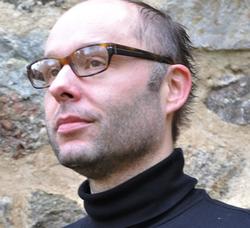
 Gerhard Wunder
· 1 previous affiliation
- Freie Universität BerlinSince 2021
- Full Professor · Since 2021
- Current
1 other author named Gerhard Wunder: Gerhard Wunder (1 paper)
Research Overview
Gerhard Wunder focuses on the intersection of cybersecurity, artificial intelligence, and information theory, with a particular emphasis on developing resilient and trustworthy systems. His work encompasses the application of AI to enhance network security and the development of defensive mechanisms to secure AI models against adversarial threats and interpretability challenges. Currently, he leads the Cybersecurity and AI (C-AI) Group at Freie Universität Berlin, where his research addresses explainability and fairness in AI, the security of generative models, and the integration of quantum systems into machine learning. His trajectory reflects a transition from fundamental wireless communications and signal processing toward the broader challenges of securing the modern AI-driven digital infrastructure.
Research Trajectory
The early stages of Wunder’s research were deeply rooted in the physical layer of wireless communications, specifically addressing the efficiency and scalability of emerging network standards. Around 2012, a significant portion of his work focused on Mitigating Peak-to-Average Power Ratio in Multi-Carrier Communications. This research addressed the Peak-to-Average Power Ratio (PAPR) problem inherent in Orthogonal Frequency-Division Multiplexing (OFDM), the backbone of 4G and Wi-Fi. By developing methods to reduce these power peaks, his work aimed to improve the energy efficiency of transmitters and the overall reliability of high-speed data transmission.
As the focus of the telecommunications industry shifted toward 5G and the Internet of Things (IoT), Wunder’s research evolved to address the challenges of massive connectivity. In 2014, he investigated The Pilot Contamination Bottleneck in Massive MIMO, identifying how the reuse of pilot signals in multi-cell environments limits the spectral efficiency of large-scale antenna arrays. During this period, he also explored Nuclear Norm Minimization for Low Rank Matrix Recovery, applying mathematical optimization techniques to reconstruct signals from incomplete or noisy data—a critical requirement for modern sensing and communication systems.
By 2015, his work increasingly addressed the signaling overhead associated with the "Internet of Everything." He contributed to the development of Grant-Free Random Access for Massive IoT Networks, proposing protocols that allow devices to transmit data without the traditional multi-step handshake required by cellular base stations. This was complemented by research into Grant-Free Massive Access via Sparse Signal Recovery, which utilized compressed sensing to detect active users and their data simultaneously. Furthermore, he explored Scaling Wireless Connectivity Beyond Orthogonal Resource Limits, a paradigm shift from traditional orthogonal resource allocation that allowed multiple users to share the same frequency and time resources, significantly increasing the number of supported devices per cell.
In recent years, Wunder has pivoted toward the security and interpretability of artificial intelligence. This shift reflects the growing necessity of securing the algorithms that govern critical infrastructure and data processing. His current work focuses on "Trustworthy AI," a domain that integrates cybersecurity principles with machine learning to ensure that AI decisions are fair, explainable, and resilient to manipulation. This includes investigating the risks and opportunities of generative AI, developing privacy-preserving synthetic data, and exploring the intersection of quantum computing and cryptography.
Current Directions
Wunder’s current research agenda is defined by several high-level initiatives supported by the German Federal Ministry of Education and Research (BMBF) and the German Research Foundation (DFG). A primary focus is the security of Generative AI and Large Language Models (LLMs). As these models are increasingly integrated into commercial and industrial workflows, his group investigates fundamental threats, including model inversion, data poisoning, and the detection of synthetic content.
Another significant area of focus is the development of resilient 6G networks. Building on his foundational work in wireless communications, he now explores how AI-driven anomaly detection and decentralized architectures, such as federated learning combined with blockchain, can protect future network infrastructures. His group also addresses the mathematical foundations of AI through the lens of explainability (XAI), seeking to move beyond "black-box" models to provide human-understandable justifications for AI-driven decisions, particularly in high-stakes environments like cybersecurity and biometrics.
Furthermore, Wunder is active in the field of quantum machine learning and quantum cryptographic analysis. This work involves evaluating how quantum systems can be integrated into machine learning workflows and assessing the vulnerability of existing cryptographic codes to quantum-based attacks.
Representative Work
Wunder’s recent contributions to the field of AI security and interpretability are exemplified by his work on feature attribution and model self-recognition. As a senior researcher, he has overseen the development of frameworks that allow for the auditing of complex AI systems without requiring full access to their internal parameters.
In the area of explainable AI, his group developed GEFA: A General Feature Attribution Framework Using Proxy Gradient Estimation. This work addresses the challenge of understanding model decisions in "black-box" settings, where the internal gradients of a model are inaccessible to the user. By utilizing proxy gradient estimation, the GEFA framework provides a method for attributing importance to specific input features, thereby offering a more practical and accessible approach to AI explanation than traditional "white-box" methods. This research was further detailed in A General Feature Attribution Framework under a Black-box Setting, which formalizes the use of estimated gradients to derive explanatory information across a broad range of model architectures.
Wunder has also addressed the problem of identifying and attributing machine-generated text, a critical issue in the era of generative AI. In LLM Self-Recognition: Steering and Retrieving Activation Signatures, his group demonstrated that LLMs implicitly encode signals in their output that can be used for self-recognition. The research introduced a method for "steering" the internal residual stream of a model during text generation with a random sparse vector. This process creates a detectable digital fingerprint that allows for the attribution of generated text to a specific model with high accuracy, while maintaining the quality of the output. This work has significant implications for the detection of deepfakes and the prevention of misinformation.
Beyond these primary papers, Wunder’s group has also contributed to the integration of quantum systems into machine learning, as evidenced by the supervision of doctoral research on the optimization of quantum systems for ML tasks. His participation in broader cybersecurity initiatives, such as AI-assisted device biometrics and low-resource federated learning, further illustrates his commitment to developing a comprehensive security architecture for the next generation of intelligent systems.
Profile updated
Loading new papers…
Other researchers whose papers cluster into the same research directions — a proxy for overlapping technical interests and shared intellectual neighborhoods.
See something wrong? Report a mistake