

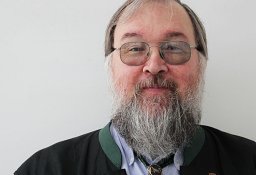
 Gerald Q. Maguire Jr.
· 8 previous affiliations
- KTH Royal Institute of TechnologySince 1994
- Emeritus · Since 2023
- Full Professor · 1994–2023
- Guest professor · 1994
- Columbia University1983–1993
- visiting professor, assitant professor, associate professor · 1983–1993
- Associate Professor · 1989–1993
- Assistant Professor · 1984–1989
- Visting Professor · 1986
- University of Utah1976–1983
- PhD student · 1981–1983
- MS and Ph.D., Computer Science · 1976–1983
- MS student · 1976–1981
- Summer student · 1975
- PhD student · 1975
- Indiana University of Pennsylvania1972–1975
- Undergrad student · 1972–1975
Research Overview
Gerald Q. Maguire Jr. focuses on computer communication systems, mobile internetworking, and medical image analysis. His early trajectory spans foundational protocols for mobile ad hoc networks and cognitive radio, alongside parallel contributions to medical imaging and radiation protection. More recently, his research addresses hardware-accelerated networking, federated learning, and efficient communication frameworks for large language models.
Research Trajectory
His earliest documented work addresses medical physics, specifically the calculation of isotopic properties in Calculation of Epsilon(Bar)-Beta, Gamma and Deltai for TC-99m. This interest in medical technology evolved into computational approaches for healthcare, leading to early methods for Graphics applied to medical image registration.
Concurrently, he established a major research thrust in computer communications and wireless systems. He guided early efforts in mobile networking architecture with IP-Based Protocols for Mobile Internetworking. As wireless systems grew more complex, he explored how software radios could adapt to user needs and spectrum etiquette, contributing to the conceptualization of cognitive radio in Cognitive radio: making software radios more personal. Expanding on mobile IP, his lab developed MIPMANET: mobile IP for mobile ad hoc networks, a solution utilizing reverse tunneling and foreign agent care-of addresses to connect reactive ad hoc networks to the broader Internet.
Maintaining his dual interests, he formalized pedagogical approaches to medical physics in Radiation Protection in the Health Sciences, addressing the standardization of definitions and technical curricula. Returning to communications, his group investigated the growing challenges of mobile telecommunications, evaluating media encryption feasibility for smartphones in Evaluation of VoIP media security for smartphones in the context of IMS. As network infrastructures transitioned toward cloud environments, he oversaw the development of Resource Monitoring in a Network Embedded Cloud: An Extension to OSPF-TE.
In the mid-2010s, his medical imaging research yielded significant clinical applications. He contributed to the research direction of Mitigating Metal Artifacts in Medical Imaging by demonstrating that computed tomography could replace traditional radiostereometric analysis for tracking orthopedic implants. This was detailed in A CT method for following patients with both prosthetic replacement and implanted tantalum beads: preliminary analysis with a pelvic model and in seven patients, which utilized a semi-automated 3D volume fusion tool to monitor tantalum beads. Building on this spatiotemporal analysis, he advanced work in the broader area of Longitudinal Registration for Spatiotemporal Medical Image Analysis. In Can Spatiotemporal Fluoride (18F−) Uptake be Used to Assess Bone Formation in the Tibia? A Longitudinal Study Using PET/CT, he and his collaborators used PET/CT scans to track fluoride uptake in complex fractures, providing functional imaging metrics to identify stalled bone healing earlier than traditional methods.
His networking research simultaneously shifted toward hardware acceleration and high-speed packet processing. His lab developed Metron: NFV Service Chains at the True Speed of the Underlying Hardware to optimize network function virtualization. Continuing this focus on hardware offloading, he guided an empirical evaluation of multi-100 Gbps programmable hardware in What You Need to Know About (Smart) Network Interface Cards, analyzing the performance benefits and limitations of offloading CPU tasks to modern NICs.
Most recently, his trajectory has incorporated distributed machine learning and artificial intelligence. He oversaw the introduction of Coded Federated Dropout in Fast Server Learning Rate Tuning for Coded Federated Dropout, utilizing coding theory to reduce communication bandwidth while maintaining model accuracy. He also participated in applying deep learning to physiological signals in FMM-Head: Enhancing Autoencoder-Based ECG Anomaly Detection with Prior Knowledge. Extending this focus on efficient AI systems, he collaborated on KVComm: Enabling Efficient LLM Communication through Selective KV Sharing, a framework that reduces computational overhead in large language models by transmitting a subset of Key-Value pairs from internal attention mechanisms.
Current Directions
The most recent papers in the evidence address the intersection of machine learning, distributed systems, and physiological monitoring. Recent work investigates communication-efficient frameworks for artificial intelligence, particularly focusing on optimizing federated learning through coding theory and adaptive learning rate tuning. Additionally, this research extends to the efficient deployment of large language models (LLMs) in multi-agent or distributed settings by selectively sharing Key-Value pairs to minimize computational overhead. Parallel efforts continue to apply advanced neural network architectures, such as autoencoders integrated with prior knowledge, to detect anomalies in medical time-series data like electrocardiograms.
Profile updated
Loading new papers…
Other researchers whose papers cluster into the same research directions — a proxy for overlapping technical interests and shared intellectual neighborhoods.
See something wrong? Report a mistake