

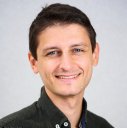
 Gautier Dagan
· 8 previous affiliations
- Cohere (Canada)Since 2026
- Member of Technical Staff · Since 2026
- Creator Fund2023–2025
- Investment Partner · 2023–2025
- University of Edinburgh2021–2025
- Doctor of Philosophy - PhD, Natural Language Processing · 2021–2025
- Research Scientist Intern · 2023
- R.grid2021–2023
- Senior Machine Learning Engineer · 2021–2023
- Entrepreneur First2020–2021
- EF LD15 Cohort Member · 2020–2021
- University of Amsterdam2017–2019
- MS student · 2017–2019
- Northwestern University2013–2017
- Undergrad student · 2013–2017
Research Overview
Gautier Dagan focuses on multimodal learning, interactive learning, and representation learning, with an emphasis on developing neuro-symbolic methods for autonomous agents. His trajectory spans early work in emergent communication and sequence modeling to recent research on equipping language models with robust planning capabilities and physical commonsense. He currently investigates agent architectures and cross-modal alignment.
Research Trajectory
Dagan’s early research explored visual reasoning and sequence modeling. He participated in collaborative work on visual dialogue systems, integrating object detection features to improve how agents answer questions about visual scenes in Adding Object Detection Skills to Visual Dialogue Agents. Shifting to core architectural challenges in natural language processing, he investigated the area of Length Extrapolation through Linear Attention Biases. In Location Attention for Extrapolation to Longer Sequences, he introduced a mechanism that models attention as a Gaussian distribution over relative positions. This approach allowed neural networks to generalize to sequences significantly longer than those encountered during training, contributing to the broader field of Mitigating Length Bias in Autoregressive Generation.
During his graduate studies at the University of Edinburgh, his focus expanded to the dynamics of language emergence and evolution. In the research direction of Topographic Similarity in Emergent Communication, he developed a framework where both the communication protocols and the neural architectures of agents evolve simultaneously. This work, detailed in Co-evolution of language and agents in referential games, demonstrated that such co-evolution yields languages that are more structured and easier for new agents to acquire. He further explored the cognitive pressures shaping language in Communicative Efficiency or Iconic Learning: Do Acquisition and Communicative Pressures Interact to Shape Colour- Naming Systems?, examining how biases for simplicity and informativity interact across generations of learners and repeated dyadic communication.
Returning to large-scale models, Dagan addressed the limitations of text-only training by grounding language models in physical environments. He presented PIGLET-Vis in Learning the Effects of Physical Actions in a Multi-modal Environment, a multi-modal approach that uses images and text to predict the effects of actions on objects, thereby improving physical commonsense reasoning. Concurrently, during an internship at Meta, he worked on foundational model components, investigating tokenization strategies for pre-training and domain adaptation in Getting the most out of your tokenizer for pre-training and domain adaptation.
His most recent trajectory centers on equipping language models with robust planning and interactive capabilities. In Dynamic Planning with a LLM, he analyzed the difficulties embodied agents face with multi-step reasoning as context windows grow, contrasting the noise tolerance of language models with the precision of symbolic planners. To facilitate lifelong learning in these agents, he developed the $How^2$ framework in How2: How to learn from procedural How-to questions, which allows agents to store answers to procedural questions in an abstracted memory for future reuse.
Continuing this focus on evaluation and alignment, he addressed the evaluation of multimodal systems in CAST: Cross-modal Alignment Similarity Test for Vision Language Models. This work introduced a testing framework to probe vision-language models for self-consistency across modalities, moving beyond standard visual question answering to better capture input biases and hallucinations. Finally, to rigorously measure these emerging capabilities, he introduced a new multi-modal dataset situated in a Minecraft environment in Plancraft: an evaluation dataset for planning with LLM agents. This work highlights the ongoing challenges models face with complex planning tasks and unsolvable problems. Following his PhD, Dagan joined Cohere as a Member of Technical Staff.
Current Directions
Recent work investigates the intersection of multi-modal learning and autonomous agent planning. The most recent papers in the evidence address the limitations of large language models in embodied environments, focusing on how agents can perform multi-step reasoning and lifelong learning. This includes developing frameworks for agents to ask procedural questions and store abstracted memories for long-term generalization. Additionally, current research emphasizes the rigorous evaluation of vision-language models, proposing new benchmarks and consistency tests to identify hallucinations, measure cross-modal alignment, and assess the feasibility of complex planning tasks in noisy, uncertain environments.
Profile updated
Loading new papers…
Other researchers whose papers cluster into the same research directions — a proxy for overlapping technical interests and shared intellectual neighborhoods.
See something wrong? Report a mistake