

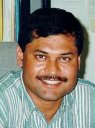
 Gautam Biswas
· 4 previous affiliations
- Vanderbilt UniversitySince 1988
- Full Professor · Since 2004
- Senior Research Scientist · Since 2002
- Cornelius Vanderbilt Professor of Computer Science and Electrical and Computer Engineering · Since 1988
- Stanford University1998–1999
- Visiting Associate Professor · 1998–1999
- Michigan State University1978–1983
- Doctor of Philosophy (Ph.D.), Computer Science · 1978–1983
- Bachelor of Technology (BTech), Electrical Engineering · 1972–1977
Research Overview
Gautam Biswas focuses on fault diagnosis in complex dynamic systems, predictive modeling for resource allocation, and multimodal representation learning. His early trajectory established foundational Bayesian methods for tracking and diagnosing hybrid systems with continuous and discrete dynamics. More recently, his focus has expanded to encompass anomaly detection in large-scale traffic networks and the integration of heterogeneous multimodal data for analyzing learning environments.
Research Trajectory
The early trajectory of this research centered on the robust monitoring and diagnosis of complex dynamical systems, particularly those exhibiting both continuous physical dynamics and discrete control states. In Hybrid Systems Diagnosis, Biswas and collaborators investigated techniques for diagnosing systems with embedded supervisory controllers that experience abrupt or partial component failures. By casting diagnosis as a model selection problem, the work utilized techniques from qualitative reasoning to generate an initial set of candidate diagnoses, which induced a smaller, more manageable set of models. These candidates were subsequently refined through rigorous parameter estimation and model fitting techniques. Expanding on this foundation, his lab advanced the research direction of Modeling Hybrid Systems with Continuous Flows and Discrete Jumps by introducing probabilistic frameworks to handle nondeterministic dynamics and noisy sensor data. The paper Bayesian Fault Detection and Diagnosis in Dynamic Systems proposed a novel approach utilizing hybrid dynamic Bayesian networks (DBNs). This architecture incorporated both continuous state variables and discrete failure nodes to track burst faults, measurement errors, and gradual drifts, contributing significantly to the broader area of Scaling Model-Based Diagnosis for Complex Systems.
Building upon these probabilistic foundations, subsequent work refined fault isolation techniques for increasingly complex architectures. In A Bayesian Framework for Fault Diagnosis of Hybrid Linear Systems, Biswas participated in developing a real-time diagnostic framework that integrated qualitative and quantitative methods with a particle filtering-based Bayesian network. This approach proved effective at disentangling concurrent parametric, discrete, and sensor faults. The evaluation of these advanced tracking methodologies was further formalized in Comparison of state estimation techniques for nonlinear hybrid systems. This study systematically analyzed the performance, computational complexity, and accuracy of various state estimation algorithms when applied to nonlinear dynamics characterized by discrete mode transitions, providing critical insights into the trade-offs inherent in hybrid system monitoring.
As the research evolved, the focus broadened from localized system diagnosis to predictive modeling and resource allocation in large-scale urban environments. In Prioritized Allocation of Emergency Responders based on a Continuous-Time Incident Prediction Model, his group formulated a non-linear mathematical program designed to maximize expected incident coverage for emergency services. To support this optimization, they introduced a continuous-time incident prediction mechanism that improved upon prior spatial-temporal forecasting methods by more accurately modeling the temporal dynamics of urban emergencies. Concurrently, Biswas explored modern deep learning techniques to streamline diagnostic models. The study Knowledge distilling based model compression and feature learning in fault diagnosis presented a knowledge distillation approach to simplify neural network topologies. By employing an occlusion-based importance analysis, the methodology enabled the selection of significant input variables and learned features, allowing a compact student network to maintain high diagnostic accuracy while reducing computational overhead.
Most recently, the trajectory has expanded into the analysis of rich, heterogeneous data streams and large-scale network anomalies. In Multimodal Methods for Analyzing Learning and Training Environments: A Systematic Literature Review, his lab provided a comprehensive taxonomy of the multimodal pipeline—encompassing speech, video, and eye gaze data—to better inform educational technologies. This work synthesizes methodological advances across several key areas, proposing a comprehensive framework that characterizes the domain in terms of distinct modality dimensions. This encompasses the research direction of Temporal Synchronization for Heterogeneous Multimodal Sensors, the broader area of Intermediate Feature Fusion for Multimodal Representation Learning, and the field of Long-Term Temporal Context for Predictive Modeling. Parallel to this work in multimodal learning, Biswas contributed to FT-AED: Benchmark Dataset for Early Freeway Traffic Anomalous Event Detection. This research introduced a large-scale, lane-level dataset designed to address the critical challenge of delayed incident reporting on freeways. By benchmarking graph neural network autoencoders that capture spatial relationships, the study demonstrated how crashes and other disruptions could be identified significantly earlier than official reports, advancing work in the area of Anomaly Detection via Reconstruction Error.
Current Directions
The most recent papers in the evidence indicate a dual focus on multimodal representation learning and large-scale anomaly detection in complex networks. One primary direction investigates how heterogeneous data streams—such as video, speech, and physiological signals—can be synchronized and fused to analyze human behavior in learning and training environments. This involves developing robust frameworks for intermediate feature fusion and managing long-term temporal context to build predictive models of user engagement and performance.
Simultaneously, recent work addresses spatial-temporal anomaly detection in critical infrastructure, specifically freeway traffic networks. By leveraging graph neural network autoencoders, this research explores how reconstruction error can be utilized to identify anomalous events, such as traffic accidents, in real-time. This direction aims to mitigate the delays inherent in traditional incident reporting systems by capturing the complex spatial dependencies and temporal dynamics of large-scale transportation grids.
Profile updated
Loading new papers…
Other researchers whose papers cluster into the same research directions — a proxy for overlapping technical interests and shared intellectual neighborhoods.
See something wrong? Report a mistake