

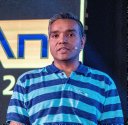
 Gaurav Aggarwal
· 2 previous affiliations
- Google (United States)Since 2019
- Researcher · Since 2019
- University of Maryland, College Park2002–2007
- PhD student · 2002–2007
Research Overview
Gaurav Aggarwal focuses on computer vision, machine learning, and their applications in robotics and large-scale data analysis. His work spans from foundational problems in image retrieval and facial recognition to contemporary challenges in model efficiency, privacy-preserving graph learning, and autonomous system control. Over a career spanning more than two decades, his research has evolved from analyzing static image properties and user perception to developing adaptive algorithms for dynamic environments and resource-constrained learning.
Research Trajectory
Aggarwal’s early research, beginning in the early 2000s, centered on Content-Based Image Retrieval (CBIR) and the challenges of subjective user perception. During this period, he investigated methodologies for Efficient Query Modification for Image Retrieval, focusing on how systems can automatically learn retrieval parameters by modifying segment-level descriptions of query images. This work addressed the inherent gap between low-level image features and high-level human interpretation.
By the mid-2000s, his focus shifted toward the geometric and physical properties of objects in computer vision. He explored the constraints of symmetry and illumination, demonstrating in Symmetric Objects are Hardly Ambiguous that bilaterally symmetric Lambertian objects could be distinguished under varying lighting conditions with minimal imagery. This period also saw an interest in Geometric Abstraction for Fast Spatial Reasoning and Expressive Volumetric Primitives for 3D Shape Representation, reflecting a broader effort to simplify complex 3D meshes into manageable forms for real-time computational tasks.
In the early 2010s, Aggarwal’s work transitioned into the domain of facial recognition and biometrics. He addressed the critical problem of predicting system performance on unseen data, a necessity for deploying recognition systems in novel environments with varying illumination and poses. His research in Predicting performance of face recognition systems: An image characterization approach proposed frameworks that did not require subject-wise labeling, instead learning mappings from image characteristics to matching scores. This line of inquiry extended to the "Good, Bad, and Ugly" (GBU) challenge, where he investigated the specific image factors that contribute to significant variations in matching difficulty. During this time, he also engaged with techniques for Canonical UV Spaces for Pose Invariant Appearance Modeling, seeking to maintain identity consistency across varying viewpoints.
Around 2015, his research interests expanded to include image quality and restoration. He investigated Aesthetic Evaluation for Non-Photorealistic Media, moving beyond the "photographic prior" to understand how models interpret artistic choices like geometric distortion or restricted color palettes. This was complemented by work on Preserving High-Frequency Textures in Image Restoration, which addressed the trade-off between noise removal and the retention of fine structural details. He also explored Monocular Metric Depth Estimation for Uncalibrated Images, a fundamental challenge in recovering absolute scale from 2D inputs.
In the early 2020s, Aggarwal’s work diversified further into social-scale simulations and privacy-preserving machine learning. He participated in large-scale agent-based modeling to study COVID-19 transmission on the Mumbai Suburban Railway, evaluating the efficacy of "cohorting" strategies. Simultaneously, he contributed to the development of node-level differentially private Graph Neural Networks (GNNs), addressing the privacy risks inherent in relational data aggregation.
Current Directions
Aggarwal’s recent research focuses on enhancing the efficiency and adaptability of machine learning models. A significant portion of this work addresses Novel Class Discovery (NCD), where models must group unlabeled data using knowledge from disjoint labeled sets. In Spacing Loss for Discovering Novel Categories, he introduced a loss function that enforces separability in latent space using multi-dimensional scaling cues.
His current work also emphasizes test-time adaptation and model predictive control (MPC) in robotics. In Is it an i or an l: Test-time Adaptation of Text Line Recognition Models, he served as the senior researcher on a project developing methods to adapt handwriting recognition models to individual writer idiosyncrasies without extensive retraining. In the robotics domain, he has led research on GAN-MPC: Training Model Predictive Controllers with Parameterized Cost Functions using Demonstrations from Non-identical Experts, which allows agents to learn complex behaviors from experts even when their dynamics or state-action spaces differ.
Furthermore, Aggarwal is involved in improving the computational efficiency of deep learning through Efficient Data Subset Selection to Generalize Training Across Models: Transductive and Inductive Networks. This research seeks to identify representative data subsets that maintain high performance while significantly reducing training costs. His recent collaborative work also extends to applied domains such as agricultural monitoring, where he has contributed to frameworks for farm-level, in-season crop identification in heterogeneous landscapes.
Representative Work
-
Efficient Query Modification for Image Retrieval (2000) This early work addresses the subjectivity of user perception in Content-Based Image Retrieval. Aggarwal proposes a methodology that automatically generates modified images based on user-selected objects of interest. By learning retrieval parameters through segment-level descriptions, the system aligns its search results more closely with the user's specific intent.
-
Symmetric Objects are Hardly Ambiguous (2007) Focusing on the intersection of geometry and computer vision, this paper examines the ambiguity of images under varying illumination. Aggarwal demonstrates that for the class of bilaterally symmetric Lambertian objects, it is possible to distinguish between different object equivalence classes using only a single image per object, even when lighting is constrained to a known point source.
-
Predicting performance of face recognition systems: An image characterization approach (2011) This research introduces a framework for predicting the performance of face matching systems on unseen data. By learning a mapping from image characteristics (such as pose and illumination) to matching performance, the system can estimate its reliability in new deployment locations without requiring the subject-wise labeling typically needed for evaluation.
-
Spacing Loss for Discovering Novel Categories (2022) In the context of Novel Class Discovery, Aggarwal proposes "Spacing Loss," a plug-and-play loss function designed to improve semantic grouping in unlabeled data. The method utilizes multi-dimensional scaling to enforce separability in the latent space, providing a robust mechanism for models to identify and categorize previously unseen classes.
-
Is it an i or an l: Test-time Adaptation of Text Line Recognition Models (2023) As the senior author, Aggarwal presents a method for adapting handwriting recognition models at test time. This approach addresses the variability in individual handwriting styles and scanning conditions, allowing models to adjust to specific writer characteristics without the need for massive retraining on new datasets.
-
GAN-MPC: Training Model Predictive Controllers with Parameterized Cost Functions using Demonstrations from Non-identical Experts (2023) This work advances Learnable-MPC by relaxing the assumption that the demonstrator and the imitator must have identical dynamics. Aggarwal and his colleagues use a GAN-based framework to learn parameterized cost functions from non-identical experts, enabling more flexible and generalizable imitation learning for complex robotic trajectories.
Profile updated
Loading new papers…
Other researchers whose papers cluster into the same research directions — a proxy for overlapping technical interests and shared intellectual neighborhoods.
See something wrong? Report a mistake