

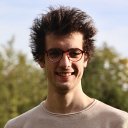
 Gaspard Lambrechts
· 3 previous affiliations
- McGill UniversitySince 2026
- Postdoc · Since 2026
- Intern · 2024
- Postdoc · Since 2026
- University of Liège2016–2025
- Postdoc · 2025
- PhD student · 2021–2025
- MS student · 2019–2021
- Undergrad student · 2016–2019
Research Overview
Gaspard Lambrechts focuses on reinforcement learning in partially observable environments, sequence learning, and asymmetric actor-critic algorithms. His trajectory spans from analyzing how recurrent neural networks represent belief states to developing theoretical and practical frameworks for leveraging privileged information during training. His current work investigates how agents can efficiently explore and learn robust policies when full state access is unavailable.
Research Trajectory
Lambrechts's early work examined the intersection of sequence modeling and decision-making under uncertainty. In 2022, he investigated how recurrent neural networks (RNNs) capture environmental uncertainty in Recurrent networks, hidden states and beliefs in partially observable environments. This work demonstrated that as RNNs approximate value functions, their hidden states naturally correlate with the relevant components of an agent's belief state, contributing to the research direction of Compressing Belief Spaces for Tractable Partially Observable Planning. Expanding on the challenges of sequence modeling, he subsequently addressed the broader area of The Vanishing Gradient Problem in Sequence Learning. In Warming up recurrent neural networks to maximise reachable multistability greatly improves learning, he introduced an initialization procedure that maximizes multistability in RNNs, enabling networks to better capture long-term dependencies through a double-layer architecture.
Building on these foundations in partial observability, Lambrechts shifted toward frameworks that utilize privileged information during the training phase of reinforcement learning. He introduced the "informed POMDP" framework in Informed POMDP: Leveraging Additional Information in Model-Based RL, adapting model-based algorithms like Dreamer to exploit extra data available only at training time, thereby accelerating learning in partially observable settings. This focus on privileged training information naturally led to his contributions to the research area of Asymmetric Actor Critic Learning. In A Theoretical Justification for Asymmetric Actor-Critic Algorithms, he provided a formal theoretical grounding for algorithms that compensate for partial observability by supplying the critic with privileged state information while the actor relies only on historical observations.
Alongside his work on partial observability, Lambrechts has collaborated on foundational problems in reinforcement learning optimization and exploration. He contributed to Behind the Myth of Exploration in Policy Gradients, which reframed exploration techniques as mechanisms that smooth the learning objective and eliminate local optima rather than merely satisfying an intrinsic need to explore. In parallel, he co-authored Off-Policy Maximum Entropy RL with Future State and Action Visitation Measures, introducing an intrinsic reward based on the surprise of future state-action visitations. This approach facilitates more effective exploration and aligns with the broader research direction of Sample Efficiency through Off-Policy Experience Replay.
Most recently, his research has synthesized these threads into advanced asymmetric actor-critic architectures. Overseeing the development of the Informed Asymmetric Actor-Critic (IAAC) framework, he guided the research in Informed Asymmetric Actor-Critic: Leveraging Privileged Signals Beyond Full-State Access. This work demonstrated that reinforcement learning critics do not strictly require full-state access during training; rather, any state-dependent privileged signal can be effective. The paper also introduced statistical tools to evaluate which supplementary signals genuinely aid the learning process.
Current Directions
Recent work investigates the theoretical and practical limits of asymmetric actor-critic architectures in reinforcement learning. The most recent papers in the evidence address how agents can optimally leverage privileged, state-dependent signals during training without requiring full-state access. This involves developing statistical toolkits to isolate beneficial supplementary information from noise, ensuring that critics are informed by the most relevant data. Additionally, ongoing research explores the underlying mechanics of exploration in policy gradients, seeking to design intrinsic reward structures and optimization criteria that systematically smooth learning objectives and improve sample efficiency in complex, partially observable environments.
Profile updated
Loading new papers…
Other researchers whose papers cluster into the same research directions — a proxy for overlapping technical interests and shared intellectual neighborhoods.
See something wrong? Report a mistake