

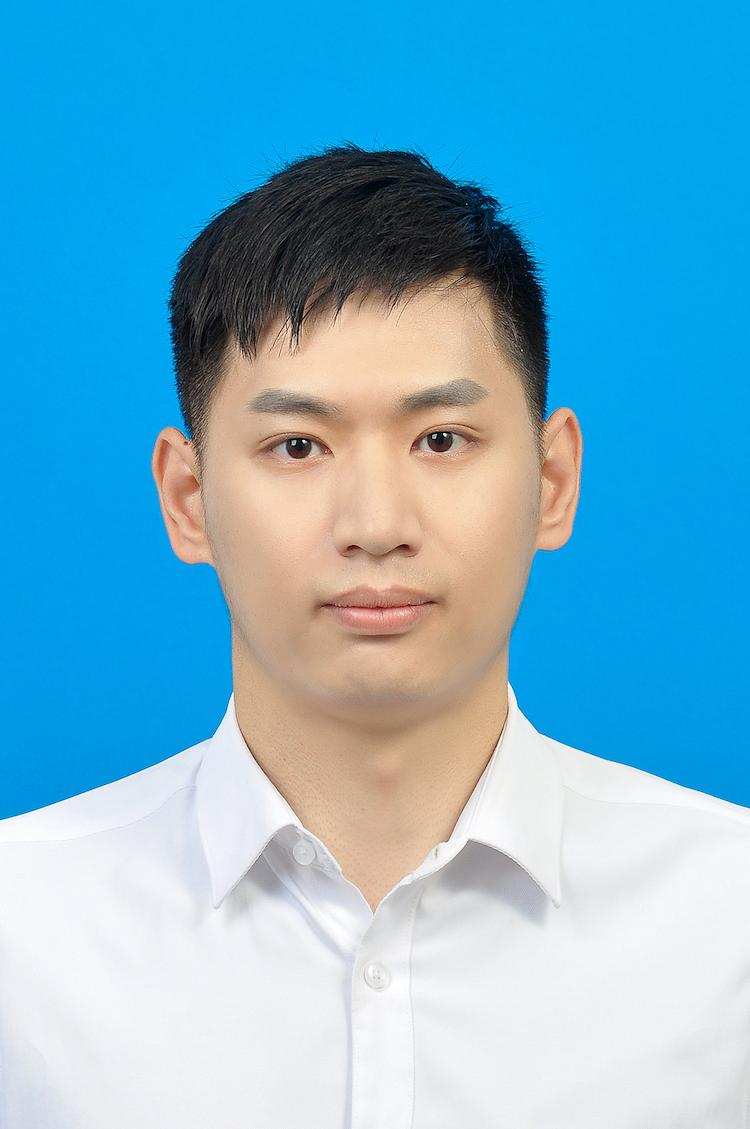
 Gaoyang Liu
· 2 previous affiliations
- Lecturer · Since 2025
- PhD student · 2016–2021
- Simon Fraser University2021–2024
- Postdoc · 2021–2024
Research Overview
Gaoyang Liu focuses on trustworthy artificial intelligence, data privacy, and the security of large language models. His trajectory spans early work in membership inference attacks and federated learning to the development of efficient machine unlearning techniques. Currently, he investigates privacy vulnerabilities and targeted knowledge erasure in generative AI systems and retrieval-augmented generation architectures.
Research Trajectory
Liu’s early research established a foundation in data privacy by analyzing vulnerabilities in machine learning models and exploring distributed training paradigms. In 2019, he investigated how predictive interfaces could leak sensitive user information, demonstrating these risks in SocInf: Membership Inference Attacks on Social Media Health Data With Machine Learning. This focus on privacy naturally extended to edge computing and distributed systems, where he proposed frameworks to minimize data transmission risks in Keep Your Data Locally: Federated-Learning-Based Data Privacy Preservation in Edge Computing (2021).
Recognizing that federated learning (FL) systems still require mechanisms to comply with the "right to be forgotten" and to mitigate data poisoning, Liu pioneered early techniques for data removal in distributed settings. He introduced the FedEraser methodology in Federated Unlearning (2020), which was subsequently formalized in FedEraser: Enabling Efficient Client-Level Data Removal from Federated Learning Models (2021). This work provided a critical step toward efficient client-level data removal without requiring complete model retraining.
Returning to the mechanics of membership inference attacks (MIAs), Liu expanded the threat model to more restrictive settings. He developed techniques for black-box environments in Gradient-Leaks: Enabling Black-Box Membership Inference Attacks Against Machine Learning Models (2023), which constructs local approximation models to infer training data membership. Concurrently, he analyzed the temporal dynamics of FL vulnerabilities in TEAR: Exploring Temporal Evolution of Adversarial Robustness for Membership Inference Attacks Against Federated Learning (2023), showing how the natural overfitting process in FL creates exploitable differences in model parameters over time.
As his focus on data removal deepened, Liu contributed significantly to the research direction of Machine Unlearning for Regulatory Data Deletion Requirements. Collaborating on Boundary Unlearning: Rapid Forgetting of Deep Networks via Shifting the Decision Boundary (2023), he helped develop a framework that manipulates the decision boundary in the output space rather than relying on complex parameter adjustments. This approach advanced the specific areas of Targeted Model Transformation for Efficient Machine Unlearning and Instance-Level Machine Unlearning for Deep Neural Networks, achieving substantial speedups while maintaining accuracy on retained data.
With the rapid adoption of generative AI, Liu shifted his attention to the privacy surfaces of large language models (LLMs) and retrieval-augmented generation (RAG) systems. In 2024, he uncovered significant privacy flaws in RAG architectures with Seeing Is Believing: Black-Box Membership Inference Attacks Against Retrieval Augmented Generation, introducing an attack that measures semantic similarity and perplexity to detect sensitive records in external databases. He also identified vulnerabilities in extended-context models in Membership Inference Attack against Long-Context Large Language Models (2024).
To address these emerging LLM vulnerabilities, Liu’s recent work heavily emphasizes the research direction of Preserving Model Utility During Machine Unlearning. A key contribution is Decoupling Memories, Muting Neurons: Towards Practical Machine Unlearning for Large Language Models (2025), which introduced a surgical unlearning approach that modulates a tiny fraction of neurons in feed-forward networks to erase specific memories without degrading general intelligence. He has continued to refine unlearning methodologies across different architectures, exploring soft-label tailoring in Prototype Surgery: Tailoring Neural Prototypes via Soft Labels for Efficient Machine Unlearning (2025) and boundary manipulation for imbalanced datasets in From Expansion to Retraction: Long-tailed Machine Unlearning via Boundary Manipulation (2025). Conversely, he has also explored the security risks inherent in the unlearning process itself, leading the development of the first unlearning attack against regression models in Unlearning Attacks for Regression Learning (2025).
In parallel with his unlearning research, Liu has maintained a strong focus on model defense and intellectual property protection. To defend federated systems against privacy leakage, he designed a post-protection mechanism in Poisoning as a Post-Protection: Mitigating Membership Privacy Leakage From Gradient and Prediction of Federated Models (2025) and investigated confidence-aware defenses in Mitigating malicious model fusion in federated learning via confidence-aware defense (2026). To protect model ownership, he participated in the development of novel fingerprinting techniques. This includes mapping decision surfaces via adversarial trajectories in United We Stand, Divided We Fall: Fingerprinting Deep Neural Networks via Adversarial Trajectories (2024) and creating verifiable "feature islands" in latent space to protect pre-trained encoders against downstream fine-tuning in Fingerprinting Pre-trained Encoders under Arbitrary Downstream Fine-Tuning via Adversarial Shifting (2026). His broader commitment to secure deployments is also reflected in domain-specific privacy work, such as Shielding sensitive medical imaging data (2024).
Current Directions
Based on his most recent publications, Liu’s current research agenda is organized around three primary themes in trustworthy AI:
Surgical Machine Unlearning for Generative AI: A major focus is developing parameter-efficient unlearning techniques for large language models. Recent work investigates how to decouple specific memorized data from general linguistic capabilities by muting targeted neurons, allowing models to "forget" sensitive information without requiring computationally prohibitive retraining or sacrificing overall performance.
Intellectual Property Protection for Foundation Models: Liu is actively exploring robust fingerprinting methods to protect the ownership of deep neural networks and pre-trained encoders. This involves designing adversarial shifting techniques and continuous adversarial trajectories that remain verifiable even after an attacker has heavily fine-tuned or modified the model for downstream tasks.
Advanced Defenses in Distributed Learning: He continues to address the security and privacy challenges of federated learning. Current efforts focus on mitigating malicious model fusion and developing post-protection poisoning strategies that degrade the efficacy of membership inference attacks without disrupting the primary utility of the distributed model.
Profile updated
Loading new papers…
Other researchers whose papers cluster into the same research directions — a proxy for overlapping technical interests and shared intellectual neighborhoods.
See something wrong? Report a mistake