

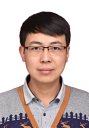
 Gaoxia Jiang
· 1 previous affiliation
- Shanxi UniversitySince 2020
- Full Professor · Since 2025
- Associate Professor · 2020–2025
- PhD student · 2012–2018
Research Overview
Gaoxia Jiang focuses on the theoretical and algorithmic foundations of robust machine learning, with a particular emphasis on learning from noisy labels, error estimation, and the application of generative models to data purification. Jiang’s work addresses the challenges of training deep neural networks and regression models on imperfect datasets, moving from early statistical modeling of environmental data to the development of sophisticated frameworks for label noise filtering and correction. By leveraging generalization error bounds and diffusion-based generative processes, Jiang’s research seeks to improve the reliability and interpretability of supervised learning in the presence of corrupted or imbalanced data.
Research Trajectory
Jiang’s research trajectory began with the application of hierarchical statistical models to complex environmental datasets. In 2012, this work involved using hierarchical linear models (HLM) to analyze monthly rainfall patterns, accounting for regional and seasonal interactions. This early phase established a foundation in handling nested data structures and level effects, which would later evolve into a more generalized interest in the statistical properties of learning algorithms.
By 2017, Jiang’s focus shifted toward the fundamental theory of model evaluation and pattern recognition. This period was characterized by a rigorous analysis of k-fold cross-validation (CV), specifically investigating the variance of CV as an error estimator. Jiang derived the quadratic relationship between CV variance and its accuracy when sample sizes are large, providing a theoretical basis for predicting variance stability. This work was followed by the development of novel distance measures for time series data, such as the Maximum Shifting Correlation Distance (MSCD), which addressed drifts in phase and amplitude to improve clustering and classification efficiency.
The most significant shift in Jiang’s career occurred around 2021, with a transition into the field of Learning from Noisy Labels (LNL). Recognizing that most noise-filtering methods were heuristic, Jiang began developing unified frameworks grounded in generalization error (GE) bounds. This work aimed to move beyond manual hyper-parameter tuning toward an "optimal sample selection" (OSS) approach that balances noise removal with the preservation of clean samples.
In recent years (2024–2026), Jiang’s work has increasingly integrated generative modeling and causal inference into the LNL domain. This includes the use of diffusion models to "purify" labels by treating noise as a corruption process that can be reversed. This evolution represents a move from purely discriminative methods—which simply filter or correct labels—to generative frameworks that model the underlying distribution of true labels. Additionally, Jiang has expanded into multi-label learning and graph neural networks, exploring how causal intervention and co-occurrence constraints can enhance model robustness in out-of-distribution and imbalanced scenarios.
Robustness to Label Noise
A central theme in Jiang’s recent work is the systematic treatment of label noise in both classification and regression. Jiang has contributed extensively to the debate between "filtering" (removing noisy samples) and "correction" (fixing labels). Through the development of the Fusion Cleaning Framework (FCF), Jiang provided theoretical evidence that the choice between these two strategies should be sample-dependent: confident noises are better suited for correction, while unconfident noises should be filtered to avoid misguiding the model.
Jiang has also addressed the specific challenges of numerical label noise in regression, which differs significantly from categorical noise in classification. By employing Maximum A Posteriori (MAP) estimation and Gaussian Mixture Models (GMM), Jiang developed algorithms to estimate the posterior distribution of true labels, allowing for more precise noise filtering in continuous-target environments. This work emphasizes interpretability, aiming to make the objective functions of sample selection frameworks more transparent to practitioners.
Generative and Diffusion-Based Approaches
The most recent phase of Jiang’s research explores the intersection of Learning from Noisy Labels and generative AI. The Directional Label Diffusion (DLD) model exemplifies this shift, reimagining label recovery as a generative task. By disentangling random noise from directed corruption, Jiang’s models learn to "reverse" the diffusion of labels, effectively recovering the true distribution from a noisy state.
Jiang has also participated in collaborative efforts to extend these concepts to more complex data structures. This includes work on multi-label learning, where diffusion models are used to enforce real-world constraints on label co-occurrence, and the development of class-aware multi-granularity co-diffusion models (CaMCoD) to handle the dual challenges of label noise and class imbalance. These contributions suggest a move toward holistic data quality management in deep learning, where generative models serve as a pre-processing or integrated purification layer.
Representative Work
Error estimation based on variance analysis of k-fold cross-validation (2017) provides a theoretical analysis of one of the most common model evaluation techniques. Jiang proved the quadratic relationship between cross-validation variance and accuracy under large-sample conditions. This work is significant for its derivation of the factors influencing CV variance, allowing researchers to predict the stability of error measurements before applying the technique.
A Unified Sample Selection Framework for Output Noise Filtering: An Error-Bound Perspective (2021) represents Jiang’s transition into robust supervised learning. The paper introduces the Optimal Sample Selection (OSS) framework, which addresses the tendency of heuristic filters to "overclean" datasets. By framing noise filtering through the lens of generalization error bounds, Jiang provided a more principled method for determining which samples to remove, ensuring that the filtering process actually improves the model's ability to generalize to unseen data.
Which Is More Effective in Label Noise Cleaning, Correction or Filtering? (2024) offers a comparative study of the two dominant strategies in label noise management. Jiang introduced a rebuilt error bound to evaluate the effectiveness of correction versus filtering at both the dataset and sample levels. The findings—that correction is superior for high-probability noise while filtering is safer for medium-probability noise—led to the creation of the Fusion Cleaning Framework (FCF), which achieved state-of-the-art results by adaptively applying both methods.
Maximum a posteriori estimation and filtering algorithm for numerical label noise (2024) extends Jiang’s noise-robustness research into the domain of regression. The paper proposes the MAPNF algorithm, which uses Gaussian Mixture Models to estimate the true distribution of numerical labels. This approach allows for the estimation of the noise level in continuous variables, providing a robust filtering mechanism for regression tasks where label quality is often overlooked compared to classification.
Directional Label Diffusion Model for Learning from Noisy Labels (2025) marks Jiang’s entry into generative label purification. The Directional Label Diffusion (DLD) model treats the presence of noisy labels as a diffusion process that can be reversed. By separating random noise from systematic corruption, the model provides an interpretable way to recover true labels, moving the field of LNL from simple discriminative filtering toward generative recovery.
An interpretable sample selection framework against numerical label noise (2025) returns to the problem of regression noise with a focus on transparency. Jiang developed the Interpretable Sample Selection (ISS) framework to address the complexity of previous objective functions in noise filtering. This work aims to provide practitioners with a more intuitive understanding of how and why specific samples are being excluded, reducing the risk that inaccurate parameter settings will degrade the filtering effect.
Profile updated
Loading new papers…
Other researchers whose papers cluster into the same research directions — a proxy for overlapping technical interests and shared intellectual neighborhoods.
See something wrong? Report a mistake