

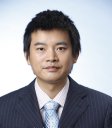
 Gaofeng Meng
· 2 previous affiliations
- Chinese Academy of SciencesSince 2020
- Full Professor · Since 2020
- Full Professor · Since 2022
Research Overview
Gaofeng Meng focuses on computer vision, neural architecture search, and continual learning. His early work addressed the geometric rectification of distorted document images before expanding into automated network design and the stability-plasticity dilemma in machine learning. Currently, he investigates multimodal foundation models, multi-agent systems, and medical image analysis.
Research Trajectory
In his early research, Meng focused extensively on the area of Geometric Rectification of Distorted Document Images. He introduced a metric rectification method in Metric Rectification of Curved Document Images, which utilized a general cylindrical surface model to restore images captured from single cameras by exploiting the convergence of printed horizontal text lines. Building on this foundation, he later proposed a segment-free approach in Exploiting Vector Fields for Geometric Rectification of Distorted Document Images, recovering 3D page shapes by analyzing intrinsic vector fields and flattening the estimated surfaces to correct geometric distortions.
By 2019, his focus expanded into automated machine learning, specifically the research direction of Scaling Neural Architecture Search to Global Macro Topologies. Meng developed RENAS: Reinforced Evolutionary Neural Architecture Search, a framework that integrated the population-based diversity of evolutionary algorithms with a reinforcement learning-based mutation controller. This work also contributed to the area of Weight Inheritance for Efficient Neural Architecture Search, yielding highly efficient models for complex vision tasks. During this period, he collaborated on DetNAS: Backbone Search for Object Detection, which applied one-shot supernet techniques to design backbones specifically optimized for object detection rather than standard image classification, advancing the broader area of Cell-Based Search Spaces for Neural Architecture Search. He further contributed to DATA: Differentiable ArchiTecture Approximation With Distribution Guided Sampling, helping to bridge the gap between architecture search and validation phases using an Ensemble Gumbel-Softmax estimator.
More recently, Meng has addressed the challenges of memory and adaptation in machine learning. In Defying Imbalanced Forgetting in Class Incremental Learning, he identified how certain classes within a task are forgotten faster due to semantic similarity with new data, proposing a class-aware disentanglement plugin to minimize interference. Concurrently, his team explored multimodal applications in live streaming environments. He guided the design of A Multimodal Transformer for Live Streaming Highlight Prediction, which introduced a modality temporal alignment module to predict highlight moments in real-time without future context. He also directed research into MMBee: Live Streaming Gift-Sending Recommendations via Multi-Modal Fusion and Behaviour Expansion, modeling real-time gifting interactions by fusing multimodal content changes with user behavior. In the medical domain, his group introduced EchoMEN: Combating Data Imbalance in Ejection Fraction Regression via Multi-expert Network, utilizing a decoupled training strategy and ensemble learning to address severe data imbalances in cardiac ultrasound assessments.
Current Directions
The most recent papers in the evidence indicate a strong focus on advanced continual learning, multimodal foundation models, and domain-specific autonomous agents.
In the realm of continual learning, Meng oversees work on the stability-plasticity dilemma. In Pareto Continual Learning: Preference-Conditioned Learning and Adaption for Dynamic Stability-Plasticity Trade-off, his lab explored preference-conditioned adaptation to dynamically balance the retention of old knowledge with the acquisition of new skills. He also participated in a study demonstrating that Reinforcement Fine-Tuning Naturally Mitigates Forgetting in Continual Post-Training, showing how selective update mechanisms in multimodal models can preserve prior capabilities better than standard supervised fine-tuning.
His current research also heavily investigates the capabilities and applications of large vision-language models (VLMs) and multi-agent systems. He contributed to VTCBench: Can Vision-Language Models Understand Long Context with Vision-Text Compression?, a benchmark revealing the associative reasoning limitations of modern VLMs when processing text compressed into images. To harness these models for complex workflows, his team developed Agent Reviewers: Domain-specific Multimodal Agents with Shared Memory for Paper Review, a multi-agent system that evaluates scientific literature by combining visual layout analysis with a shared memory of past submissions. Similarly, he collaborated on PDE-Agent: A toolchain-augmented multi-agent framework for PDE solving, which assists in navigating the complex mathematical and physical constraints of partial differential equations. Finally, extending his prior work in medical imaging, he directed the creation of A Fully Open and Generalizable Foundation Model for Ultrasound Clinical Applications, aiming to move beyond task-specific models to provide a versatile diagnostic tool for clinical ultrasound interpretation.
Profile updated
Loading new papers…
Other researchers whose papers cluster into the same research directions — a proxy for overlapping technical interests and shared intellectual neighborhoods.
See something wrong? Report a mistake