

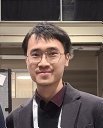
 Ganyu Wang
· 4 previous affiliations
- Huawei Technologies (Canada)Since 2025
- Senior Researcher · Since 2025
- Western University2021–2025
- PhD student · 2021–2025
- Lecturer · 2022
- Ontario Tech University2019–2021
- Research Assistant · 2019–2021
1 other author named Ganyu Wang: Ganyu Wang (1 paper)
Research Overview
Ganyu Wang focuses on the intersection of machine learning, distributed systems, and privacy-preserving computation, with a primary emphasis on Vertical Federated Learning (VFL) and large-scale optimization. His research addresses the fundamental challenges of training models on vertically partitioned data—where different participants hold different features for the same set of entities—while maintaining strict privacy guarantees and communication efficiency. Currently a Senior Researcher at Huawei Canada, Wang’s work has expanded from foundational optimization algorithms for VFL to the development of query-efficient frameworks for black-box Large Language Model (LLM) prompt tuning and online learning in non-stationary environments.
Research Trajectory
Wang’s early research focused on resolving the inherent trade-offs between privacy and efficiency in VFL. In traditional VFL settings, participants must collaborate without exposing their local data or model parameters, often necessitating costly cryptographic primitives or high-frequency communication. Wang addressed these bottlenecks by investigating zeroth-order optimization (ZOO) techniques, which allow for model updates without direct access to gradients. While ZOO-based methods naturally enhance privacy by concealing internal model information, they typically suffer from slow convergence rates. To mitigate this, Wang developed hybrid optimization frameworks that combine zeroth-order and first-order methods, achieving convergence speeds comparable to gradient-based VFL while maintaining a formal differential privacy guarantee and reducing communication overhead.
Starting in 2024, Wang’s work transitioned toward the complexities of real-world distributed environments, specifically focusing on asynchronous systems and Sublinear Regret Convergence in Online Learning. Recognizing that synchronous VFL is often impractical due to varying participant latencies and "straggler" effects, he proposed cascaded hybrid optimization methods to enable secure and fast asynchronous training. This period also marked a shift toward online learning, where data arrives in continuous streams and the underlying data distribution may be subject to Learning in Non-Stationary Data Streams. By integrating the concept of Dynamic Regret Minimization in Non-Stationary Online Learning, Wang developed frameworks for "event-driven" online VFL, allowing models to adapt to non-stationary environments where only a subset of clients may receive new information at any given time.
Most recently, Wang has applied these distributed optimization principles to the domain of Large Language Models. His work in this area focuses on Black-Box Discrete Prompt Learning (BDPL), a paradigm where prompts are optimized without access to the LLM’s internal parameters or gradients. This is particularly relevant for cloud-based LLM services where API query costs are a significant constraint. Wang’s research in this area has challenged conventional wisdom in federated learning by demonstrating that reducing client participation—specifically activating only one client per round—can be the most query-efficient strategy for decentralized prompt tuning.
Current Directions
Wang’s current research continues to push the boundaries of Decentralized Optimization and LLM efficiency. A significant portion of his recent work involves enhancing the robustness of VFL models against adversarial perturbations. Because VFL involves multiple participants with distinct feature sets, standard adversarial training is computationally expensive and communication-intensive. Wang has contributed to the development of decoupling mechanisms that parallelize backpropagation across participants, significantly accelerating the training of robust VFL models.
Furthermore, he is exploring the challenges of online black-box prompt optimization under noisy feedback. This direction acknowledges that LLMs often produce inconsistent outputs for identical inputs, requiring optimization algorithms that can provide regret guarantees even when the feedback signal is unreliable. His ongoing work at Huawei Canada involves the design of LLM-powered semantic analytics systems, focusing on the low-level system optimization of inference pipelines and distributed semantic aggregation under strict latency constraints.
Representative Work
A Unified Solution for Privacy and Communication Efficiency in Vertical Federated Learning In this work, Wang introduces VFL-CZOFO, a hybrid optimization framework designed to bridge the gap between privacy and efficiency. By applying zeroth-order optimization to the client’s output layer and first-order optimization elsewhere, the method achieves near-gradient-level convergence with significantly reduced communication costs and formal differential privacy.
Secure and fast asynchronous Vertical Federated Learning via cascaded hybrid optimization Addressing the limitations of synchronous training, this paper proposes a cascaded hybrid optimization method for VFL. The approach allows downstream client models to be trained using zeroth-order optimization to preserve privacy, while maintaining high training speeds in an asynchronous environment, making it more suitable for large-scale modern models.
Event-Driven Online Vertical Federated Learning This paper introduces a framework for online VFL that accounts for sporadic, event-driven data updates. By utilizing Dynamic Local Regret, the method provides a robust solution for training non-convex models in non-stationary environments, offering superior stability and lower communication costs than traditional synchronous approaches.
FedOne: Query-Efficient Federated Learning for Black-box Discrete Prompt Learning Wang investigates the query costs associated with tuning discrete prompts for cloud-based LLMs across decentralized data. The paper proves that activating only one client per round is the most query-efficient strategy for black-box prompt tuning, providing a theoretical and practical foundation for reducing the costs of federated LLM services.
Asynchronous Vertical Federated Learning for Kernelized AUC Maximization In this collaborative work, Wang contributes to the development of asynchronous VFL algorithms specifically tailored for Area Under the Curve (AUC) maximization in kernelized settings. The research addresses the challenges of optimizing non-decomposable loss functions in a distributed and asynchronous manner.
Accelerated Vertical Federated Adversarial Learning through Decoupling Layer-Wise Dependencies As a key contributor to this research, Wang helped develop DecVFAL, a framework that uses a dual-level decoupling mechanism to parallelize backpropagation in VFL. This approach achieves a 3 to 10-fold speedup in training robust models against adversarial attacks without sacrificing accuracy, providing the first rigorous convergence guarantees for this setting.
Profile updated
Loading new papers…
Other researchers whose papers cluster into the same research directions — a proxy for overlapping technical interests and shared intellectual neighborhoods.
See something wrong? Report a mistake