

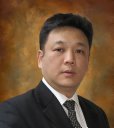
 Gang Li
· 1 previous affiliation
- Clemson UniversitySince 2006
- Full Professor · Since 2018
- Current
- Associate Professor · 2012–2018
- Assistant Professor · 2006–2012
15 other authors named Gang Li: Gang Li (Deakin University · 853 papers), Gang Li (87 papers), Gang Li (Orby AI · 32 papers), Gang Li (Chinese Academy of Sciences · 20 papers), Gang Li (Tongji University · 16 papers), and 10 more
Research Overview
Gang Li focuses on the computational mechanics, manufacturing, and design optimization of advanced fiber-reinforced polymer composites. His work integrates traditional finite element analysis (FEA) with emerging machine learning frameworks, such as deep reinforcement learning and generative diffusion models, to solve complex engineering problems in automotive lightweighting and structural health monitoring. By bridging the gap between theoretical solid mechanics and data-driven inverse design, Li addresses the challenges of process-induced deformation, microstructural optimization, and the development of sustainable thermoplastic materials.
Research Trajectory
Li’s early research, beginning around 2008, was centered on the fundamental mechanics of composite materials, with a specific emphasis on the environmental and structural factors that influence internal stress. In 2009, he conducted a detailed investigation into the Study on Residual Stresses Induced by Moisture Absorption in Unidirectional Carbon Fiber/Epoxy Resin Composites. This work utilized numerical simulations to model moisture diffusion and its subsequent impact on residual stress, demonstrating that random fiber distribution models provided more accurate predictions than traditional hexagonal arrangements. This early period established Li’s expertise in using the finite element method (FEM) to characterize material behavior under varying hygroscopic and thermal conditions.
By 2012, Li’s focus shifted toward the analytical modeling of structural interfaces. He developed Thereotical solutions of adhesive stresses in bonded composite butt joints, providing closed-form mathematical solutions that offered a computationally efficient alternative to full-scale numerical simulations. This research was critical for the rapid assessment of joint integrity in aerospace and automotive structures, where adhesive bonding is a primary failure point.
In the following decade, Li transitioned toward the practical application of these computational methods in industrial manufacturing, particularly within the automotive sector. This phase of his career was characterized by a focus on lightweighting and the adoption of thermoplastic composites. In 2020, he contributed to a A Finite Element Design Study and Performance Evaluation of an Ultra-Lightweight Carbon Fiber Reinforced Thermoplastic Composites Vehicle Door Assembly, which demonstrated the feasibility of replacing traditional metallic components with advanced composites to improve fuel efficiency. During this time, Li also focused on engineering education, co-authoring comprehensive texts such as Introduction to the Finite Element Method and Implementation with MATLAB®, which formalized his approach to connecting solid mechanics theory with systematic numerical implementation.
The most recent evolution of Li’s work, beginning around 2021, involves the integration of artificial intelligence into the engineering design workflow. This shift represents a move from forward-modeling (predicting behavior from known designs) to autonomous inverse design. He has explored Continuous Coordinate Based Positional Encodings and other machine learning architectures to overcome the limitations of discrete grid-based modeling in structural optimization. His current work applies these techniques to the design of complex microstructures and the mitigation of manufacturing defects. Along these lines, Li investigated Design for energy absorption using snap-through bistable metamaterials via surrogate modeling, and evaluated Thermoforming process effects on structural performance of carbon fiber reinforced thermoplastic composite parts through a manufacturing to response pathway. In 2023, Li presented an Analytical estimation of cohesive parameters for a bilinear traction-separation law in DCB mode I loading, advanced Deep reinforcement learning for the rapid on-demand design of mechanical metamaterials with targeted nonlinear deformation responses, and co-developed the Integration of Vehicle Dynamics with Finite Element Composite Structure Simulation. Moving further into process and interface modeling, Li formulated A Parametrized Continuum Constitutive Model for Reinforced Thermoplastic Composites with Mechanically Interlocked Interface and studied the Use of Non-Isothermal cure cycles for reducing cure induced deformation in laminated composites. Most recently, Li participated in pre-training ChemFM as a scaling law guided foundation model pre-trained on informative chemicals, explored Improving the compressive strength of interlaminar stiffened and reinforced glass fiber composites by CNT/epoxy composite film with photothermal effects, and formulated the Mechanical Response Characteristics and Damage Constitutive Model of Coal Under Coupled Static and Dynamic Loads.
Current Directions
Li’s current research agenda is defined by the application of "Physics-Informed" and generative AI to materials science. A primary focus is the use of reinforcement learning for topology optimization, where an agent learns to distribute material within a design domain to maximize performance while minimizing weight. This approach seeks to reduce the human bias often found in supervised learning models by allowing the agent to explore the design space through interactive experience.
Another significant direction is the development of generative models for the inverse design of 3D microstructures. Li is involved in creating frameworks that use diffusion models to generate internal material architectures that meet specific nonlinear stress-strain requirements. These models are increasingly "physically constrained" to ensure that the generated designs are not only mathematically optimal but also manufacturable, preventing issues such as fiber overlap in the digital model.
Li is also addressing the challenges of manufacturing uncertainty and process-induced deformation (warpage). By utilizing Deep Operator Networks (DeepONets) and transfer learning, he is developing probabilistic surrogate models that can optimize manufacturing cure cycles. These models aim to bridge the gap between high-fidelity physics simulations and sparse experimental data, allowing for real-time optimization of the manufacturing process. Most recently, his work has expanded into the domain of molecular structure recognition and editing, exploring how large language models can be benchmarked for their understanding of chemical and molecular structures, signaling a broader interest in the intersection of AI and molecular science.
Representative Work
As the senior author, Li led a significant study on Deep Reinforcement Learning for Engineering Design through Topology Optimization of Elementally Discretized Design Domains. This research addressed the limitations of supervised learning in engineering by implementing a reinforcement learning (RL) agent capable of learning sequential design actions. The work demonstrated that RL could achieve complex topology optimization without the need for large, pre-fabricated, and potentially biased datasets, offering a more autonomous path for structural design.
In the area of structural mechanics, Li’s first-author paper, Thereotical solutions of adhesive stresses in bonded composite butt joints, remains a key contribution to the field. By deriving exact mathematical expressions for stress distribution in adhesive layers, he provided engineers with a tool to optimize joint geometry and material selection without the high computational cost of iterative FEA.
Li’s involvement in automotive innovation is exemplified by his work on Advancing Automotive Light-weighting: Material–Process–Microstructure–Performance (MP2) Relationships of Supercritical Foam Injection of PP–Graphene Nanocomposite Foams and Over-molding. This research investigated the use of eco-friendly supercritical nitrogen in the production of graphene-filled polypropylene foams. The study provided a detailed analysis of how the over-molding process influences the flexural strength of lightweight components, establishing critical relationships between manufacturing processes and final part performance.
In the realm of generative design, Li participated in the development of Physically Constrained 3D Diffusion for Inverse Design of Fiber-reinforced Polymer Composite Materials. This work introduced a generative AI framework (PC3D_Diffusion) capable of designing internal microstructures to match entire nonlinear stress-strain curves. A notable contribution of this research was the "loss-guided" approach, which ensures that the generated 3D fiber distributions maintain physical realism by preventing fiber overlap.
Li also contributed to the development of a data-driven framework for manufacturing optimization in Probabilistic Predictions of Process-Induced Deformation in Carbon/Epoxy Composites Using a Deep Operator Network. This research utilized DeepONets and Ensemble Kalman Inversion to create a surrogate model that predicts "warpage" in composites. The framework demonstrated an 8–10% improvement in optimizing cure cycles compared to baseline methods, while providing a robust mechanism for quantifying prediction uncertainty in the manufacturing process.
Finally, Li’s recent collaborative work on MolLangBench: A Comprehensive Benchmark for Language-Prompted Molecular Structure Recognition, Editing, and Generation indicates an expansion into the evaluation of AI models for molecular science. This research established a rigorous benchmark to test the ability of large language models to interpret and generate molecular structures from natural language prompts, revealing significant gaps in the current capabilities of even advanced AI systems in handling chemical data.
Profile updated
Loading new papers…
Other researchers whose papers cluster into the same research directions — a proxy for overlapping technical interests and shared intellectual neighborhoods.
See something wrong? Report a mistake