

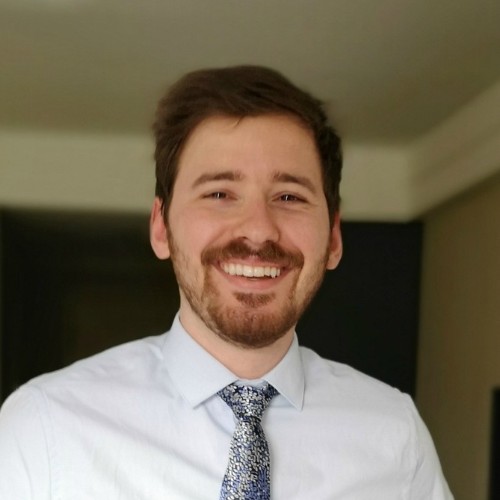
 Gabriel Laberge
· 4 previous affiliations
- Thales (Canada)Since 2025
- Researcher · Since 2025
- Polytechnique Montréal2018–2024
- Doctoral Student · 2020–2024
- Teaching Assistant · 2020
- Masters Student · 2018–2020
- Ecole Polytechnique de Montreal2018–2024
- PhD student · 2020–2024
- MS student · 2018–2020
- The Stellar Group2018
- Machine Learning Research Intern · 2018
Research Overview
Gabriel Laberge focuses on explainable artificial intelligence, trustworthy machine learning, and the formal characterization of model interpretability. His work traces an arc from establishing the theoretical foundations of feature attribution methods to addressing the vulnerabilities and disagreements inherent in post-hoc explanations. Most recently, his research investigates regional explanation frameworks and adaptive feature grouping to resolve conflicts between competing interpretability techniques.
Research Trajectory
Laberge’s early work established foundational insights into feature attribution methods and their practical applications. In 2022, he provided a formal proof detailing the mechanics of Understanding Interventional TreeSHAP : How and Why it Works, alleviating the exponential computational burden of explaining decision tree ensembles and increasing the transparency of the widely used SHAP library. In parallel, he collaborated on evaluating the practical utility of these methods in software engineering, characterizing how post-hoc explanations often conflict in Why Don't XAI Techniques Agree? Characterizing the Disagreements Between Post-hoc Explanations of Defect Predictions. This work highlighted the uncertainty practitioners face when relying on feature rankings to make decisions about software reliability.
Building on these insights, his research expanded in 2023 to examine the vulnerabilities and ambiguities of feature attributions. He identified critical security flaws in SHAP explanations, demonstrating how they can be manipulated without altering the underlying model in Fooling SHAP with Stealthily Biased Sampling. By altering the data points used to approximate expectations with respect to the background distribution, he showed how adversaries could hide model biases during fairness audits. This work contributed to the broader research area of Stealthy Manipulation of Statistical Two-Sample Tests and the direction of Feature Attribution for Dependent Variables. Addressing the ambiguity caused by model multiplicity, he introduced methods to extract consistent logical statements about feature attributions across all well-performing models in a Rashomon set in Partial Order in Chaos: Consensus on Feature Attributions in the Rashomon Set. This paper advanced several areas, including Robust Feature Attribution for Trustworthy Machine Learning, Grouped Feature Importance for High-Dimensional Data, and the direction of Actionable Recourse through Counterfactual Explanations.
In 2024, Laberge continued to explore the intersection of interpretability, software engineering, and model architecture. He collaborated on Mining Action Rules for Defect Reduction Planning, which generated transparent, actionable defect reduction plans from historical data, contrasting with traditional black-box AI recommendations. He also contributed to the theoretical foundations of systems that combine interpretable models with complex black boxes via a gating mechanism in Learning Hybrid Interpretable Models: Theory, Taxonomy, and Methods, touching upon the area of Generalizing Learning Bounds to Uncountable Hypothesis Spaces. Further collaborative work focused on fairness, systematically identifying unknown bias-inducing features by observing prediction changes during feature swapping in Detection and evaluation of bias-inducing features in machine learning. Returning to the core issue of conflicting explanations, he proposed a functional decomposition approach to partition input spaces into approximately additive regions in Tackling the XAI Disagreement Problem with Regional Explanations, demonstrating that many XAI techniques disagree primarily because they handle feature interactions differently.
His recent trajectory emphasizes resolving the XAI disagreement problem and characterizing model sets mathematically. In 2025, he participated in developing an enumeration-free mathematical programming method to evaluate fairness and sparsity within Rashomon sets in Fairness and Sparsity within Rashomon sets: Enumeration-Free Exploration and Characterization. To systematically address conflicting explanations from methods like SHAP, LIME, and Integrated Gradients, he developed the AGREED algorithm, which adaptively groups features to eliminate complex interactions, detailed in Tackling the XAI Disagreement Problem with Adaptive Feature Grouping. He further expanded on this by co-developing GRANITE: A Generalized Regional Framework for Identifying Agreement in Feature-Based Explanations, which partitions feature spaces to minimize interaction and distribution influences, unifying regional approaches to yield consistent interpretations.
Current Directions
The most recent papers in the evidence address the persistent challenge of conflicting explanations in post-hoc interpretability, often referred to as the XAI Disagreement Problem. Current work investigates generalized regional frameworks that partition feature spaces to minimize the influence of complex interactions and data distributions. By adaptively grouping features, these approaches aim to align disparate explainability methods into a single, consistent explanation that satisfies multiple faithfulness metrics simultaneously. Additionally, ongoing research explores mathematical programming techniques to precisely characterize fairness and sparsity constraints within sets of empirically successful models, ensuring that interpretability and ethical considerations can be formally verified without exhaustive enumeration.
Profile updated
Loading new papers…
Other researchers whose papers cluster into the same research directions — a proxy for overlapping technical interests and shared intellectual neighborhoods.
See something wrong? Report a mistake