

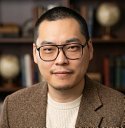
 Ga Wu
· 4 previous affiliations
- Dalhousie UniversitySince 2023
- Assistant Professor · Since 2023
- Twitter (United States)2021–2022
- Researcher · 2021–2022
- Borealis AI2020–2021
- Researcher · 2020–2021
- University of Toronto2016–2020
- PhD student · 2016–2020
Research Overview
Ga Wu focuses on scalable planning in hybrid domains, personalized recommendation systems, and the robustness of machine learning models. His early work developed optimization techniques for continuous and discrete action spaces using deep learned transition models. More recently, his research investigates model editing, data-centric explanations, and quality assessment for large language models and retrieval-augmented generation.
Research Trajectory
Ga Wu's early research focused on foundational probabilistic machine learning. He introduced an exact evaluation method for Bayesian Model Averaging Naive Bayes (BMA-NB): Averaging over an Exponential Number of Feature Models in Linear Time, demonstrating that Bayesian model averaging could be computed efficiently over an exponential number of feature models to reduce prediction variance compared to greedy feature selection.
Following this, his focus shifted toward scalable planning in complex, high-dimensional environments. In Scalable Planning with Tensorflow for Hybrid Nonlinear Domains, he demonstrated that symbolic gradient optimization tools could be effectively applied to hybrid nonlinear domains, advancing the research direction of Extending Continuous Decision Frameworks to Discrete Action Spaces and the broader area of Search and Planning in Continuous Action Spaces. He expanded on this hybrid approach by integrating deep learned transition models with mixed-integer linear programming in Nonlinear Hybrid Planning with Deep Net Learned Transition Models and Mixed-Integer Linear Programming, contributing to the area of Compiling ReLU Neural Networks into Mixed Integer Programs. This arc culminated in Scalable Planning with Deep Neural Network Learned Transition Models, which addressed the challenge of planning directly with deep network learned transition models without relying on traditional black-box search methods like Monte Carlo Tree Search.
Parallel to his work in planning, he explored representation learning for recommendation systems. In Aesthetic Features for Personalized Photo Recommendation, he utilized deep style embeddings—specifically Gram matrices extracted from intermediate layers of a VGG-19 network—to improve collaborative filtering for photography enthusiasts, contributing to the research direction of Representing Visual Style through Neural Feature Correlations. He subsequently addressed the strong popularity bias inherent in implicit feedback matrices by deriving a closed-form, depopularized embedding using Noise Contrastive Estimation in Noise Contrastive Estimation for One-Class Collaborative Filtering.
By 2022, his research broadened to encompass model robustness, generative inference, and machine unlearning. With collaborators, he developed a "Smoothed Tree Attack" in Scalable Whitebox Attacks on Tree-based Models, which approximates non-differentiable tree ensembles with differentiable functions to enable high-speed, scalable gradient-based adversarial attacks. For generative models, he proposed training small conditional prior networks to enable efficient arbitrary conditional inference in variational autoencoders in Arbitrary conditional inference in variational autoencoders via fast prior network training, bypassing the long mixing times of MCMC sampling. Addressing the emerging challenge of data removal, he introduced PUMA: Performance Unchanged Model Augmentation for Training Data Removal, a method designed to erase the unique characteristics of marked training data without degrading the model's overall generalization ability.
Returning to large-scale user modeling and social platforms in 2023, he developed an asynchronous and asymmetric distributed collaborative filtering system capable of tracking hundreds of millions of users' preferences in real time in Large-scale User Preference Tracking via Asynchronous and Asymmetric Updating at Twitter. He also oversaw a user-centric analysis of social media content to evaluate its efficacy and potential for manipulation in stock market prediction in A User-Centric Analysis of Social Media for Stock Market Prediction.
Most recently, his work has centered on the interpretability, editing, and evaluation of large-scale models. He guided research into data-centric prediction explanations using Kernelized Stein Discrepancy in Data-centric Prediction Explanation via Kernelized Stein Discrepancy, creating a highly scalable tool that bypasses the computational overhead of traditional influence functions. In the domain of self-supervised representation learning, his research group investigated how information-theoretic objectives dictate optimization strategies and model design choices from first principles in Self-Supervised Representation Learning as Mutual Information Maximization. He also participated in developing methods for Resolving Lexical Bias in Model Editing. Extending model editing techniques to recommendation systems, his team introduced CRAMER: Control via Request-Aware Masking for Editing Recommenders, a lightweight framework that uses sparse masking to adapt sequential recommenders to natural-language user requests instantly without retraining. Additionally, he guided work on assessing response quality for retrieval-augmented generation using conditional conformal factuality in Response Quality Assessment for Retrieval-Augmented Generation via Conditional Conformal Factuality.
Current Directions
The most recent papers in the evidence indicate a strong focus on the interpretability, dynamic adaptation, and rigorous evaluation of large-scale machine learning models. Current work investigates efficient methods for model editing, allowing systems—such as sequential recommenders and language models—to adapt to new instructions or correct internal biases without the need for full retraining. Additionally, ongoing research addresses the fundamental principles of self-supervised representation learning and develops scalable, data-centric explanation techniques to identify the influence of specific training points on model predictions. Finally, ensuring the factuality and quality of retrieval-augmented generation remains a key priority in his latest evaluations.
Profile updated
Loading new papers…
Other researchers whose papers cluster into the same research directions — a proxy for overlapping technical interests and shared intellectual neighborhoods.
See something wrong? Report a mistake