

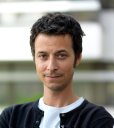
 Frederic Pascal
· 9 previous affiliations
- CentraleSupélecSince 2008
- Coordinator of AI activities · Since 2020
- Chair holder of the Givaudan Data Science chair · Since 2018
- Full Professor · Since 2014
- Assistant Professor · 2008–2013
- Université Paris-SaclaySince 2025
- Vice President of Artificial Intelligence · Since 2025
- Unified Resource SphereSince 2025
- Scientific Advisor for Unified Resource Sphere (Urs) · Since 2025
- Institut DATAIA2021–2023
- Director · 2023
- Scientific co-head of DATAIA institute · 2021–2023
- National University of Singapore2013–2014
- Visiting Associate Professor · 2013–2014
- Habilitation à Diriger des Recherches, Signal Processing · 2012
- École Normale Supérieure - PSL2006–2008
- Postdoc · 2006–2008
- Université Paris Nanterre2003–2006
- Doctorat, Traitement du Signal · 2003–2006
- PhD student · 2003–2006
Research Overview
Frederic Pascal focuses on statistical signal processing and advanced machine learning, with a primary emphasis on robust estimation, Riemannian geometry, and high-dimensional data analysis. As a Full Professor at CentraleSupélec and the Coordinator of AI at University Paris-Saclay, his work addresses the theoretical foundations and practical applications of signal detection and estimation in complex environments. His research trajectory has evolved from early investigations into physical and philosophical systems toward a rigorous mathematical framework for processing non-Gaussian, heavy-tailed data in domains such as radar, sonar, and brain-computer interfaces.
Research Trajectory
The temporal evolution of Pascal’s work reflects a broadening of scope from specific physical and conceptual inquiries toward generalized statistical methodologies. In the early 1990s, his research involved the study of sedimentary dynamics and geochemistry, specifically examining carbonate compositions in the Loyalty Basin Minéralogie, géochimie et dynamique sédimentaire des carbonates actuels et récents du bassin des Loyauté (Nouvelle-Calédonie, Pacifique sud-ouest). During this period, he also engaged with the Reduced Order Modeling of Biophysical Neuron Dynamics, exploring the computational complexity of biological neurons beyond simplified mathematical abstractions.
In the mid-2000s and early 2010s, Pascal’s focus shifted toward the intersection of signal recording and analytical philosophy. He explored how sound recordings serve as witnesses to interaction Références et inférences depuis le document enregistré ; de quoi l'enregistrement sonore peut-il nous rendre témoin ? and examined the origins of analytical philosophy as a technical tool for critical thought La philosophie analytique ou Les promesses d'une pensée technologique.
By 2014, Pascal’s research program solidified around Statistical Signal Processing. He began addressing the limitations of standard Gaussian assumptions in high-dimensional settings, particularly when dealing with "impulsive" noise or radar clutter. This period was marked by a focus on Learning Directly on Multidimensional Tensor Structures and Rank Selection for Low-Rank Tensor Decompositions. He developed robust scatter estimators and applied Random Matrix Theory (RMT) to predict the performance of adaptive filters in radar and sonar environments.
In the 2020s, his work increasingly integrated differential geometry and manifold learning. This shift was driven by the need to process data residing on non-Euclidean spaces, such as the space of Symmetric Positive Definite (SPD) matrices. He has been instrumental in developing Geodesic Metrics for Manifold Aware Machine Learning and exploring Low Rank Optimization on Riemannian Quotient Manifolds. His recent work also addresses Adaptive Heavy-Tailed Modeling with Learnable Degrees of Freedom, providing more flexible frameworks for data that does not conform to thin-tailed distributions.
Current Directions
Pascal’s current research is characterized by the convergence of robust statistics, Riemannian geometry, and physics-informed machine learning. A significant portion of his recent activity involves the development of Riemannian frameworks for robust estimation, which allow for more accurate modeling of data geometry in high-dimensional spaces. This is particularly relevant for applications in Brain-Computer Interfaces (BCI) and medical imaging, where signal-to-noise ratios are often low and data is naturally represented as covariance matrices.
He is also actively exploring Bayesian optimization for computer simulations and the use of physics-informed models to improve the reliability of machine learning in engineering contexts. His work on manifold learning continues with investigations into the Fermat distance, focusing on how to navigate the trade-offs between capturing underlying data geometry and maintaining robustness against noise. Furthermore, he is extending the theory of Elliptical Wishart distributions to provide a comprehensive framework for statistical learning on SPD matrices, bridging the gap between theoretical information geometry and practical signal classification.
Representative Work
Pascal’s contributions to the field are exemplified by his work on robust estimation and high-dimensional performance analysis. In Second order statistics of robust estimators of scatter. Application to GLRT detection for elliptical signals, he contributed to a mathematical breakthrough regarding the fluctuations of robust scatter estimators. By establishing a new Central Limit Theorem (CLT) for these estimators, the work demonstrated how to tune signal detectors to maintain sensitivity in the presence of impulsive noise, even when the number of sensors is comparable to the number of data samples.
His research into adaptive filtering is further detailed in Convergence of Structured Quadratic Forms With Application to Theoretical Performances of Adaptive Filters in Low Rank Gaussian Context. In this study, Pascal utilized Random Matrix Theory to move beyond heuristic models, providing precise performance predictions for modern signal processing systems operating in complex radar and sonar environments. This work is critical for understanding how adaptive filters behave in low-rank contexts where traditional assumptions fail.
The problem of data corruption is addressed in Robust clustering and outlier rejection using the Mahalanobis distance distribution. This research focuses on scenarios where data is corrupted by outliers and sample sizes are relatively small. By studying the distribution of the Mahalanobis distance under robust estimators for mean and scatter, Pascal developed clustering and outlier rejection methods within the context of robust mixture modeling, illustrating the practical utility of these methods through synthetic simulations.
In the domain of neuroimaging and BCI, Pascal co-authored Distribution matricielle t-Wishart : géométrie d'information, estimation et application pour la classification de signaux EEG. This work introduced a robust framework for classifying covariance matrices by leveraging the t-Wishart distribution and Riemannian geometry. The resulting classification rule, t-WDA, demonstrated superior performance over standard Gaussian-based methods when applied to heavy-tailed EEG signals, providing a more reliable tool for signal classification in noisy biological environments.
Pascal has also participated in foundational research regarding manifold learning parameters, as seen in Choosing the parameter of the Fermat distance: navigating geometry and noise. This work investigates the Fermat distance, a tool used to exploit the geometric properties of datasets when Euclidean distances are insufficient. The research identifies a fundamental trade-off in selecting the distance parameter $\alpha$: it must be large enough to capture geometric intricacies but small enough to prevent noise from inflating the variance of distance estimates.
Finally, his recent theoretical contributions include the development of Elliptical Wishart distributions: information geometry, maximum likelihood estimator, performance analysis and statistical learning. This paper presents a comprehensive framework for a robust family of distributions for SPD matrices. By deriving their information geometry and providing efficient optimization algorithms, Pascal has helped bridge the gap between abstract statistical theory and the practical requirements of modern machine learning and signal processing.
Profile updated
Loading new papers…
Other researchers whose papers cluster into the same research directions — a proxy for overlapping technical interests and shared intellectual neighborhoods.
See something wrong? Report a mistake