

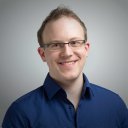
 Frank Schneider
· 6 previous affiliations
- Aleph AlphaSince 2026
- AI Researcher · Since 2026
- University of Tübingen2017–2025
- Postdoctoral Researcher · 2022–2025
- PhD, Computer Science · 2017–2022
- PhD student · 2017–2018
- University of Stuttgart2011–2017
- Research Assistant · 2017
- Master of Science (M.Sc.), Simulation Technology · 2015–2016
- Undergrad student · 2011–2015
- Internship - Master Project · 2016
- Eindhoven University of Technology2015–2016
- MS student · 2015–2016
Research Overview
Frank Schneider focuses on the design and evaluation of efficient training algorithms for deep neural networks, hyperparameter automation, and rigorous optimization benchmarking. His trajectory spans the development of foundational evaluation suites for stochastic optimizers to advanced debugging tools for neural network training. Currently, he investigates hyperparameter-free training methods and scalable probabilistic solvers to make machine learning more accessible and computationally efficient.
Research Trajectory
The early phase of Schneider’s research focused on establishing rigorous, reproducible methodologies for evaluating deep learning optimizers, addressing a critical gap in how training algorithms were assessed. In 2019, he and his collaborators established DeepOBS: A Deep Learning Optimizer Benchmark Suite, a comprehensive Python package designed to standardize the quantitative assessment of stochastic optimization strategies. This work provided the community with reliable routines to evaluate optimizer performance, contributing to the research direction of The Structural Sensitivity of Deep Learning Optimizers and the area of Hyperparameter Robust Optimization via Local Geometry and Feedback.
Subsequent investigations expanded into large-scale empirical evaluations. In the 2021 study Descending through a Crowded Valley - Benchmarking Deep Learning Optimizers, his research team conducted a massive benchmark of over 50,000 training runs. The findings demonstrated that despite the proliferation of novel optimization methods, established algorithms like ADAM remained highly competitive, suggesting that practitioners often benefit more from testing multiple optimizers with default settings than from exhaustively tuning a single method. This insight intersected with the broader area of Per Instance Algorithm Selection. Recognizing that practitioners often lack visibility into the training process, he developed Cockpit: A Practical Debugging Tool for the Training of Deep Neural Networks that same year. Cockpit provided a suite of instruments to monitor internal network states and identify failure modes, such as ill-chosen hyperparameters, moving beyond simple train/test loss monitoring.
Building on this foundation of benchmarking and diagnostics, his focus expanded to include the mathematical mechanics of late-stage training. In 2022, his research examined Late-Phase Second-Order Training, investigating how stochastic first-order methods often stall in diffusion toward the end of training. By evaluating a second-order Hessian-free optimizer, the work demonstrated that executing a few precise, computationally intensive second-order steps could outperform continued first-order optimization with learning rate decays. He synthesized these themes of evaluation, diagnostics, and algorithmic design in his 2022 overview, Understanding Deep Learning Optimization via Benchmarking and Debugging, which formalized the central role of optimization procedures in minimizing loss functions for machine learning models.
In 2023, Schneider introduced a major initiative to standardize optimizer evaluation with Benchmarking Neural Network Training Algorithms. This paper laid the groundwork for AlgoPerf, a competitive benchmark designed to evaluate training algorithms based strictly on the wall-clock time required to reach a target performance, standardizing hardware, workloads, and hyperparameter tuning to ensure fair comparisons.
Alongside his work on deep learning optimizers, his recent research has also addressed probabilistic modeling and sequential learning. In 2024, collaborative work proposed Efficient Weight-Space Laplace-Gaussian Filtering and Smoothing for Sequential Deep Learning. This Bayesian framework treated neural network weights as an evolving state, utilizing a diagonal plus low-rank approximation to enable Bayesian smoothing—allowing models to improve performance on past tasks using future knowledge without revisiting the original data. Continuing in the probabilistic domain, he contributed to Accelerating Non-Conjugate Gaussian Processes By Trading Off Computation For Uncertainty in 2025. This work introduced IterNCGP, an iterative probabilistic solver that accelerates non-conjugate Gaussian Processes by recycling previous computations, advancing the research direction of Scaling Gaussian Processes Beyond Cubic Complexity.
In 2025, his research also returned to the structural properties of neural network loss landscapes. He explored the relationship between network sparsity and curvature in Connecting Parameter Magnitudes and Hessian Eigenspaces at Scale using Sketched Methods. By developing methodologies to measure the similarity between parameter masks and Hessian eigenspaces via Grassmannian metrics, the study showed how curvature concentrates early in training, addressing challenges in the area of Overcoming the Hessian Dimensionality Bottleneck. Concurrently, he analyzed the culmination of his benchmarking efforts in Accelerating neural network training: An analysis of the AlgoPerf competition. The competition results revealed the practical superiority of non-diagonal preconditioning methods like Distributed Shampoo over standard optimizers, and highlighted the emerging viability of completely hyperparameter-free algorithms, directly informing the research direction of The Wall Clock Tradeoffs of Preconditioning.
Current Directions
Recent work investigates the practical limits and theoretical underpinnings of neural network training algorithms, with a strong emphasis on automation and computational efficiency. A major focus is the ongoing development and analysis of the AlgoPerf competition, which evaluates optimizers strictly on wall-clock time to reach target performance across fixed hardware. This effort highlights the growing viability of hyperparameter-free algorithms (such as Schedule-Free AdamW) and the effectiveness of non-diagonal preconditioning methods in practical, large-scale settings.
In parallel, the most recent papers in the evidence explore the geometry of deep learning loss landscapes, specifically mapping the relationship between parameter pruning masks and Hessian eigenspaces to better understand how curvature concentrates during training. Additionally, this research extends into scalable probabilistic modeling, developing iterative solvers that accelerate non-conjugate Gaussian Processes by explicitly trading off computation time for quantifiable predictive uncertainty, and applying Bayesian smoothing techniques to sequential deep learning.
Profile updated
Loading new papers…
Other researchers whose papers cluster into the same research directions — a proxy for overlapping technical interests and shared intellectual neighborhoods.
See something wrong? Report a mistake