

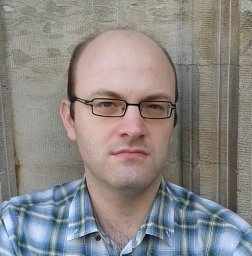
 François Schnitzler
· 7 previous affiliations
- InterDigital (Canada)Since 2018
- Senior Scientist · Since 2018
- InterDigital (United States)Since 2019
- Senior Researcher · Since 2019
- Technicolor2015–2019
- Senior Researcher · 2016–2019
- Senior Scientist · 2015–2016
- Université de Bretagne Sud2017–2019
- Temporary Lecturer · 2017–2019
- Senior researcher · 2014–2015
- Postdoc · 2013–2015
- Postdoctoral Fellow · 2013–2014
- University of Liège2003–2012
- PhD student · 2008–2012
- Engineer's Degree, Electricy (electronics) · 2003–2008
- Fund for Scientific Research2008–2012
- PHD Fellow - F.R.I.A. scholarship · 2008–2012
Research Overview
François Schnitzler focuses on machine learning methodologies for complex dynamical systems, with a particular emphasis on spatio-temporal modeling, reinforcement learning, and the optimization of neural architectures for resource-constrained environments. His work addresses the challenges of data sparsity and veracity in real-world systems, ranging from urban traffic management to multimodal video understanding. By developing algorithms for off-policy evaluation and efficient sequence processing, he contributes to the robustness and scalability of predictive models in high-dimensional domains.
Research Trajectory
The evolution of Schnitzler’s research reflects a consistent interest in the intersection of statistical learning and dynamic physical or digital environments. His early work, beginning around 2011, centered on batch-mode reinforcement learning (RL). During this period, he investigated the problem of sample selection, seeking to improve the efficiency of RL agents when learning from fixed datasets rather than active exploration. This foundational interest in sample efficiency transitioned into a broader focus on Markov Decision Processes (MDPs) with unknown structures, where he developed methods for off-policy evaluation that could prove the superiority of new policies without requiring risky real-world testing.
By 2014, Schnitzler’s focus shifted toward the application of these machine learning principles to urban infrastructure and spatio-temporal analytics. This period was characterized by significant contributions to Neural Reconstruction of Sparse Spatio-Temporal Fields. He addressed the inherent limitations of physical sensor networks—which are often expensive, fragile, and geographically biased—by developing systems that fuse heterogeneous data sources. His work in this domain involved integrating fixed intersection sensors with mobile sensors on public transport and resolving data veracity issues through crowdsourcing. A key theme during this time was Fusing Exogenous Context into Spatio-Temporal Neural Networks, where he explored how external variables such as weather or scheduled events influence system dynamics like traffic flow and travel times.
In the mid-2010s, Schnitzler also pursued methodological refinements in modeling time-variant systems. He addressed the problem of overparameterization in linear dynamical systems (LDS) where dynamics change over time. By investigating reparametrization and regularization techniques, he sought to detect redundancies in model parameters, thereby preventing overfitting when training on relatively small samples. This work bridged the gap between classical control theory and modern high-dimensional statistical learning.
His more recent research, appearing around 2021, demonstrates a shift toward deep learning efficiency and multimodal content analysis. He has explored the development of resource-adaptable recurrent neural networks (RNNs) that can respect strict computational budgets, a critical requirement for deploying advanced models on limited hardware. Additionally, he has contributed to the field of Video Question Answering (VideoQA), moving away from a reliance on external human-made metadata toward the use of automated dialog summarization to capture the narrative structure of long-form video content.
Current Directions
Schnitzler’s current research interests appear to converge on the dual goals of computational efficiency and high-level semantic understanding. In the realm of neural architectures, he is focused on mechanisms that allow models to dynamically trade off accuracy for computational cost. This involves creating "resource-aware" models that can skip unnecessary processing steps while maintaining performance, particularly for sequence analysis tasks like activity recognition.
In the domain of multimodal learning, his work focuses on extracting "hidden" information from unstructured data sources. By treating dialog as a primary modality for story understanding in video, he is developing methods to synthesize complex narratives without the need for manually curated plot synopses or scripts. This direction suggests a broader interest in making deep learning systems more autonomous and less dependent on expensive external supervision.
Representative Work
Optimal Sample Selection for Batch-mode Reinforcement Learning In this early work, Schnitzler addressed the challenge of selecting the most informative samples for batch-mode reinforcement learning. The research focuses on improving the learning curve of agents when they are restricted to a fixed set of transitions, a common constraint in industrial or medical applications where active exploration is costly or dangerous.
Heterogeneous Stream Processing and Crowdsourcing for Traffic Monitoring: Highlights As the lead author of this study, Schnitzler presented an intelligent urban traffic management system designed to handle the complexities of "Big Data" in a city context. The system integrates data from fixed sensors and mobile public transport units to detect congestion events. A significant contribution of this work is the use of crowdsourcing to resolve disagreements between sensors and the application of a traffic model to provide information in areas with low sensor coverage, directly addressing the problem of data sparsity in urban environments.
Off-policy evaluation for MDPs with unknown structure This research introduced the G-SCOPE algorithm, designed for off-policy evaluation in dynamic decision problems. Schnitzler and his collaborators focused on the problem of evaluating a new policy using data generated by a different, existing policy. The algorithm achieves computational and sample efficiency by greedily exploiting the factored structure in the environment's dynamics. The work provides a finite sample analysis and demonstrates that the approach scales effectively to high-dimensional problems where data is scarce.
Compressible Reparametrization of Time-Variant Linear Dynamical Systems In this paper, Schnitzler explored the modeling of stochastic dynamic processes where the underlying dynamics change over time. Because such models can involve millions of parameters, they are highly susceptible to overfitting. The study proposes a combined reparametrization and regularization approach specifically designed to exploit temporal structures and detect redundancies, allowing for more robust estimation of time-variant dynamics from limited training samples.
SkipW: Resource Adaptable RNN with Strict Upper Computational Limit Serving as the senior author, Schnitzler introduced "Skip-Window," a method that enables recurrent neural networks to adapt their computational load during sequence analysis. Unlike previous approaches that only encouraged reduced computation, Skip-Window is designed to respect a strict, user-defined computational budget. This makes the model particularly suitable for deployment on hardware with rigid resource constraints. The method was validated on human activity recognition and synthetic tasks, showing it could maintain or exceed the accuracy of standard models while significantly reducing the number of inputs processed.
On the hidden treasure of dialog in video question answering This work addresses the difficulty of understanding complex stories in movies and TV shows. While many VideoQA systems rely on external sources like scripts or plot synopses, Schnitzler and his co-authors proposed a method that treats the dialog within the video as a primary, albeit noisy, source of information. By applying dialog summarization techniques and fusing the resulting text descriptions with video features via transformers, the approach enables high-level story understanding without the need for human-made external metadata.
Profile updated
Loading new papers…
Other researchers whose papers cluster into the same research directions — a proxy for overlapping technical interests and shared intellectual neighborhoods.
See something wrong? Report a mistake