

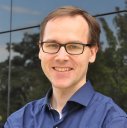
 Florian Marquardt
· 5 previous affiliations
- Full Professor · Since 2010
- Principal Researcher · Since 2016
- Junior research group leader · 2005–2010
- Yale University2003–2005
- Postdoctoral Research Fellow · 2003–2005
- University of Basel1999–2003
- Postdoc · 2002–2003
- Postdoctoral Researcher · 1999–2002
Research Overview
Florian Marquardt focuses on the intersection of machine learning and quantum physics, specifically developing methods for artificial scientific discovery and the characterization of complex physical systems. His trajectory moves from foundational work in estimating mutual information for continuous variables to applying deep neural networks and normalizing flows to experimental design. His most recent work addresses adaptive measurement strategies for quantum many-body systems and quantum technology platforms.
Research Trajectory
In 2020, Marquardt led research investigating the extraction of continuous features from high-dimensional systems. As the senior author on Renormalized Mutual Information for Extraction of Continuous Features, he and his collaborators derived a renormalized version of mutual information. This mathematical framework allows for the estimation of statistical dependence between continuous random variables, particularly in the challenging case where one variable is deterministically dependent on the other. By enabling the discovery of collective variables in physical systems and aiding the analysis of information flow in artificial neural networks, this work contributes to the broader research direction of Neural Mutual Information Estimation.
By 2023, Marquardt's focus expanded to the efficient characterization of quantum technologies. Working as a co-author, he contributed to Deep Bayesian experimental design for quantum many-body systems. This research addresses the fundamental challenge of selecting optimal measurements to characterize physical systems by maximizing expected information gain. By leveraging deep neural networks and normalizing flows, the authors approximated posterior distributions in complex, high-dimensional scenarios where traditional calculations fail. This approach facilitates adaptive measurement strategies for systems such as coupled cavities and qubit arrays, which are highly relevant for modern quantum simulations. This publication aligns with themes such as Amortizing Doubly Intractable Expectations in Bayesian Experimental Design and the broader area of Overcoming the Exponential Complexity of Quantum State Tomography.
Current Directions
The most recent papers in the evidence, published in 2023, indicate a strong focus on optimizing measurement and characterization protocols for quantum technologies. Recent work investigates how machine learning techniques can be integrated into experimental physics to maximize information extraction while minimizing the number of required measurements. This involves active engagement with the research direction of Sequential Experimental Design for Active Sensing and Exploration, where adaptive strategies replace fixed sampling patterns to dynamically guide scientific discovery. Furthermore, by utilizing deep learning to approximate complex probability distributions, Marquardt's recent contributions intersect with work in the area of Cost-Normalized Acquisition for Multi-Fidelity Optimization, aiming to make the characterization of high-dimensional quantum many-body systems computationally tractable and experimentally efficient.
Profile updated
| Title | Venue | Year |
|---|---|---|
| Deep Bayesian Experimental Design for Quantum Many-Body Systems | arXiv | 2023 |
| Renormalized Mutual Information for Artificial Scientific Discovery | Physical Review Letters | 2021 |
Loading new papers…
Other researchers whose papers cluster into the same research directions — a proxy for overlapping technical interests and shared intellectual neighborhoods.
See something wrong? Report a mistake