

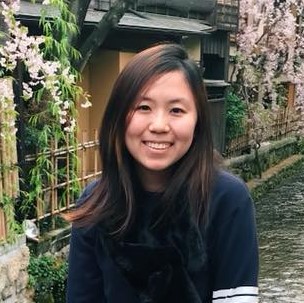
 Fiona Anting Tan
· 7 previous affiliations
- Meta (United States)Since 2024
- Research Scientist / Machine Learning Engineer · Since 2024
- Current
- PhD student · 2020–2024
- Amazon (United States)2023–2024
- Applied Scientist Intern · 2023–2024
- Decision Science Manager - Intern · 2023
- Quantitative Research Mentee · 2023
- Factorem2021–2022
- Data Science Consultant · 2021–2022
- Bachelor of Science (BSc), Econometrics and Mathematical Economics
Research Overview
Fiona Anting Tan focuses on causal text mining, information extraction, and the construction of knowledge graphs from unstructured documents. Her early work developed specialized neural architectures and annotated corpora to identify cause-and-effect relationships in financial and news texts. More recently, her research has expanded to include the application of large language models to tabular data processing and synthesis.
Research Trajectory
Beginning in 2021, Tan's research primarily addressed the extraction of cause-and-effect relationships from specialized domains such as finance. Her early first-author work, NUS-IDS at FinCausal 2021: Dependency Tree in Graph Neural Network for Better Cause-Effect Span Detection, demonstrated how incorporating dependency relation features into graph embeddings could improve the identification of causal spans in financial documents. By building on a baseline BERT token classifier with Viterbi decoding, this approach aligned with the broader research direction of Syntactic Graphs for Long Range Textual Dependencies, utilizing the underlying structural skeleton of language to enhance sequence modeling.
Recognizing the need for high-quality annotated data to train these models, Tan subsequently led the development of The Causal News Corpus: Annotating Causal Relations in Event Sentences from News in 2022. This effort provided a foundational resource for identifying causal events within unstructured news narratives, addressing a critical bottleneck in training robust extraction systems.
By 2023, Tan's focus expanded from sentence-level extraction to the systemic organization of causal information, contributing significantly to the theme of Automated Causal Discovery from Unstructured Text. She proposed end-to-end methodologies in Constructing and Interpreting Causal Knowledge Graphs from News, which introduced a two-step process involving the extraction of causal relations followed by argument clustering. This work intersected with the area of Semantic Consolidation for Structured Knowledge Extraction, addressing the challenge of merging synonymous textual descriptions into functional graph nodes to build interpretable causal knowledge graphs.
During the same year, Tan addressed the fragmentation of evaluation metrics and datasets in the field by introducing UniCausal: Unified Benchmark and Repository for Causal Text Mining. By consolidating and aligning annotations from six distinct corpora, this benchmark standardized evaluation across three core tasks: causal sequence classification, cause-effect span detection, and causal pair classification. She also explored practical downstream applications of these structured representations, as seen in Economics Assistant for Robustness Checks (EconARC): Identifying Confounders from Causal Knowledge Graphs.
In 2024, Tan's published work indicates a broadening of scope to include structured data modalities. As a co-author on Large Language Models (LLMs) on Tabular Data: Prediction, Generation, and Understanding - A Survey, she participated in synthesizing recent methodologies for applying large language models to tabular datasets. This survey maps out the unique challenges of table understanding, synthesis, and question answering, connecting to emerging themes such as Permutation Invariant Transformers for Tabular Data.
Current Directions
The most recent papers in the evidence suggest a transition toward understanding how large language models interact with structured, non-textual formats. While her foundational work heavily emphasized causal text mining and knowledge graph construction from natural language, her 2024 collaborative work investigates the intersection of generative AI and tabular data. This current direction explores how language models can be adapted for prediction, synthesis, and question-answering tasks over tables, addressing the architectural and evaluative challenges of applying sequence-based models to two-dimensional data structures.
Profile updated
Loading new papers…
Other researchers whose papers cluster into the same research directions — a proxy for overlapping technical interests and shared intellectual neighborhoods.
See something wrong? Report a mistake