

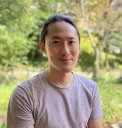
 FengTing Liao
· 6 previous affiliations
- MediaTek (Taiwan)Since 2020
- Senior Research Scientist · Since 2020
- Umbo Computer Vision (United Kingdom)2019–2020
- AI Research Engineer · 2019–2020
- University of Oxford2013–2019
- Postdoc · 2018–2019
- PhD student · 2018
- DPhil Researcher · 2013–2018
- Tutor · 2016–2017
- Burberry2018
- Data Scientist · 2018
- Academia Sinica2013
- Research Assistant · 2013
- Bachelor of Science (B.S.), Electrophysics · 2008–2012
Research Overview
FengTing Liao focuses on the development and evaluation of large language models (LLMs), speech processing systems, and efficient neural architectures. Currently a Senior Research Scientist at MediaTek Research, Liao’s work spans the lifecycle of generative AI, from fundamental architectural design and pretraining to specialized fine-tuning for domain-specific tasks and the creation of robust evaluation benchmarks. This research trajectory is characterized by a transition from meta-learning and representation learning toward the optimization of LLMs for multilingual contexts and the integration of retrieval-augmented generation (RAG) in complex dialogue systems.
Research Trajectory
Liao’s early contributions in the corpus centered on meta-learning and the challenge of knowledge transfer across structured tasks. In Meta-Learning with MAML on Trees, Liao and colleagues addressed the limitations of Model-Agnostic Meta-Learning (MAML) when applied to tasks with hierarchical relationships. The research introduced TreeMAML, an algorithm that adapts models to new tasks by following a tree structure where gradients are pooled across task clusters. This approach sought to mitigate the "negative transfer" that occurs when information is shared between unrelated tasks, demonstrating an early interest in how structural priors can improve the efficiency of few-shot learning.
By 2023, Liao’s focus shifted toward the intersection of speech processing and large-scale generative models. As the lead author of Zero-Shot Domain-Sensitive Speech Recognition with Prompt-Conditioning Fine-Tuning, Liao investigated how to enhance the domain adaptability of end-to-end speech recognition models like Whisper. The research proposed a method for conditioning speech generation on textual prompts, allowing the model to leverage domain-specific context (such as medical or financial terminology) without requiring extensive audio-transcript pairs for every new domain. This work demonstrated that prompt-conditioning could significantly reduce Word Error Rates (WER) in zero-shot settings, highlighting a move toward more flexible, instruction-aware recognition systems.
During this same period, Liao participated in broader generative modeling research, including work on diffusion models. In the collaborative project Image generation with shortest path diffusion, the research team explored the use of the Fisher metric to identify optimal paths for image corruption and reconstruction. By moving beyond standard Gaussian noise to a "shortest path" approach involving image sharpening, the work aimed to achieve high-quality image synthesis with fewer sampling steps and reduced hyperparameter dependency.
Large Language Model Development and Evaluation
A significant portion of Liao’s recent work involves the development of LLMs tailored for Traditional Chinese and the creation of benchmarks to measure their performance. Liao was a key contributor to the Breeze-7B Technical Report, which detailed the additional pretraining and fine-tuning required to adapt the Mistral-7B architecture for Traditional Chinese language comprehension and chatbot applications. This effort was part of a larger initiative at MediaTek Research to provide open-source and commercialized models (such as BreeXe-8x7B) that perform competitively against larger models in specific linguistic and cultural contexts.
Parallel to model development, Liao has led efforts to address the "evaluation gap" in LLM research, particularly regarding Retrieval-Augmented Generation (RAG). In RAD-Bench: Evaluating Large Language Models' Capabilities in Retrieval Augmented Dialogues, Liao introduced a comprehensive benchmark designed to test how models handle external information across multi-turn conversations. Unlike previous benchmarks that focused on single-turn retrieval or general chat capabilities, RAD-Bench isolates "Retrieval Synthesis" and "Retrieval Reasoning." The findings indicated that even high-performing models struggle to maintain accuracy as constraints accumulate over multiple turns, providing a diagnostic tool for improving the reliability of RAG systems in real-world applications.
Innovations in Decoding and Architecture
Liao’s recent research has also explored the boundaries of model inference and fundamental neural network design. In Let's Fuse Step by Step: A Generative Fusion Decoding Algorithm with LLMs for Robust and Instruction-Aware ASR and OCR, Liao co-developed the Generative Fusion Decoding (GFD) algorithm. This work addresses the challenge of integrating LLMs with existing Automatic Speech Recognition (ASR) and Optical Character Recognition (OCR) systems. Because these systems often use different tokenizers, traditional fusion methods are difficult to implement. GFD operates at the byte level, allowing for the "fusion" of disparate models without retraining. This enables ASR systems to become "instruction-aware," following complex formatting rules or correcting errors based on the linguistic priors of the LLM.
In the realm of fundamental architecture, Liao has challenged long-standing conventions in deep learning. In Rethinking the shape convention of an MLP, the research team questioned the standard "narrow-wide-narrow" design of Multi-Layer Perceptrons (MLPs). They proposed an "Hourglass" architecture where skip connections operate in high-dimensional spaces while the primary computation occurs within a narrow bottleneck. This inversion was shown to provide better performance-to-parameter trade-offs in generative tasks, suggesting that the traditional placement of residual connections may not be optimal for all scales of representation learning.
Current Directions
Liao’s most recent work continues to explore alternatives to the Transformer architecture and new paradigms for multi-agent reasoning. This includes participation in the development of the Log-Normal State-Space Model (SSM), which seeks to combine the linear-time complexity of SSMs with the expressive representation power of self-attention mechanisms. Additionally, Liao has contributed to the "Group Think" inference paradigm, which enables a single LLM to function as multiple concurrent reasoning agents. By collaborating at the token level rather than through sequential turns, this method aims to reduce latency and improve reasoning quality in complex problem-solving tasks.
Across these diverse areas, Liao’s work is unified by a focus on making large-scale generative models more efficient, more capable of handling specialized domains, and more rigorously evaluable in complex, multi-turn interactions.
Profile updated
Loading new papers…
Other researchers whose papers cluster into the same research directions — a proxy for overlapping technical interests and shared intellectual neighborhoods.
See something wrong? Report a mistake