

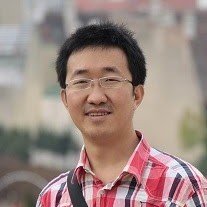
 Feng Yang
· 6 previous affiliations
- Senior Area Editor · Since 2024
- Associate Editor · 2020–2024
- IEEE Transactions on Image ProcessingSince 2020
- Senior Area Editor · Since 2025
- Associate Editor · 2020–2025
- Principal Scientist (Director) · 2024
- Google (United States)2015–2024
- Principal Scientist · 2024
- Senior Staff Software Engineer · 2015–2024
- PhD, Computer and communication sciences · 2007–2012
- Tsinghua University2004–2007
- Master, Automation · 2004–2007
Research Overview
Feng Yang focuses on computer vision, multimedia processing, and multimodal generation. His early work addressed computational photography and image quality assessment, developing novel techniques for high dynamic range imaging and efficient video compression. Recently, his research has shifted toward vision-language models, generative AI alignment, and robust watermarking for intellectual property protection.
Research Trajectory
Feng Yang’s early research explored computational photography and sensor design, particularly focusing on the area of Poisson Likelihood Modeling for Photon Limited Reconstruction. He introduced methods for recovering light intensity fields from binary sensor observations in Image reconstruction in the gigavision camera. Building on this concept, he developed a digital film sensor model that utilizes oversampled binary measurements to achieve high dynamic range imaging, detailed in Bits From Photons: Oversampled Image Acquisition Using Binary Poisson Statistics.
Transitioning into multimedia processing, his work addressed the optimization of standard image formats and codecs. He contributed to the development of neural networks for reducing color banding in legacy formats, as seen in GIFnets: Differentiable GIF Encoding Framework. This research aligns with broader efforts in Adaptive Image Preprocessing for Standard Codecs and Differentiable Proxies for Standard Codec Optimization, further explored in Better Compression With Deep Pre-Editing, which proposed server-side image manipulations to improve visual quality under strict bit-rate constraints.
A significant portion of his trajectory involves image and video quality assessment, particularly the challenge of Evaluating Video Quality Without a Pristine Reference. To handle images of varying sizes and aspect ratios without degradation from resizing, he guided the creation of MUSIQ: Multi-scale Image Quality Transformer. This multi-scale approach was later extended to user-generated video content in MRET: Multi-resolution Transformer for Video Quality Assessment. He also investigated the subjective nature of visual appeal, utilizing vision-language pretraining to capture nuanced human preferences from text in VILA: Learning Image Aesthetics from User Comments with Vision-Language Pretraining. In a related practical application for document processing, he oversaw work on Identifying Document Images with Glare Using Global and Localized Feature Fusion.
As generative models became more prevalent, Yang’s focus expanded to include intellectual property protection and media provenance. He contributed to the area of Spatial Redundancy for Robust Digital Watermarking and the broader direction of The Invisibility-Robustness Trade-off in Generative Watermarking. His research in this domain includes Deep 3D-to-2D Watermarking: Embedding Messages in 3D Meshes and Extracting Them from 2D Renderings, which bridges volumetric assets and 2D outputs. He also developed highly efficient, distortion-resistant systems like LECA: A Learned Approach for Efficient Cover-agnostic Watermarking. More recently, he participated in extending these protections to temporal media, ensuring watermarks survive the transition from static images to generated video in WaTeRFlow: Watermark Temporal Robustness via Flow Consistency.
In parallel, Yang has actively advanced the capabilities and alignment of generative models. He addressed the inefficiencies of personalizing text-to-image diffusion models by fine-tuning singular values in SVDiff: Compact Parameter Space for Diffusion Fine-Tuning. To better align these models with multiple quality metrics, he led the development of Parrot: Pareto-optimal Multi-Reward Reinforcement Learning Framework for Text-to-Image Generation. His recent collaborative efforts continue to refine generative outputs, including Improvement-Guided Iterative DPO for Diffusion Models, which optimizes diffusion models using implicit preference directions without requiring extra annotations. Additionally, he explored the application of large vision-language models to complex editing tasks via in-context learning in Cropper: Vision-Language Model for Image Cropping through In-Context Learning.
Current Directions
The most recent papers in the evidence indicate a strong focus on the alignment and control of large-scale generative models. Recent work investigates iterative preference optimization techniques to better align diffusion models with human expectations without relying on extensive offline datasets. Additionally, there is an ongoing emphasis on utilizing large vision-language models for precise, zero-shot image editing tasks through in-context learning. Alongside generation, a critical current direction involves media provenance, specifically developing robust watermarking frameworks that can persist across modalities—such as from static images to AI-generated videos—ensuring intellectual property protection in an era of rapid generative advancements.
Profile updated
| Paper | Venue | Year |
|---|---|---|
| MaxViT: Multi-axis Vision TransformerGitHubgoogle-research/ | ECCV | 2022 |
Loading new papers…
Other researchers whose papers cluster into the same research directions — a proxy for overlapping technical interests and shared intellectual neighborhoods.
See something wrong? Report a mistake