

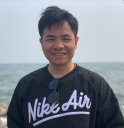
 Feng Liang
· 5 previous affiliations
- Utopai StudiosSince 2026
- Research Scientist · Since 2026
- Current
- Research Assistant · 2021–2025
- Meta (United States)2023–2026
- Researcher · 2025–2026
- AI Research Scientist Intern · 2023
- Tsinghua University2016–2019
- Master's degree, Electrical and Electronics Engineering · 2016–2019
- Undergrad student · 2012–2016
2 other authors named Feng Liang: Feng Liang (University of Illinois Urbana-Champaign · 23 papers), Feng Liang (Shenzhen MSU-BIT University · University of Hong Kong · 13 papers)
Research Overview
Feng Liang focuses on the development of efficient, personalized, and creative artificial intelligence systems. His research addresses the computational and data-related constraints of deep learning, with a particular emphasis on neural architecture search, model quantization, and data-efficient pre-training. More recently, his work has transitioned toward controllable multimodal generation, specifically in the domain of high-fidelity video synthesis and multi-concept personalization. Currently a Research Scientist at Meta AI, Liang’s trajectory reflects a shift from optimizing the structural efficiency of discriminative models to enhancing the controllability and scalability of generative frameworks.
Research Trajectory
Liang’s early research, beginning around 2019, was primarily concerned with the deployment of deep neural networks on resource-constrained hardware. This period was characterized by investigations into low-bitwidth arithmetic and automated model design. He participated in research regarding Fully Quantized Network for Object Detection, which addressed the challenges of maintaining accuracy in complex visual tasks when using 4-bit quantization. By 2020, his focus moved toward the integration of quantization with One Shot Neural Architecture Search with Weight Sharing. During this time, he co-developed frameworks designed to bypass the traditional search-retrain cycle, allowing for the simultaneous discovery and deployment of quantized compact models.
In 2021, Liang expanded his work on efficiency by addressing the search process itself. He proposed methods to improve the reliability of performance predictors in architecture search by mapping neural structures into continuous latent spaces. This work aimed to make automated model design more accessible by reducing the computational overhead typically associated with brute-force search methods. Simultaneously, he began addressing the "data-hungry" nature of large-scale vision-language models. He contributed to the development of paradigms that leverage widespread supervision within image-text pairs to improve the efficiency of contrastive learning, reducing the reliance on massive datasets for pre-training.
By 2022, Liang’s research diversified into temporal efficiency and hybrid learning frameworks. He introduced methods for adapting neural networks across the temporal dimension in video processing, utilizing semantic differences between frames to dynamically adjust computational load. He also developed hybrid pre-training strategies that combined masked autoencoding with supervised learning to achieve high accuracy with significantly reduced compute costs. This period marked a transition from static model optimization to dynamic, context-aware adaptation.
Since 2024, Liang has focused on the challenges of generative AI, particularly in video-to-video synthesis and personalization. His recent work addresses the limitations of temporal consistency and identity preservation in generative models. This includes the development of frameworks that treat motion information as a flexible hint rather than a rigid constraint, as well as methods for handling multiple distinct identities within a single generated scene. This evolution aligns with broader trends in Unified Skeletal Representations for Human Motion and controllable video generation, moving toward systems that empower human creativity through precise, user-adaptive AI.
Current Directions
Liang’s current research at Meta AI centers on "AI for Creativity," specifically focusing on the scalability and controllability of multimodal models. A primary area of interest is the advancement of video generation frameworks that can maintain high visual quality and temporal coherence across long sequences. This involves investigating how to better integrate spatial conditions and motion priors into diffusion-based models.
Another significant direction is personalized AI, where the goal is to develop models that can adapt to specific user contexts or visual concepts without requiring extensive fine-tuning. This includes solving the problem of "identity blending" in multi-concept generation, ensuring that distinct characters or objects remain visually consistent and separate within a generated environment. Furthermore, he continues to explore efficiency in the context of large-scale generative models, seeking ways to accelerate training and inference through improved diffusion processes and data-efficient learning paradigms.
Representative Work
The following papers characterize Liang’s contributions to the fields of efficient machine learning and generative video synthesis:
NASGEM: Neural Architecture Search via Graph Embedding Method In this work, Liang proposed a method to improve Neural Architecture Search (NAS) by ensuring that similar neural network architectures are mapped to nearby points in a continuous latent space. By utilizing a Weisfeiler-Lehman graph kernel to guide the embedding process, the research established a more accurate performance predictor. This approach allowed for the discovery of models that were both more accurate and significantly more efficient than previous state-of-the-art designs, addressing the high computational cost of traditional NAS.
SupMAE: Supervised Masked Autoencoders Are Efficient Vision Learners Liang developed SupMAE, a hybrid pre-training framework that integrates a supervised classification branch into the Masked Autoencoder (MAE) architecture. By training the model on only a small subset of visible image patches to simultaneously reconstruct missing pixels and predict labels, the framework achieved accuracy comparable to standard MAE while using only 30% of the compute cost. This work demonstrated that supervised signals could significantly enhance the efficiency and robustness of self-supervised vision learners.
ANT: Adapt Network Across Time for Efficient Video Processing Addressing the computational redundancies in video streams, Liang introduced the Adaptive Network across Time (ANT) framework. Unlike static networks, ANT adapts its structure along the temporal dimension by inspecting semantic differences between consecutive frames. The system switches to smaller, more efficient networks when observing minimal changes between frames, thereby reducing the overall computational cost of video processing without sacrificing accuracy.
Supervision Exists Everywhere: A Data Efficient Contrastive Language-Image Pre-training Paradigm Liang contributed to the development of Data-efficient CLIP (DeCLIP), a paradigm designed to alleviate the massive data requirements of standard contrastive language-image pre-training. By fully exploiting the potential of image-text pairs through multiple levels of supervision—including self-supervision within modalities and cross-modal alignment—the research demonstrated that generic visual features could be learned more efficiently, making large-scale pre-training more accessible.
FlowVid: Taming Imperfect Optical Flows for Consistent Video-to-Video Synthesis In the domain of generative AI, Liang developed FlowVid, a high-efficiency video-to-video synthesis framework. The core innovation of FlowVid is treating optical flow as a "soft" supplementary hint rather than a rigid constraint, which allows the model to maintain temporal consistency even when flow estimation is imperfect. By combining flow-warped reference frames with spatial conditions, the framework propagates edits across an entire video significantly faster than previous methods while maintaining high visual quality.
Movie Weaver: Tuning-Free Multi-Concept Video Personalization with Anchored Prompts Liang introduced Movie Weaver to address the challenge of multi-concept personalization in video generation. The framework is tuning-free and capable of handling multiple distinct identities in a single scene without "identity blending," where features from different reference images bleed into one another. By introducing anchored prompts and concept embeddings, the method provides a scalable way to generate personalized video content involving multiple specific characters or objects.
Profile updated
Loading new papers…
Other researchers whose papers cluster into the same research directions — a proxy for overlapping technical interests and shared intellectual neighborhoods.
See something wrong? Report a mistake