

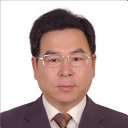
 Feilong Cao
· 4 previous affiliations
- Zhejiang Normal UniversitySince 2025
- Full Professor · Since 2025
- China Jiliang University2004–2024
- Full Professor · 2004–2024
- Xi'an Jiaotong University2000–2003
- PhD student · 2000–2003
- Ningxia University1983–1998
- MS student · 1995–1998
- Undergrad student · 1983–1987
1 other author named Feilong Cao: Feilong Cao (1 paper)
Research Overview
Feilong Cao focuses on the approximation theory of neural networks, graph representation learning, and 3D point cloud analysis. His trajectory spans foundational mathematical bounds on network approximation to modern applications in hypergraph contrastive learning and hyperspectral image processing. Recently, his work emphasizes robust representation learning and multi-modal geometric reconstruction.
Research Trajectory
Early in his career, Cao established rigorous mathematical foundations for neural network approximation. In The essential order of approximation for neural networks (2004), he and his collaborators clarified the essential approximation ability of feedforward networks by establishing both upper and lower bounds based on the modulus of smoothness. Continuing in this mathematical vein, he characterized the directional derivatives of multidimensional Bernstein operators in Derivatives of multidimensional Bernstein operators and smoothness. This theoretical focus culminated in a constructive proof for the upper bound of approximation error in single-hidden-layer networks, detailed in The estimate for approximation error of neural networks: A constructive approach.
Moving into the 2010s, his focus expanded to statistical learning and optimization algorithms. He explored generalization bounds for support vector machines using uniformly ergodic Markov chains in Compressed classification learning with Markov chain samples. Addressing the scalability of random basis function approximators, he developed an iterative regularization scheme for large datasets in An iterative learning algorithm for feedforward neural networks with random weights. Concurrently, his work addressed sparsity and low-rank recovery in computer vision. He proposed a non-convex optimization approach for single-image super-resolution in Image Super-Resolution via Adaptive ℓ(0<p<1) Regularization and Sparse Representation, and introduced the truncated nuclear norm to better approximate matrix rank in Recovering low-rank and sparse matrix based on the truncated nuclear norm.
Cao has continued to advance the theoretical understanding of neural networks, particularly concerning the research direction of The Computational Limits of Bounded Weight Neural Networks and the broader area of Neural Networks as Continuous Integral Transforms. For instance, participating in the study How Powerful are Shallow Neural Networks with Bandlimited Random Weights?, he helped apply ridgelet analysis to prove fundamental lower bounds on approximation error when random weights are restricted to a bounded range. He further bridged theoretical versatility and practical interpretability by developing a constructive operator to qualify data features like smoothness and radial symmetry in Feature Qualification by Deep Nets: A Constructive Approach.
In recent years, a major branch of his research has focused on 3D point cloud analysis and geometric deep learning. He introduced RecARONet, utilizing adaptive relation-oriented convolution for more accurate point cloud registration, in A new method for point cloud registration: Adaptive relation-oriented convolution and recurrent correspondence-walk. His research group also developed translation and scaling invariant graph convolutional networks for 3D analysis in TSI-GCN: Translation and scaling invariant GCN for 3D point cloud analysis. Expanding into multi-modal reconstruction, he oversaw the development of the Interleaved Attention Enhanced Transformer in Multi-Modal Point Cloud Completion with Interleaved Attention Enhanced Transformer, which uses 2D images as active queries to guide the upsampling of sparse 3D scans.
Parallel to his 3D vision work, Cao has extensively investigated graph and hypergraph neural networks, particularly for robust representation learning and hyperspectral imaging. To defend against adversarial attacks that manipulate graph structures, he proposed a multi-view graph structure learning technique in A Multi-View Graph Contrastive Learning Framework for Defending Against Adversarial Attacks. Applying graph attention to remote sensing, he modeled long-range spatial dependencies for hyperspectral unmixing in A Joint Multiscale Graph Attention and Classify-Driven Autoencoder Framework for Hyperspectral Unmixing, and later led work on spatial-spectral sparse dynamic graphs for image denoising in A spatial-spectral sparse dynamic graph learning network for hyperspectral image denoising. His recent contributions to hypergraph learning include HyperMixup: Hypergraph-Augmented with Higher-order Information Mixup, a data augmentation framework that interpolates node features without destroying higher-order semantics, and participation in H$^2$CL: Heterogeneity-Aware Hypergraph Contrastive Learning for Robust Representation Learning, which mitigates noise from semantically diverse nodes within hyperedges.
Current Directions
The most recent papers in the evidence address the robustness and scalability of higher-order relational models, particularly hypergraph neural networks. Recent work investigates how to handle semantic heterogeneity and structural noise within hyperedges using contrastive learning frameworks and manifold-aware data augmentation techniques. Additionally, ongoing research applies dynamic graph learning and multiscale attention mechanisms to complex remote sensing tasks, such as hyperspectral image denoising and unmixing, demonstrating a continued interest in modeling long-range spatial dependencies in high-dimensional data.
Profile updated
| Paper | Venue | Year |
|---|---|---|
| Triplet teaching graph contrastive networks with self-evolving adaptive augmentationGitHubhailiangye/ | Pattern Recognition | 2023 |
Loading new papers…
Other researchers whose papers cluster into the same research directions — a proxy for overlapping technical interests and shared intellectual neighborhoods.
See something wrong? Report a mistake