

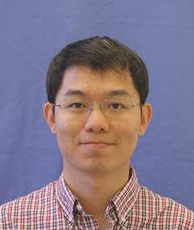
 Fei Yang
· 6 previous affiliations
- Meta (United States)Since 2026
- AI Research Scientist · Since 2026
- Researcher · 2013–2018
- Adobe Systems (United States)2025–2026
- Researcher · 2025–2026
- Kuaishou (China)2021–2025
- Engineering Director, Head of AI Innovation&Application Center · 2021–2025
- TAL Education Group2018–2021
- Engineering Director, Head of Algorithm Platform · 2018–2021
- PhD, Computer science · 2007–2013
- M.E., Computer science · 2003–2006
5 other authors named Fei Yang: Fei Yang (University of Chinese Academy of Sciences · Zhejiang Lab · Zhejiang University · 49 papers), Fei Yang (Nankai University · 45 papers), Fei Yang (5 papers), Fei Yang (1 paper), Fei Yang (1 paper)
Research Overview
Fei Yang focuses on the development of large-scale generative models and the curation of high-fidelity datasets for video synthesis. This work emphasizes improving the alignment between fine-grained conditional inputs and generated visual content, utilizing techniques such as rectified flow and automated data refinement. Yang’s research trajectory reflects a transition from specialized high-dimensional data analysis—including hyperspectral imaging and quantum-classical hybrids—toward the engineering of massive datasets and the optimization of temporal generative architectures.
Research Trajectory
Yang’s earlier research involvement, as indicated by thematic clusters, centered on the processing of complex, high-dimensional signals. This included work on Deep Learning for High Dimensional Hyperspectral Data, where the primary challenge is the interpretation of continuous spectral curves rather than standard RGB pixels. During this period, Yang also contributed to investigations into Hybrid Quantum-Classical Neural Networks for High-Dimensional Feature Mapping, exploring how Noisy Intermediate-Scale Quantum (NISQ) devices can be integrated with classical neural architectures to enhance feature representation in high-dimensional spaces.
The focus subsequently expanded toward temporal and spatial modeling. This included the development of Feedforward Temporal Architectures for Stable Long Horizon Forecasting, which sought to mitigate the "drift" common in recurrent neural networks during long-term prediction by utilizing feedforward structures. By 2021, this interest in spatial data evolved into the Joint Optimization of 3D Geometry and Semantics, moving away from linear pipelines toward unified models that simultaneously reconstruct 3D shapes and identify their semantic components.
In the most recent period (2024–2025), Yang’s work has converged on the challenges of large-scale data engineering and generative AI. This includes participation in Modeling Variable Length Protein Sequences with Indels, which addresses the limitations of fixed-grid protein design by allowing for insertions and deletions in sequence modeling. Most significantly, Yang has been part of large-scale efforts in Automated Dataset Refinement with Large Language Models, leveraging the reasoning capabilities of LLMs to improve the quality and consistency of video datasets.
Current Directions
Yang’s current work focuses on the scalability and fidelity of video generation models. A primary concern in this domain is the "hallucination" of physics and motion jitter, which Yang and collaborators address through human feedback and refined generative processes. This involves moving beyond traditional diffusion models toward rectified flow techniques, which aim to make the generative process more efficient and "straighter."
Another major focus is the creation of massive, high-quality video datasets that overcome the limitations of existing benchmarks. Yang asserts that temporal splitting, detailed captions, and video quality filtering are the three crucial determinants of dataset quality. Current projects involve the development of datasets exceeding 30 million samples, where automated pipelines are used to ensure that fine-grained conditions (such as specific text prompts) are accurately reflected in the video content.
Representative Work
As part of a large collaborative team, Yang contributed to Improving Video Generation with Human Feedback. This work addresses common failures in video synthesis, such as hallucinated physics and jittery motion. The research utilizes rectified flow to improve generative efficiency and incorporates human feedback to align model outputs more closely with user expectations and physical reality.
Yang also participated in the development of Kinda-45M: A Large-scale Video Dataset Improving Consistency between Fine-grained Conditions and Video Content. This project introduced a large-scale dataset designed to address the limitations of existing video-text benchmarks. The core contribution of the team involved improving the consistency between fine-grained conditions and video content through accurate temporal splitting and detailed captioning, which are essential for training robust generative models.
In a similar vein, Yang was part of the team that introduced Koala-36M: A Large-scale Video Dataset Improving Consistency between Fine-grained Conditions and Video Content. This work reinforces the importance of dataset quality in the performance of visual generation technologies. The project focused on superior video quality filtering and the creation of detailed, accurate captions to ensure that the scale of the dataset (36 million samples) translates into improved model performance.
Profile updated
Loading new papers…
Other researchers whose papers cluster into the same research directions — a proxy for overlapping technical interests and shared intellectual neighborhoods.
See something wrong? Report a mistake