

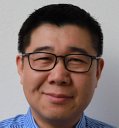
 Fei Sha
· 3 previous affiliations
- Google (United States)Since 2019
- research scientist · Since 2019
- Current
- University of Southern California2020–2021
- Full Professor · 2020–2021
- University of Pennsylvania2002–2007
- PhD student · 2002–2007
Research Overview
Fei Sha focuses on machine learning methodologies, spanning dimensionality reduction, domain adaptation, and multimodal representation learning. His trajectory evolved from foundational work in large-margin models and manifold learning to complex multi-agent reinforcement learning and visually grounded concept composition. Most recently, his research addresses data-driven modeling for physical systems, including fluid dynamics and global weather forecasting.
Research Trajectory
Early in his career, Sha's work addressed foundational challenges in dimensionality reduction and margin-based learning. This included participation in Learning a kernel matrix for nonlinear dimensionality reduction (2004), which formulated manifold learning as an instance of semidefinite programming to unfold high-dimensional data. He subsequently developed Large Margin Hidden Markov Models for Automatic Speech Recognition (2006), formulating a convex optimization approach for continuous density HMMs that avoided spurious local minima during acoustic feature modeling. Expanding on discriminative techniques, he collaborated on DiscLDA: Discriminative Learning for Dimensionality Reduction and Classification (2008), which introduced a class-dependent linear transformation to the topic mixture proportions of Latent Dirichlet Allocation models.
In the following years, his focus expanded to include the research direction Test Time Adaptation for Distribution Shift. He contributed to Geodesic flow kernel for unsupervised domain adaptation (2012), a method that exploited intrinsic low-dimensional structures to align heterogeneous latent spaces across domains. To address the computational costs and scalability limits of standard stacked denoising autoencoders in this space, he introduced Marginalized Denoising Autoencoders for Domain Adaptation (2012), which marginalized noise to enable efficient, high-dimensional feature learning without relying on stochastic gradient descent. Transitioning toward sequential data and computer vision, he participated in applying Long Short-Term Memory networks to structured prediction for Video Summarization with Long Short-Term Memory (2016), modeling variable-range temporal dependencies to extract compact video summaries.
Sha's trajectory then incorporated significant work in reinforcement learning, particularly in multi-agent and hierarchical settings. He participated in developing an Actor-Attention-Critic for Multi-Agent Reinforcement Learning (2019) to address the complexities of multi-agent coordination. He later expanded on hierarchical approaches for multi-agent systems, introducing ALMA: Hierarchical Learning for Composite Multi-Agent Tasks (2022). This work decomposed policies into two levels of decision-making—subtask allocation and execution—allowing agents to focus on isolated local interactions. In single-agent hierarchical reinforcement learning, his work on Possibility Before Utility: Learning And Using Hierarchical Affordances (2022) proposed pruning impossible subtasks to improve learning efficiency, allowing agents to evaluate only feasible actions.
Concurrently, Sha advanced multimodal representation learning and compositional generalization. To handle varying temporal granularities in untrimmed media, he developed A Hierarchical Multi-Modal Encoder for Moment Localization in Video Corpus (2022). He also explored structured representations for text-image grounding, proposing a Concept and Relation Graph in Visually Grounded Concept Composition (2022) to recursively combine primitive concepts. Building on this structural approach, he utilized denotation graphs in Learning to Represent Image and Text with Denotation Graph (2022) to capture implicit hierarchical relationships between visual concepts and linguistic descriptions, improving performance on image retrieval tasks. In natural language processing, he investigated how models handle novel combinations of familiar constructs in Learning to Generalize Compositionally by Transferring Across Semantic Parsing Tasks (2022), strategically pre-finetuning representations to facilitate transfer learning across mismatched domains.
Most recently, Sha's research has pivoted toward the modeling of complex physical systems and fluid dynamics. He developed data-driven surrogate models for advection-dominated partial differential equations in Evolve Smoothly, Fit Consistently: Learning Smooth Latent Dynamics For Advection-Dominated Systems (2023), leveraging hypernetworks and consistency regularization to learn smooth, low-dimensional latent trajectories. To simulate chaotic fluid dynamics more efficiently, he introduced Neural Ideal Large Eddy Simulation: Modeling Turbulence with Neural Stochastic Differential Equations (2023), utilizing neural SDEs to improve the stability and physical accuracy of turbulence modeling. Continuing in the domain of earth sciences, he participated in establishing WeatherBench 2: A Benchmark for the Next Generation of Data-Driven Global Weather Models (2024), providing an open-source framework and metrics to evaluate AI-driven weather forecasting against traditional physical models.
Current Directions
The most recent papers in the evidence address the intersection of machine learning and complex physical systems. Recent work investigates data-driven surrogate modeling for advection-dominated partial differential equations and the simulation of chaotic fluid dynamics, such as turbulence, using neural stochastic differential equations. This direction emphasizes improving the computational efficiency, stability, and physical accuracy of high-dimensional simulations. Additionally, current efforts involve establishing rigorous, open-source benchmarking frameworks to evaluate the next generation of AI-driven global weather forecasting models against traditional physical baselines.
Profile updated
Loading new papers…
Other researchers whose papers cluster into the same research directions — a proxy for overlapping technical interests and shared intellectual neighborhoods.
See something wrong? Report a mistake