

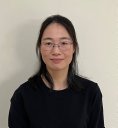
 Fayao Liu
· 2 previous affiliations
- Research Scientist · Since 2019
- Adelaide University2011–2015
- PhD student · 2011–2015
Research Overview
Fayao Liu focuses on 3D vision, multi-modal generative models, and structured representation learning from images and videos. His trajectory spans early work in monocular depth estimation and dense prediction to recent advancements in generative world modeling for 3D environments. Currently, his research emphasizes high-fidelity 3D reconstruction, text-to-3D generation, and label-efficient perception for complex scenes.
Research Trajectory
Fayao Liu's research trajectory begins with foundational challenges in computer vision, particularly focusing on depth estimation and semantic segmentation. In his early work, he addressed the difficulty of extracting depth cues from single images. With Deep convolutional neural fields for depth estimation from a single image, he formulated depth estimation as a continuous conditional random field learning problem, integrating deep convolutional features to advance the research direction of Monocular Depth Estimation via Learned Geometric Priors. Expanding into dense prediction and segmentation, he participated in the development of few-shot learning frameworks. In CANet: Class-Agnostic Segmentation Networks With Iterative Refinement and Attentive Few-Shot Learning, he contributed to a model that segments novel objects from minimal examples by combining dense feature comparison with iterative refinement. He also contributed to multi-path architectures for dense prediction in RefineNet: Multi-Path Refinement Networks for Dense Prediction.
As his focus shifted toward 3D vision and generative modeling, Liu developed several methods for high-fidelity human digitization from sparse or single-view inputs. In R-Cyclic Diffuser: Reductive and Cyclic Latent Diffusion for 3D Clothed Human Digitalization, he introduced a cyclical conditioning mechanism to resolve view inconsistency in latent diffusion models, advancing work in structural priors for anatomically correct human image synthesis. To address structural artifacts in single-view reconstruction, he developed Fine Structure-Aware Sampling: A New Sampling Training Scheme for Pixel-Aligned Implicit Models in Single-View Human Reconstruction. This approach proactively adapts to surface thickness, contributing to the research direction of Learning Dense Object Boundaries from Sparse Supervision and bridging volumetric density with explicit surface geometry. Further improving multi-view perception, he introduced 3DFG-PIFu: 3D Feature Grids for Human Digitization from Sparse Views, which shifted from late point-wise fusion to early global fusion to better capture complex structural details.
Beyond human digitization, Liu has made significant contributions to general 3D generation and the reconstruction of articulated objects. He addressed the lack of visual variety and structural degradation in text-to-3D generation with Diverse and Stable 2D Diffusion Guided Text to 3D Generation with Noise Recalibration, making the noise in the distillation process learnable to solve the Janus problem in 3D shape generation. He also guided the development of REACTO: Reconstructing Articulated Objects from a Single Video, a framework that reconstructs the 3D shapes, textures, and motions of general articulated objects by rethinking point assignment, contributing to the research direction of Geodesic Metrics for Topology Aware Mesh Deformation. Concurrently, he explored representation learning in graph structures, introducing Graph Contrastive Representation Distillation in On Representation Knowledge Distillation for Graph Neural Networks to align node embeddings and preserve topology.
In his most recent work, Liu has focused on leveraging advanced generative priors and improving label efficiency in 3D perception. He oversaw the development of CADCrafter: Generating Computer-Aided Design Models from Unconstrained Images, which uses texture-invariant geometric features to transform real-world images into parametric CAD sequences. He also directed research on Text-to-Image Rectified Flow as Plug-and-Play Priors, exploring how Rectified Flow models can be utilized for lifting 2D generative priors to 3D. To address the high cost of manual voxel annotations, he participated in designing OccLE: Label-Efficient 3D Semantic Occupancy Prediction, which decouples geometry and semantics using 2D foundation models to support sparse supervision for 3D scene understanding. Continuing his interest in few-shot learning, he contributed to Exploiting independent query information for few-shot image segmentation and guided the creation of PIRN: Prototypical-based Intra-modal Reconstruction with Normality Communication for Multi-modal Anomaly Detection., which utilizes learnable prototypes for efficient anomaly detection in complex multimodal spaces.
Current Directions
The most recent papers in the evidence address the intersection of multi-modal generative models and structured 3D environments. Recent work investigates the use of advanced generative priors, such as Rectified Flow and latent diffusion, to synthesize editable 3D assets and parametric CAD models from unconstrained 2D images. Additionally, there is a strong focus on label-efficient 3D perception and few-shot anomaly detection, utilizing cross-modal alignment and 2D foundation models to reduce the reliance on dense 3D annotations. These efforts collectively aim to bridge the gap between complex real-world visual data and structured, interactive 3D representations.
Profile updated
Loading new papers…
Other researchers whose papers cluster into the same research directions — a proxy for overlapping technical interests and shared intellectual neighborhoods.
See something wrong? Report a mistake