

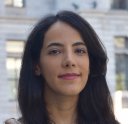
 Farimah Poursafaei
· 5 previous affiliations
- BNP Paribas (France)Since 2025
- AVP, AI Model Validation · Since 2025
- Data Scientist · 2024–2025
- Postdoctoral Fellow · 2022–2024
- McGill University2017–2025
- Postdoc · 2022–2025
- Doctor of Philosophy - PhD, Computer Engineering · 2017–2022
- Valence Labs powered by recursion2023–2024
- Intern · 2023–2024
- Sharif University of Technology2014–2016
- Master of Science - MS, Computer Engineering · 2014–2016
Research Overview
Farimah Poursafaei focuses on the development and evaluation of machine learning models for temporal graphs, with a particular emphasis on dynamic link prediction, benchmarking, and the Unifying Continuous and Discrete Time Dynamic Graphs. Her work addresses the challenges of modeling networks that evolve over time, ranging from financial transaction systems to social and transportation networks. By critiquing existing evaluation protocols and introducing standardized benchmarks and software libraries, she has contributed to improving the reproducibility and robustness of temporal graph representation learning.
Research Trajectory
The early stages of Poursafaei's research were characterized by the application of machine learning to blockchain forensics and security. In 2020, she investigated the Topological Signatures of Malicious Financial Activity within the Ethereum ecosystem. This work involved extracting complex features from the public ledger to identify fraudulent entities, balancing the pseudonymity of blockchain users against the transparency of transaction data. This period established her interest in how graph structures can reveal underlying behaviors in dynamic, high-stakes environments.
Starting in 2022, Poursafaei shifted her focus toward the methodological foundations of temporal graph learning. She identified a significant gap between the high performance reported by dynamic link prediction models and their actual utility in real-world scenarios. This led to a series of critical evaluations of how these models are tested. She argued that standard evaluation strategies often overlooked the inherent sparsity and recurrence patterns of dynamic networks, leading to inflated performance metrics. To demonstrate this, she introduced "EdgeBank," a simple memorization baseline that outperformed many sophisticated neural models by simply tracking recurring edges. This work highlighted the need for more stringent and realistic evaluation protocols that distinguish between a model's ability to learn structural evolution versus its ability to remember past interactions.
By 2023 and 2024, Poursafaei’s work moved toward providing the infrastructure necessary for the field to progress. She played a central role in the creation of large-scale benchmarks and software tools designed to standardize temporal graph research. This included the development of datasets that span multiple domains and the release of open-source packages for temporal network analysis. During this time, she also began exploring architectural improvements for Temporal Graph Neural Networks (TGNNs), specifically addressing communication bottlenecks and the integration of different temporal representations. Her recent work has expanded into the scalability of graph neural networks and the use of reinforcement learning and large language models for explainable reasoning on temporal graphs.
Current Directions
Poursafaei’s current research focuses on three primary areas: architectural unification, scalability, and the integration of diverse graph types. A major theme in her recent work is the bridging of the divide between Discrete-Time Dynamic Graphs (DTDG), which use snapshots, and Continuous-Time Dynamic Graphs (CTDG), which treat interactions as a stream of events. By developing frameworks that allow models to operate across both representations, she aims to enable better theoretical and experimental cross-pollination in the field.
Additionally, she is involved in efforts to scale graph learning to massive datasets, such as 2D molecular graphs and heterogeneous knowledge graphs. This involves investigating the Vectorized Tensor Operations for Efficient Temporal Graph Learning and the scaling behavior of message-passing networks and graph Transformers. Her participation in the development of "TGB 2.0" reflects a move toward more complex graph structures, including multi-relational and heterogeneous temporal graphs, which require more sophisticated evaluation protocols than simple homogeneous networks.
Representative Work
Detecting Malicious Ethereum Entities via Application of Machine Learning Classification As the lead author of this 2020 study, Poursafaei developed a framework for identifying criminal activity on the Ethereum blockchain. The research focused on feature extraction from the transaction graph to overcome the challenges posed by pseudonymity. This work demonstrated the efficacy of combining graph-based features with machine learning classifiers to detect scams and frauds in decentralized financial systems.
Towards Better Evaluation for Dynamic Link Prediction In this first-author paper, Poursafaei critiqued the prevailing evaluation methods for dynamic link prediction. She introduced visualization techniques to reveal edge recurrence patterns and proposed the EdgeBank baseline. The study showed that many existing models appeared successful only because they were tested on "easy" negative edges or failed to account for simple edge reoccurrence, prompting a shift toward more rigorous benchmarking in the temporal graph community.
Temporal Graph Benchmark for Machine Learning on Temporal Graphs As a key contributor to the Temporal Graph Benchmark (TGB), Poursafaei helped establish a collection of large-scale, diverse datasets for realistic model evaluation. The project addressed the lack of standardized benchmarks by providing datasets from social, trade, and transportation domains, along with robust evaluation protocols. This work has become a foundational resource for ensuring reproducibility in temporal graph research.
Temporal Graph Analysis with TGX Serving as the senior author, Poursafaei led the development of TGX, a Python library specifically designed for the analysis of evolving graphs. While previous libraries focused primarily on static graphs, TGX provides an automated pipeline for data loading, discretization, and temporal analysis. The tool integrates with TGB and supports the visualization of temporal dynamics, filling a critical gap in the software ecosystem for graph researchers.
Temporal Graph Rewiring with Expander Graphs In this work, Poursafaei contributed to the development of Temporal Graph Rewiring (TGR), a framework designed to alleviate communication bottlenecks in TGNNs. By utilizing expander graphs to create "highways" for message passing between nodes that are temporally distant, the method improves the flow of information across the graph's history. This approach resulted in significant performance gains on standard benchmarks by addressing the "over-squashing" problem in a temporal context.
UTG: Towards a Unified View of Snapshot and Event Based Models for Temporal Graphs Poursafaei co-developed the Unified Temporal Graph (UTG) framework to reconcile the snapshot-based and event-based perspectives of temporal networks. The framework allows models designed for one representation to be applied to the other, facilitating more comprehensive comparisons and allowing researchers to leverage the strengths of both DTDG and CTDG approaches within a single model architecture.
Profile updated
Loading new papers…
Other researchers whose papers cluster into the same research directions — a proxy for overlapping technical interests and shared intellectual neighborhoods.
See something wrong? Report a mistake