

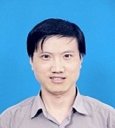
 Fanhua Shang
· 4 previous affiliations
- Tianjin UniversitySince 2022
- Full Professor · 2022–2050
- Chinese University of Hong Kong2016–2022
- Associate Professor · 2016–2022
- Duke University2012–2013
- Postdoc · 2012–2013
- Xidian University2007–2012
- PhD student · 2007–2012
Research Overview
Fanhua Shang focuses on large-scale machine learning optimization, low-rank matrix and tensor recovery, and efficient architectures for multimodal foundation models. His trajectory spans foundational work in stochastic variance reduction and non-convex regularization to recent advancements in federated learning and token compression for vision-language models. Currently, he investigates parameter-efficient fine-tuning and scalable optimization for decentralized large models.
Research Trajectory
Shang’s early research addressed fundamental challenges in learning from limited or corrupted data, particularly through semi-supervised learning and matrix recovery. In 2012, he developed Semi-supervised learning with mixed knowledge information, proposing a unified framework that simultaneously leverages sparse labeled data, pairwise constraints, and unlabeled data. He soon expanded this focus to higher-dimensional data structures, introducing the generalized Higher-Order Orthogonal Iteration (gHOI) algorithm in Generalized Higher-Order Orthogonal Iteration for Tensor Decomposition and Completion. By demonstrating that the Schatten 1-norm of a low-rank tensor is equivalent to that of its much smaller core tensor, this work provided a highly scalable framework, contributing significantly to the area of Overcoming the Exponential Bottleneck in Tensor Decompositions. Continuing to address the computational bottlenecks of rank approximation, he published Scalable Algorithms for Tractable Schatten Quasi-Norm Minimization in 2016. This research defined tractable hybrid quasi-norms that bypassed the need for full singular value decomposition in each iteration, advancing the broader direction of Tractable Rank Minimization via Convex and Nonconvex Surrogates.
In the late 2010s, Shang’s focus increasingly centered on advanced optimization techniques for machine learning. He extended classical acceleration methods to non-Euclidean spaces with Accelerated First-order Methods for Geodesically Convex Optimization on Riemannian Manifolds, achieving optimal convergence rates for geodesically convex problems. Concurrently, he addressed the stability of stochastic gradient methods in A Simple Stochastic Variance Reduced Algorithm with Fast Convergence Rates, which formed part of his sustained engagement with the research direction of Reducing Gradient Variance for Stable Stochastic Optimization. He also applied non-convex optimization to computer vision applications, as seen in Bilinear Factor Matrix Norm Minimization for Robust PCA: Algorithms and Applications. By modeling heavy-tailed distributions of corrupted outliers with hyper-Laplacian priors, this work provided efficient algorithms for large-scale robust principal component analysis, contributing to the area of Non-convex Rank Approximation for Multidimensional Data Recovery.
Moving into the 2020s, Shang continued to refine stochastic optimization while exploring the mathematical foundations of deep learning architectures. He extended variance reduction techniques to alternating direction method of multipliers (ADMM) frameworks in Accelerated Variance Reduction Stochastic ADMM for Large-Scale Machine Learning. Shortly after, he introduced the DAVIS algorithm in Kill a Bird with Two Stones: Closing the Convergence Gaps in Non-Strongly Convex Optimization by Directly Accelerated SVRG with Double Compensation and Snapshots, utilizing a double snapshot strategy to achieve optimal convergence rates for non-strongly convex problems. Bridging optimization and network design, he collaborated on HNO: High-Order Numerical Architecture for ODE-Inspired Deep Unfolding Networks. This work demonstrated that standard unfolding layers act as first-order Euler approximations and proposed higher-order numerical methods to improve convergence, advancing the research direction concerning Deep Unfolding Networks for Inverse Problems.
Alongside his core optimization research, Shang has explored network robustness and continual learning. In Improving the Transferability of Adversarial Examples with Arbitrary Style Transfer, he developed a method to generate diverse adversarial images across visual domains, preventing overfitting to source models and improving black-box transferability. To address training instability in multi-task environments, his group developed Towards stable training of parallel continual learning, which applies orthogonality constraints during forward and backward propagation to mitigate conflicting gradients.
Most recently, Shang’s trajectory has pivoted toward the efficient training and deployment of large-scale foundation models, particularly in federated and multimodal contexts. In federated learning, he introduced FedMuon: Accelerating Federated Learning with Matrix Orthogonalization, an optimizer that treats model weights as structured matrices to overcome client drift, and FedAdamW: A Communication-Efficient Optimizer with Convergence and Generalization Guarantees for Federated Large Models, which adapts block-wise moment aggregation for decentralized Transformer training. For parameter-efficient fine-tuning, he co-authored LAVA: A Unified Framework for Finetuning Language and Vision Models, which preserves the dimensional integrity of convolution layers using tensor-based weight treatments and orthogonal regularization. Extending this focus to manifold optimization, Shang contributed to Riemannian Optimization for Low-Rank Adaptation via Desingularization, which addresses rank-deficient singularities in LoRA by desingularizing adapter updates onto a smooth bounded-rank geometry with null-space projectors and custom retraction mechanisms.
A major recent focus has been accelerating Vision-Language Models (VLMs) by reducing visual redundancy. He developed LightVLM: Acceleraing Large Multimodal Models with Pyramid Token Merging and KV Cache Compression, a training-free framework that slashes redundant image tokens to boost throughput. This was further expanded in iLLaVA: An Image is Worth Fewer Than 1/3 Input Tokens in Large Multimodal Models, which jointly reduces visual tokens in both the image encoder and the language model by recycling information from redundant patches. These contributions are central to the emerging area of Semantic Token Aggregation for Efficient Multimodal Transformers. Concurrently, he continues to advance fundamental non-convex optimization, as evidenced by recent work on Stochastic limited memory BFGS algorithms for solving nonconvex support vector machine problems and nonconvex risk minimization program.
Current Directions
The most recent papers in the evidence indicate a strong focus on the scalable optimization and efficient deployment of large foundation models. A primary direction is federated learning for massive architectures, where recent work investigates communication-efficient optimizers that utilize matrix orthogonalization and moment aggregation to stabilize training across decentralized, non-IID data sources.
Additionally, current research heavily addresses the computational bottlenecks of multimodal foundation models. By developing sophisticated token merging, token compression, and parameter-efficient fine-tuning frameworks, this work seeks to drastically reduce the memory footprint and inference latency of Vision-Language Models. These approaches aim to maintain the high performance and reasoning capabilities of large models while enabling faster, more resource-efficient deployment in both centralized and distributed environments.
Profile updated
Loading new papers…
Other researchers whose papers cluster into the same research directions — a proxy for overlapping technical interests and shared intellectual neighborhoods.
See something wrong? Report a mistake