

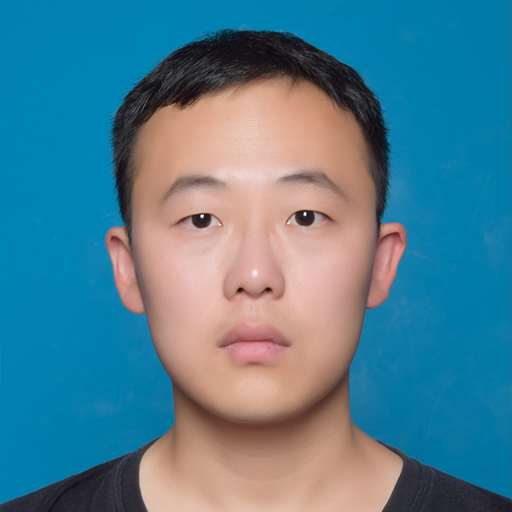
 Fan Zhang
· 2 previous affiliations
- Current
- Postdoc · 2023–2025
- PhD student · 2017–2023
- Undergrad student · 2013–2017
23 other authors named Fan Zhang: Fan Zhang (University of Bristol · 174 papers), Fan Zhang (Shandong Institute of Business and Technology · 57 papers), Fan Zhang (Chinese University of Hong Kong · 51 papers), Fan Zhang (Guangzhou University · 50 papers), Fan Zhang (Tetras · 23 papers), and 18 more
Research Overview
Fan Zhang focuses on artificial intelligence for scientific discovery, reinforcement learning, and spatiotemporal data modeling. His trajectory spans from interactive learning-to-rank systems and multi-agent reinforcement learning to recent applications in oceanography and generative music. Currently, his work addresses probabilistic data imputation and architectural scaling for large models, bridging foundational machine learning techniques with complex, real-world scientific and creative domains.
Research Trajectory
His early research focused on improving information retrieval systems by modeling user interactions. In 2022, he introduced An Attention-Based Interactive Learning-to-Rank Model for Document Retrieval. This work conceptualized ranking not as a static scoring mechanism, but as an interactive process, utilizing an attention-based model to better capture and adapt to user search intent during document retrieval.
By 2024, his focus expanded into reinforcement learning and continuous control. He participated in multi-agent reinforcement learning research, contributing to QDAP: Downsizing adaptive policy for cooperative multi-agent reinforcement learning. This framework addresses the bias introduced by inactive or "dead" agents in centralized training paradigms, actively discerning relevant information to maintain cooperative policies. In the domain of continuous control, he contributed to Improving Exploration in Actor-Critic With Weakly Pessimistic Value Estimation and Optimistic Policy Optimization, which balances pessimistic value estimation with optimistic policy updates to trigger exploration in low-value regions and enhance overall sample efficiency.
Concurrently, he explored computer vision and industrial fault diagnosis. He developed A pruned-optimized weighted graph convolutional network for axial flow pump fault diagnosis with hydrophone signals, utilizing underwater acoustic signals and graph pruning to detect spatially dispersed faults in axial flow pumps. In computer vision, he participated in research on few-shot localization, contributing to Class-agnostic counting and localization with feature augmentation and scale-adaptive aggregation, which mines inherent instances from query features to enrich exemplars. This vision work continued into 2025 with Decoupled Feature Matching for Few-shot Counting and Localization, where he helped design a module to separate target and non-target regions, preventing feature blending and improving counting accuracy.
A significant focus on AI for scientific discovery emerged in 2025. He developed STIMP, detailed in AI-powered spatiotemporal imputation and prediction of chlorophyll-a concentration in coastal ecosystems. This framework combines denoising diffusion models with graph neural networks to reconstruct incomplete satellite imagery and predict future ecological metrics. This work advances the research direction of Forecasting Aperiodic Deviations in Spatio-Temporal Series and contributes to the broader area of Probabilistic Data Imputation with Generative Diffusion Models.
Expanding into foundation models and efficient computing, he participated in developing GPAS: Accelerating Convergence of LLM Pretraining via Gradient-Preserving Activation Scaling. This architectural plugin addresses the exponential growth of activation variance in modern Transformers, intersecting with the area of Depth Dependent Residual Scaling and the research direction of Architectural Scale Invariance for Frontier Language Models. Additionally, he contributed to energy-efficient reinforcement learning through Toward Energy-Efficient Spike-Based Deep Reinforcement Learning With Temporal Coding, which leverages spiking neural networks to deploy autonomous agents in resource-constrained edge environments.
Most recently, in 2026, his work has extended to generative AI for creative domains. He co-developed SyncTrack: Rhythmic Stability and Synchronization in Multi-Track Music Generation, which focuses on maintaining temporal alignment and rhythmic stability across multiple audio tracks. This contributes to the research direction of Long Form Structural Coherence in Musical Audio Generation and the area of Expressive Performance Modeling for Neural Audio Synthesis.
Current Directions
Recent work investigates the application of generative models to complex, multidimensional data. This includes developing diffusion-based frameworks for spatiotemporal imputation in scientific observation, particularly for reconstructing incomplete satellite imagery in oceanography. Concurrently, his research addresses architectural stability in large-scale foundation models, focusing on activation scaling techniques to accelerate pretraining convergence in Transformers. The most recent papers in the evidence also explore generative AI in creative domains, specifically tackling rhythmic stability and synchronization challenges in multi-track music generation.
Profile updated
Loading new papers…
Other researchers whose papers cluster into the same research directions — a proxy for overlapping technical interests and shared intellectual neighborhoods.
See something wrong? Report a mistake