

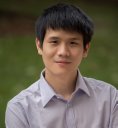
 Fan Long
· 1 previous affiliation
- University of TorontoSince 2018
- Assistant Professor · Since 2018
Research Overview
Fan Long focuses on programming languages, software engineering, systems security, and blockchain technology. His trajectory spans early work in automated program repair and natural language processing to recent advancements in smart contract security and blockchain scalability. Currently, he investigates the intersection of artificial intelligence and software engineering, emphasizing the reliability and security of large language models in code generation.
Research Trajectory
Early in his career, his work focused heavily on automated software engineering and program synthesis. In 2013, he participated in research on translating English specifications into executable code, detailing a method in From Natural Language Specifications to Program Input Parsers that utilized a Bayesian generative model to map natural language to C++ input parsers. Building on automated code manipulation, he developed novel systems for program repair. This included the SPR system, introduced in Staged program repair with condition synthesis, which efficiently generated software patches by intelligently exploring a rich space of potential repairs. He expanded on these automated repair techniques by investigating methods for Automatic error elimination by horizontal code transfer across multiple applications. Subsequently, he explored Automatic patch generation by learning correct code, advancing the capacity of systems to infer valid fixes from existing software repositories.
Shifting toward decentralized systems and hardware optimization, his research began addressing the performance and autonomy of execution environments. He directed the development of an extension to the Ethereum Virtual Machine in SigVM: Toward Fully Autonomous Smart Contracts, enabling native, event-driven execution that removed the reliance on centralized off-chain servers for triggering contract responses. Concurrently, he contributed to the area of Operator Fusion for Memory-Bound Deep Learning by introducing horizontal fusion techniques. Detailed in Automatic Horizontal Fusion for GPU Kernels, this work—which also touches on the research direction of Register Constrained Instruction Scheduling—resulted in the HFUSE tool, designed to automatically increase thread-level parallelism and hide instruction latencies.
By 2024, his focus on decentralized finance (DeFi) security deepened alongside investigations into AI-assisted programming. He analyzed the utility of runtime invariants for securing blockchain applications in Demystifying Invariant Effectiveness for Securing Smart Contracts. To proactively identify vulnerabilities, he introduced an automated tool in FlashSyn: Flash Loan Attack Synthesis via Counter Example Driven Approximation that synthesizes flash loan attacks on DeFi protocols. This synthesis-via-approximation technique intersects with broader methodological areas such as Polynomial Approximations for Secure Neural Network Inference. In parallel, his group evaluated the reasoning capabilities of large language models in software engineering. In Assessing Code Generation with Intermediate Languages, they demonstrated that prompting models to generate intermediate natural language sketches significantly improves final code generation performance through a chain-of-thought effect.
Most recently, his research addresses the intersection of AI security and formal methods. He co-authored studies uncovering systemic security flaws in production LLMs, revealing that models can absorb malicious scam endpoints during training in Poisoned at Scale: A Scalable Audit Uncovers Hidden Scam Endpoints in Production LLMs. This led to the formalization of Scam2Prompt: A Scalable Framework for Auditing Malicious Scam Endpoints in Production LLMs, a tool designed to synthesize benign developer prompts that expose these embedded vulnerabilities. To rigorously evaluate the reasoning capabilities of these models, he helped introduce a benchmark in VerifyThisBench: Generating Code, Specifications, and Proofs All at Once, testing LLMs on full program verification from natural language. Returning to blockchain security, his recent work also tackles the risks of composability in DeFi ecosystems, proposing mechanisms in Secure Smart Contract with Control Flow Integrity to prevent attackers from exploiting interlinked smart contract dependencies.
Current Directions
The most recent papers in the evidence address the reliability and security of large language models alongside advanced protections for decentralized finance ecosystems. A primary focus is auditing production LLMs for embedded vulnerabilities, specifically identifying how models inadvertently reproduce malicious endpoints and phishing URLs during code generation. Concurrently, work in this area seeks to bridge the gap between AI-assisted programming and formal verification by evaluating the capacity of language models to generate mathematically rigorous proofs and specifications. In the blockchain domain, current research continues to mitigate the risks of smart contract composability, developing control flow integrity techniques to secure modular financial protocols against complex, multi-contract exploits.
Profile updated
Loading new papers…
Other researchers whose papers cluster into the same research directions — a proxy for overlapping technical interests and shared intellectual neighborhoods.
See something wrong? Report a mistake