

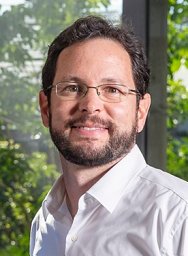
 Fabio Ramos
· 4 previous affiliations
- The University of SydneySince 2015
- Professor · Since 2019
- Associate Professor · 2015–2018
- Doctor of Philosophy - PhD, Machine learning, robotics · 2003–2007
- Research Fellow
- Nvidia (United States)Since 2018
- Principal Research Scientist · Since 2019
- Visiting Professor · 2018–2019
- Centre for Translational Data Science2017–2019
- Co Director · 2017–2019
- Universidade de São Paulo2001–2003
- Master of Philosophy - MPhil, Mechatronics, Robotics, and Automation Engineering · 2001–2003
Research Overview
Fabio Ramos focuses on probabilistic machine learning, robotic perception, and autonomous decision-making. His trajectory spans early work in large-scale terrain modeling and occupancy mapping to recent advancements in differentiable simulation, Bayesian optimization, and sim-to-real transfer. Currently, his research addresses scalable task and motion planning, leveraging GPU acceleration and foundation models to enable complex, multi-arm robotic manipulation in open-world environments.
Research Trajectory
The early phase of this research focused heavily on perception, spatial modeling, and mapping for autonomous systems. He introduced CRF-Matching: Conditional Random Fields for Feature-Based Scan Matching in 2007, applying conditional random fields to improve feature-based alignment. Following this, he collaborated on Gaussian Process modeling of large scale terrain (2009), addressing the challenge of handling uncertainty and incompleteness in spatial data using multi-resolution Gaussian processes. This focus on scalable spatial representations culminated in Hilbert maps: Scalable continuous occupancy mapping with stochastic gradient descent (2016), which provided a continuous occupancy mapping framework that scaled efficiently via stochastic gradient descent.
By 2019, the research expanded into sim-to-real transfer and probabilistic inference for robotic control. In BayesSim: Adaptive Domain Randomization Via Probabilistic Inference for Robotics Simulators (2019), he utilized likelihood-free inference to estimate posterior distributions of simulator parameters from real-world data. This work contributed significantly to the research direction of Neural Density Estimation for Likelihood Free Inference and the broader area of Scaling Kernel Methods with Random Fourier Features. He further explored control under uncertainty in Stein Variational Model Predictive Control (2020), advancing work in the area of Sequential Decision Making as Probabilistic Inference.
In 2021, his lab developed BORE: Bayesian Optimization by Density-Ratio Estimation, which reframed blackbox optimization as a binary classification problem to scale Bayesian optimization to high-dimensional spaces without relying on traditional surrogate models. Concurrently, he directed the development of DiSECt: A Differentiable Simulation Engine for Autonomous Robotic Cutting (2021), enabling gradient-based optimization for complex soft material models and cutting trajectories. He synthesized much of the field's progress in sim-to-real transfer in the comprehensive 2022 survey, Robot Learning From Randomized Simulations: A Review, detailing how domain randomization bridges the reality gap.
Returning to foundational probabilistic methods in 2024, his group introduced Stein Random Feature Regression, leveraging Stein Variational Gradient Descent to improve Gaussian Process kernel approximations for complex spectral densities. He also presented Fast Fourier Bayesian Quadrature (2024), recasting integration problems as spectral convolutions to overcome traditional scalability limits in Bayesian Quadrature. In applied robotics, he oversaw research on Gentle Manipulation of Tree Branches: A Contact-Aware Policy Learning Approach (2024), demonstrating successful sim-to-real transfer of proprioceptive policies for navigating deformable environments without relying on vision.
The most recent phase of his trajectory focuses heavily on complex task and motion planning (TAMP) and the integration of foundation models. He led the creation of Differentiable GPU-Parallelized Task and Motion Planning (2025), a framework utilizing GPU parallelism and differentiable optimization to solve long-horizon manipulation problems in seconds. This interest in multi-arm coordination is further reflected in Learning to Plan & Schedule with Reinforcement-Learned Bimanual Robot Skills (2025) and ScheduleStream: Temporal Planning with Samplers for GPU-Accelerated Multi-Arm Task and Motion Planning & Scheduling (2025), which couple temporal planning with GPU-accelerated sampling to efficiently schedule dual-arm tasks in cluttered environments.
In parallel, he explored novel search and optimization strategies, such as Diversifying Parallel Ergodic Search: A Signature Kernel Evolution Strategy (2025) to prevent mode collapse in robotic exploration, and Informing Acquisition Functions via Foundation Models for Molecular Discovery (2025), which bypasses expensive surrogate modeling by leveraging large language models for Bayesian optimization. Most recently, this intersection of foundation models and robotics culminated in Open-World Task and Motion Planning via Vision-Language Model Generated Constraints (2026), utilizing vision-language models to bridge high-level reasoning and low-level motor control for open-world manipulation tasks. Expanding on foundation model integration, Ramos contributed to D&A: Decoupling Description and Assessment Enables VLMs as Zero-Shot Robotic Reward Models (2026), decoupling scene description from rubric assessment to yield robust zero-shot reward signals for reinforcement learning. To address reliability in generative policy execution, their group introduced Coherent Moment Propagation: Epistemic Uncertainty for Pre-trained Robot Policies (2026), tracking state-weight cross-covariances through ODE integration to reliably quantify epistemic uncertainty in flow matching policies without retraining.
Current Directions
The most recent papers in the evidence address the intersection of high-performance task and motion planning (TAMP) and foundation models. Recent work investigates GPU-accelerated temporal planning to coordinate multi-arm robots in complex, long-horizon manipulation tasks, moving beyond sequential single-arm execution. Additionally, this research explores the integration of Vision-Language Models (VLMs) and Large Language Models (LLMs) to generate task-specific constraints and inform acquisition functions. This hybrid approach enables autonomous systems to operate in open-world environments with novel objectives and accelerates black-box optimization in domains such as molecular discovery.
Profile updated
Loading new papers…
Other researchers whose papers cluster into the same research directions — a proxy for overlapping technical interests and shared intellectual neighborhoods.
See something wrong? Report a mistake