

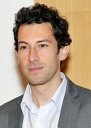
 Fabien Scalzo
· 7 previous affiliations
- Pepperdine UniversitySince 2020
- Associate Professor · Since 2020
- University of California, Los AngelesSince 2012
- Adjunct Associate Professor · Since 2021
- Current
- Assistant Professor in Residence · 2015–2020
- Visiting Assistant Professor · 2012–2015
- Metanoia Bio Inc.Since 2021
- Chief AI Officer · Since 2025
- Senior AI Scientist · 2021–2025
- Horizon Surgical Systems2023–2025
- Senior Director of AI · 2023–2025
- Neurolutions2018–2023
- Senior Technical Advisor · 2018–2023
- Discover2015–2020
- Associate Professor · 2015–2020
- University of Liège2002–2008
- Doctor of Philosophy (Ph.D.), Computer Vision - Machine Learning · 2004–2008
- Master's degree, Science · 2002–2004
Research Overview
Fabien Scalzo focuses on the development and application of machine learning and computer vision techniques to solve complex problems in medical imaging, neurovascular health, and autonomous systems. His work emphasizes the creation of robust algorithmic frameworks for clinical decision support, particularly in the context of acute stroke, vascular pathology, and ophthalmology. By integrating deep learning architectures with multimodal data sources—ranging from 3D neuroimaging to longitudinal clinical records—Scalzo’s research aims to improve diagnostic accuracy and prognostic modeling in high-stakes medical environments.
Research Trajectory
The evolution of Scalzo’s research reflects a broader shift in the computational sciences from classical statistical modeling toward sophisticated deep learning and multimodal architectures. His early work in the 1980s was grounded in systems engineering and sensor reliability. During this period, he contributed to the development of methodologies for Sensory redundancy management: The development of a design methodology for determining threshold values through a statistical analysis of sensor output data, which utilized probability density functions and algorithmic approaches to detect failures in avionics systems. This early focus on failure detection and signal reliability established a foundation for his subsequent interest in high-reliability systems, though the domain would later shift from aerospace to medicine.
By the mid-2000s, Scalzo’s work transitioned into the field of computer vision and interactive learning. He explored how visual stimuli could be mapped to actions through closed-loop learning processes. This is evidenced by research into Task-Driven Learning of Spatial Combinations of Visual Features, which employed reinforcement learning to select relevant visual features by progressively splitting perceptual space. This period marked a significant methodological shift toward adaptive learning algorithms that could handle complex, high-dimensional visual data.
In the late 2010s and early 2020s, Scalzo’s research became deeply embedded in clinical neuroimaging, specifically focusing on acute ischemic stroke and vascular health. His work during this time addressed the challenges of identifying vulnerable plaque and predicting tissue outcomes. He investigated the associations between middle cerebral artery (MCA) plaque hyperintensity on T2-weighted vessel wall imaging and the occurrence of ischemic stroke, contributing to more precise symptomatic plaque classification. Simultaneously, he began applying convolutional neural networks (CNNs) to automate the segmentation and analysis of cerebral vasculature, moving away from manual annotation toward scalable, AI-driven workflows.
Most recently, Scalzo has expanded his scope to include multimodal large language models (LLMs) and retrieval-augmented generation (RAG) within specialized medical domains. This current phase of research explores how generative AI can reason across disparate data types, such as 3D MRI sequences and clinical text, to provide interpretable insights for complex diagnoses like brain tumors and glaucoma.
Current Directions
Scalzo’s current research is characterized by three primary pillars: multimodal medical reasoning, automated vascular analysis, and prognostic modeling in ophthalmology.
In the realm of multimodal reasoning, he is involved in developing architectures that can process and synthesize information from multiple 3D imaging sequences. This includes the development of hierarchical Mixture-of-Experts (MoE) models designed for visual question answering on brain MRI. This work seeks to bridge the gap between raw volumetric data and clinical interpretation, providing automated insights into tumor morphology and location.
His work in vascular analysis continues to push the boundaries of "weakly-supervised" learning. By reducing the reliance on exhaustive manual labeling, his frameworks aim to make high-quality vessel segmentation more accessible for clinical research. This involves combining traditional mathematical models, such as active contours, with deep learning to achieve state-of-the-art results with minimal human intervention.
Finally, Scalzo has extended his predictive modeling expertise to ophthalmology. He is currently developing deep learning models that combine structural measurements from macular OCT scans with demographic and clinical data to predict the progression of conditions like glaucoma. This direction emphasizes the integration of longitudinal clinical data with high-resolution imaging to provide personalized prognostic information.
Representative Work
The following papers represent key milestones in Scalzo’s research trajectory, illustrating his methodological transitions and core contributions to the field.
In the early stages of his career, Scalzo addressed fundamental problems in sensor reliability. In Sensory redundancy management: The development of a design methodology for determining threshold values through a statistical analysis of sensor output data, he developed a statistical framework for determining false alarm rates in avionics. This work utilized microcomputer software to analyze cumulative probability functions within the domain of failure, applying these models to flight data from AFT1 F-16 aircraft. This research established his early expertise in algorithmic failure detection and statistical data analysis.
As his focus shifted toward computer vision, Scalzo co-authored Task-Driven Learning of Spatial Combinations of Visual Features. This paper proposed an algorithm for selecting discriminative visual features through reinforcement learning. By exercising a task in a closed-loop process, the algorithm learned to map visual stimuli to appropriate actions, demonstrating an early application of adaptive learning to solve complex perceptual tasks.
In the domain of medical imaging, Scalzo served as the senior author on Weakly-Supervised Convolutional Neural Networks for Vessel Segmentation in Cerebral Angiography. This work introduced a framework that significantly reduced the burden of data labeling in neurovascular imaging. By integrating automated active contour models with a human-in-the-loop selection process, the study demonstrated that it is possible to achieve segmentation quality exceeding that of human annotators while reducing the required labeling time from hours to minutes. This paper highlights his commitment to creating efficient, scalable AI tools for clinical use.
Scalzo has also contributed to the development of contrast-free diagnostic tools for stroke. In Hypoperfusion Lesion And Target Mismatch Prediction In Acute Ischemic Stroke From Baseline Mr Diffusion Imaging Using A 3d Convolutional Neural Network, he explored the use of 3D CNNs to predict hypoperfusion and target mismatch directly from diffusion-weighted imaging (DWI) and clinical data. This approach is significant because it potentially allows for the identification of patients who could benefit from thrombectomy without the need for time-consuming and invasive perfusion imaging.
His recent work in multimodal AI is exemplified by A Multimodal LLM Approach for Visual Question Answering on Multiparametric 3D Brain MRI. As part of the research team, he contributed to the development of mpLLM, a model that utilizes a hierarchical Mixture-of-Experts architecture to reason across multiple 3D MRI sequences. The model was trained on a synthetic visual question-answering dataset to provide clinically interpretable insights into brain tumors, outperforming existing medical vision-language baselines.
Finally, Scalzo’s expansion into ophthalmic prognosis is seen in An Artificial Intelligence-Based Prognostic Model for Prediction of Functional Glaucoma Progression From Clinical and Structural Data. This research presents a deep learning model designed to predict glaucoma progression by combining baseline demographic data with structural measurements. This work represents a move toward integrative prognostic models that leverage both clinical history and high-dimensional imaging data to support long-term patient management.
Profile updated
Loading new papers…
Other researchers whose papers cluster into the same research directions — a proxy for overlapping technical interests and shared intellectual neighborhoods.
See something wrong? Report a mistake