

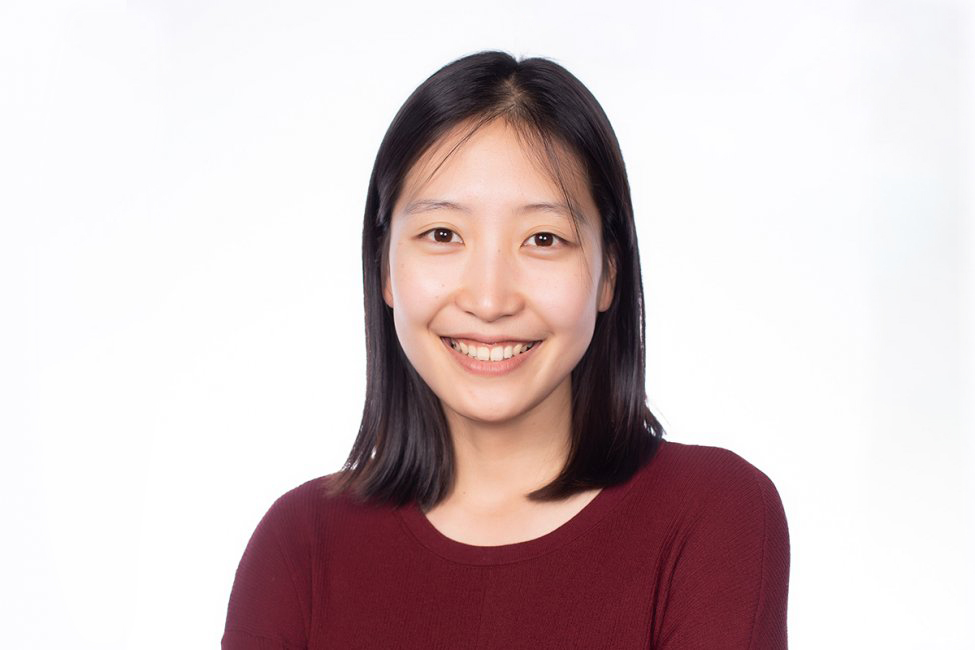
 Eunsol Choi
· 5 previous affiliations
- New York UniversitySince 2024
- Assistant Professor · Since 2024
- The University of Texas at Austin2020–2024
- Assistant Professor · 2020–2024
- Google (United States)2019–2020
- Visiting Researcher · 2019–2020
- University of Washington2012–2019
- PhD student · 2012–2019
- Cornell Tech2008–2012
- Undergrad student · 2008–2012
Research Overview
Eunsol Choi focuses on natural language processing, specifically designing efficient language models, robust retrieval systems, and rigorous evaluation benchmarks. Her trajectory spans foundational work in question answering and machine reading comprehension to recent investigations into human-model interaction and culturally grounded multilingual evaluation. Currently, she investigates how language models can dynamically adapt their reasoning and interact with users to resolve ambiguity.
Research Trajectory
Early work focused on semantic parsing and bridging the gap between natural language and structured data. In Scaling Semantic Parsers with On-the-Fly Ontology Matching, she introduced a two-stage parser that decoupled linguistic structure from target ontologies to resolve mismatches against rigid database schemas.
This interest in complex language understanding naturally transitioned into large-scale machine reading comprehension and question answering (QA). She developed TriviaQA: A Large Scale Distantly Supervised Challenge Dataset for Reading Comprehension, a benchmark that decoupled question generation from document selection to create more challenging evaluation scenarios. Continuing to push the boundaries of QA, she and her collaborators developed QuAC: Question Answering in Context, which modeled information-seeking dialogs between a student and a teacher, introducing open-ended and unanswerable questions within conversational contexts.
As QA systems matured, her research expanded to address the diversity of global languages and the dynamic nature of real-world knowledge. She contributed to TyDi QA: A Benchmark for Information-Seeking Question Answering in Typologically Diverse Languages, evaluating models across a wide linguistic spectrum. This multilingual focus extended to cross-lingual open-retrieval QA with XOR QA: Cross-lingual Open-Retrieval Question Answering, participating in the broader research areas of Shared Semantic Spaces for Language Agnostic Retrieval and Bridging Information Asymmetry across Multilingual Knowledge Bases. Concurrently, she investigated how models handle shifting facts and contexts. In SituatedQA: Incorporating Extra-Linguistic Contexts into QA, she demonstrated that state-of-the-art models struggle when questions depend on specific temporal or geographical contexts. She also explored how sentences rely on their surrounding text in Decontextualization: Making Sentences Stand-Alone, defining a task to rewrite excerpts so they remain interpretable out of context.
Around this time, her work began to formally address ambiguity and human uncertainty. In Capturing Label Distribution: A Case Study in NLI, she showed that training on multi-annotated examples better captures inherent uncertainty than relying on single "gold" labels, advancing the research direction of Modeling Human Disagreement as a Signal for Linguistic Ambiguity.
The evaluation of generative models became a central theme as large language models (LLMs) grew more capable. She critically examined existing metrics in A Critical Evaluation of Evaluations for Long-form Question Answering, revealing that domain experts prioritize completeness and factuality over the conciseness favored by crowdworkers. This work highlighted the limitations of automatic metrics like ROUGE and contributed to the area of Scalable Evaluation of Generative Models with LLM Judges. She further expanded evaluation paradigms to encompass cultural nuances in CaLMQA: Exploring culturally specific long-form question answering across 23 languages. This translation-free dataset exposed a significant "cultural gap" in LLM reliability, driving progress in Culturally Grounded Benchmarks for Multilingual Evaluation and Granular Verification via Atomic Fact Decomposition.
Recent work has increasingly focused on retrieval augmentation, human-model interaction, and reasoning efficiency. To address bias in retrieval systems, she introduced the BERDS benchmark in Open-World Evaluation for Retrieving Diverse Perspectives, showing that current retrievers often fail to surface diverse viewpoints on contentious topics. She also improved encoder-only retrieval models by incorporating in-context examples during fine-tuning in RARe: Retrieval Augmented Retrieval with In-Context Examples.
To improve how models handle ambiguity during interaction, she developed a framework in Clarify When Necessary: Resolving Ambiguity Through Interaction with LMs that helps LLMs decide when to ask clarification questions based on simulated user intents. Her investigations into reasoning have also yielded novel architectures and training methods. In Learning to Reason Across Parallel Samples for LLM Reasoning, she trained a compact Sample Set Aggregator to efficiently synthesize multiple reasoning paths. Exploring the limits of continuous reasoning, Training Continuous Chain of Thought Models: A Tale of Two Regimes introduced a method for models to "think" using dense latent representations, while also identifying severe degradation when scaling to long reasoning traces. Finally, DiffAdapt: Difficulty-Adaptive Reasoning for Token-Efficient LLM Inference presented a lightweight framework that predicts problem difficulty from internal hidden states, dynamically optimizing inference strategies to reduce token usage and accelerate computation.
More recently, Choi has extended her focus to model interpretability, diverse generation, and multi-round retrieval. In Making LLMs Say What They Think: Measuring and Improving CoT-Interpretability Alignment, she and her collaborators introduced a metric and post-training approach to audit and improve the agreement between chain-of-thought traces and internal computations. Broadening interpretability beyond text models, Discovering Interpretable Acoustic Features in Autoregressive Voice-Cloning TTS Models introduced a feature-based interpretability framework using sparse autoencoders and PCA to probe and steer acoustic properties in speech synthesis models. To ensure comprehensive outputs for prompts with numerous valid solutions, she contributed to No Single Best Model for Diversity: Learning a Router for Sample Diversity, proposing a routing framework that directs queries to the model best suited for generating diverse answers. Addressing the retrieval analogue of this challenge, RVR: Retrieve-Verify-Retrieve Iterative Framework for Comprehensive Retrieval introduced a multi-round framework that iteratively verifies and augments queries to maximize answer coverage across documents.
Current Directions
The most recent papers in the evidence point to three primary areas of ongoing research:
First, she is investigating adaptive and efficient reasoning in large language models. Recent work explores how models can dynamically allocate computational resources by predicting problem difficulty from internal hidden states, as well as testing the limits of continuous, latent reasoning mechanisms that bypass verbose text generation.
Second, her research addresses interactive ambiguity resolution. Rather than forcing models to provide direct answers to underspecified queries, recent frameworks simulate potential user intents to help models determine exactly when to pause and ask for clarification, fostering more reliable human-AI interaction.
Finally, she continues to advance culturally grounded evaluation and diverse retrieval. Recent benchmarks move beyond monolithic, culturally agnostic factuality to assess how well models answer questions rooted in specific local cultures. Concurrently, she is developing open-world evaluation methods to ensure retrieval systems surface a broad spectrum of perspectives on contentious issues, rather than simply echoing the bias of the user's prompt.
Profile updated
Loading new papers…
Other researchers whose papers cluster into the same research directions — a proxy for overlapping technical interests and shared intellectual neighborhoods.
See something wrong? Report a mistake