

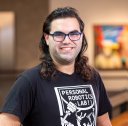
 Ethan Kroll Gordon
· 5 previous affiliations
- University of PennsylvaniaSince 2024
- Postdoctoral Researcher · Since 2024
- Full-time parenting · 2025
- University of Washington2018–2024
- Researcher · 2023–2024
- Graduate Research And Teaching Assistant · 2018–2023
- Travel · 2022
- Research Internship · 2022
- Summer STEM Institute (SSI)2021
- Research Mentor · 2021
- Princeton University2013–2017
- Undergrad student · 2013–2017
Research Overview
Ethan Kroll Gordon focuses on autonomous robotic manipulation, interactive perception, and assistive robotics. His trajectory centers on developing adaptive control and learning frameworks for robot-assisted feeding, enabling systems to handle diverse and previously unseen physical properties. His most recent work investigates the system-level integration of safe, portable, and adaptable feeding robots for real-world human-robot interaction.
Research Trajectory
Gordon’s research trajectory is heavily anchored in the physical and algorithmic challenges of robot-assisted feeding. Early in this trajectory, he participated in collaborative work addressing how robots can successfully acquire diverse food items. As a co-author on Robot-Assisted Feeding: Generalizing Skewering Strategies Across Food Items on a Plate (2019), he contributed to the insight that foods with similar physical properties exhibit similar success rates across a given action space. By analyzing a dataset of 2,450 robot bite acquisition trials across 16 food items, this work demonstrated how a robot could generalize skewering strategies to previously unseen foods.
In 2020, Gordon transitioned to leading research in this domain, framing bite acquisition as an online learning problem. As first author of Adaptive Robot-Assisted Feeding: An Online Learning Framework for Acquiring Previously Unseen Food Items, he modeled the selection of manipulation strategies as a linear contextual bandit problem. This approach allowed the robotic system to adapt to changing user preferences and uncertain environments by combining low-level controllers and planners into discrete action trajectories, evaluated within a simulated environment using a doubly robust loss framework.
This focus on adaptability naturally extended into the broader research direction of Interactive Perception for Robotic Material and State Discovery. Recognizing that visual data alone is often insufficient to determine the physical properties of food, Gordon led Leveraging Post Hoc Context for Faster Learning in Bandit Settings with Applications in Robot-Assisted Feeding (2021). This work aligns closely with themes such as Interactive Multimodal Learning of Latent Physical Properties. The core insight was that haptic context collected during and after manipulation—termed "post hoc" context—could be used to learn latent multi-modal properties, thereby accelerating the robot's ability to adapt its visual models to new items.
While primarily focused on assistive feeding, Gordon has also contributed to broader challenges in robotic control, including the area of Reinforcement Learning for Continuous Action Spaces. He was a middle author on Benchmarking Structured Policies and Policy Optimization for Real-World Dexterous Object Manipulation (2022), which evaluated methods for the open-source TriFinger robotic platform. This research highlighted the value of "structured policies" that combine classical robotics with modern policy optimization to improve sample efficiency, interpretability, and reliability in dexterous manipulation tasks.
Returning to the specific constraints of assistive robotics, Gordon’s work expanded from the mechanics of food acquisition to the human-robot interaction phase of feeding. As second author on Balancing Efficiency and Comfort in Robot-Assisted Bite Transfer (2022), he helped formalize user comfort and feeding efficiency as heuristics for motion planning. The project utilized heuristics-guided bi-directional Rapidly-exploring Random Trees (h-BiRRT) to generate bite transfer trajectories that safely and comfortably accommodate arbitrary food geometries.
In 2023, Gordon led Towards General Single-Utensil Food Acquisition with Human-Informed Actions, tackling the extensive state and action spaces involved in using general-purpose utensils. The research posited that the visual diversity of food often belies a degree of physical homogeneity. By leveraging human-informed actions—parameterizing motions like scoops, skewers, wiggles, and twirls—the work demonstrated that a relatively small subset of actions is sufficient to acquire a wide variety of foods, significantly simplifying the learning requirements for acquisition policies.
Current Directions
The most recent papers in the evidence indicate a shift from isolated algorithmic challenges toward comprehensive system integration and deployment. Recent work investigates the engineering and design of adaptable, safe, and portable robot-assisted feeding systems. This suggests a current focus on translating foundational research in contextual bandits, interactive perception, and motion planning into robust, user-facing robotic platforms capable of operating safely in real-world human environments.
Profile updated
Loading new papers…
Other researchers whose papers cluster into the same research directions — a proxy for overlapping technical interests and shared intellectual neighborhoods.
See something wrong? Report a mistake