

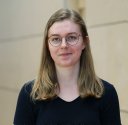
 Esther Ploeger
· 3 previous affiliations
- Utrecht UniversitySince 2026
- Postdoc · Since 2026
- Aalborg University2022–2025
- PhD student · 2022–2025
- University of Groningen2018–2022
- MS student · 2021–2022
- Undergrad student · 2018–2021
Research Overview
Esther Ploeger focuses on multilingual natural language processing, linguistic typology, and the evaluation of machine translation systems. Her work addresses the limitations of categorical linguistic databases by modeling language features as continuous gradients and establishes rigorous frameworks for typologically diverse language sampling. Recently, she investigates culturally grounded benchmarking and methods for preserving lexical diversity in literary translation.
Research Trajectory
Ploeger’s early research explored hybrid natural language processing architectures, as seen in her development of a coreference resolution system for Dutch literature. A Hybrid Rule-Based and Neural Coreference Resolution System with an Evaluation on Dutch Literature (2021) combined traditional rule-based sieves with lightweight neural classifiers, achieving high performance on long literary texts while maintaining computational efficiency.
Moving into broader multilingual NLP, she began addressing structural limitations in how languages are categorized. In The Past, Present, and Future of Typological Databases in NLP (2023), she critiqued the "categorical bias" of databases like WALS and Grambank, arguing that forcing linguistic reality into discrete boxes limits NLP progress and complicates work in the area of Predicting Missing Structural Features in Global Typological Databases. This established her focus on the research direction of Modeling Linguistic Gradience with Soft Constraints. She formalized this continuous approach in Multilingual Gradient Word-Order Typology from Universal Dependencies (2024), introducing a dataset that extracts word order as a statistical gradient rather than a rigid classification, demonstrating that regression models capture these nuances more accurately than traditional discrete categorization.
Building on her typological expertise, Ploeger systematically investigated how the NLP community selects languages for evaluation. In a meta-analysis titled What is "Typological Diversity" in NLP? (2024), she examined the widespread but often loosely defined claims of typological diversity used to justify language sampling. She followed this with A Call for Consistency in Reporting Typological Diversity (2024), revealing stark inconsistencies in how diversity is claimed across the literature and advocating for quantitative metrics like lang2vec. To solve these sampling flaws, she and her collaborators introduced A Principled Framework for Evaluating on Typologically Diverse Languages (2024), providing a rigorous methodology for selecting representative language sets to test cross-lingual generalizability. Her commitment to expanding evaluation to underrepresented languages is also evident in her participation in the development of CreoleVal: Multilingual Multitask Benchmarks for Creoles (2024), a comprehensive suite addressing the scarcity of resources for Creole languages.
Parallel to her work in typology, Ploeger has made significant contributions to machine translation (MT), particularly concerning stylistic and morphological richness. In Towards Tailored Recovery of Lexical Diversity in Literary Machine Translation (2024), she addressed the tendency of MT to produce lexically impoverished text, reframing the challenge as recovering lost diversity through targeted reranking rather than rigid augmentation. She expanded on this in Multi-perspective Alignment for Increasing Naturalness in Neural Machine Translation (2025), utilizing a reinforcement learning framework to balance content preservation with naturalness, effectively mitigating "translationese" in literary contexts. Her MT research also extends to morphologically complex, low-resource languages; in Tokenization on Trial: The Case of Kalaallisut-Danish Legal Machine Translation (2025), she evaluated subword segmentation techniques, demonstrating the importance of preserving morphological boundaries for languages like Kalaallisut. Broadening the scope of MT evaluation, she investigated cross-lingual performance in A Cross-Lingual Perspective on Neural Machine Translation Difficulty (2025), which analyzed 56 European translation directions to show that data-driven similarity metrics have largely superseded traditional statistical MT indicators, advancing the broader area of Multilingual and Cross-lingual Benchmarking for Large Models.
In her most recent work, Ploeger has focused on quantifying language relationships and culturally grounding model evaluations. She co-developed DistaLs: a Comprehensive Collection of Language Distance Measures (2025), a toolkit providing diverse metrics for language distance to inform cross-lingual transfer, contributing to areas such as Script Similarity for Cross-Lingual Knowledge Transfer. Furthermore, she has participated in large-scale collaborative efforts to evaluate models on regional and cultural knowledge. This includes INCLUDE: Evaluating Multilingual Language Understanding with Regional Knowledge (2025), a massive benchmark testing large language models on local professional exams to avoid the pitfalls of translated English content, aligning with the research direction of Native Source Benchmarking for Culturally Grounded Evaluation. Similarly, she contributed to SHADES: Towards a Multilingual Assessment of Stereotypes in Large Language Models (2025), a dataset spanning 16 languages designed to evaluate culturally specific social biases globally, a key advancement in the research direction of Culturally Grounded Benchmarks for Multilingual Evaluation.
Current Directions
The most recent papers in the evidence indicate a strong focus on culturally grounded evaluation and the refinement of cross-lingual measurement. Ploeger is actively investigating how to benchmark large language models on authentic regional knowledge and culturally specific social biases, moving away from translated English datasets that fail to capture local nuances. Concurrently, her work addresses the mechanics of cross-lingual transfer and machine translation, exploring comprehensive language distance metrics and reinforcement learning techniques to preserve naturalness and lexical diversity in generated text. This dual focus ensures that multilingual models are evaluated not just on structural accuracy, but on their cultural relevance and stylistic richness across a truly diverse sample of the world's languages.
Profile updated
Loading new papers…
Other researchers whose papers cluster into the same research directions — a proxy for overlapping technical interests and shared intellectual neighborhoods.
See something wrong? Report a mistake