

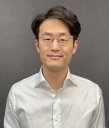
 Ernest K. Ryu
· 3 previous affiliations
- University of California, Los AngelesSince 2024
- Assistant Professor · Since 2024
- Assistant Adjunct Professor · 2016–2019
- OpenAI (United States)Since 2026
- Researcher · Since 2026
- Seoul National University2020–2024
- Assistant Professor · 2020–2024
Research Overview
Ernest K. Ryu focuses on the theoretical foundations of mathematical optimization, fixed-point iterations, and the dynamics of generative models. His trajectory spans from fundamental complexity bounds in convex-concave minimax problems to geometric frameworks for analyzing operator splitting methods. Most recently, his focus has expanded to address numerical stiffness in diffusion models and the convergence properties of reinforcement learning algorithms.
Research Trajectory
The early phase of his research explored foundational mathematical programming and the behavior of optimization algorithms under pathological conditions. In 2015, he investigated infinite-dimensional linear programming to construct Gauss-like quadrature rules in Extensions of Gauss Quadrature Via Linear Programming. Moving into operator splitting, he and his collaborators demonstrated how divergent iterates in Douglas-Rachford splitting could be repurposed to identify pathological conic programs in A new use of Douglas-Rachford splitting for identifying infeasible, unbounded, and pathological conic programs. Around the same time, he established convergence guarantees for non-convex frameworks that integrate modern denoising priors into proximal algorithms in Plug-and-Play Methods Provably Converge with Properly Trained Denoisers.
His attention then turned to the rigorous evaluation and acceleration of optimization algorithms. He developed tight contraction factors for operator splitting in Operator Splitting Performance Estimation: Tight Contraction Factors and Optimal Parameter Selection. This laid the groundwork for contributions to the area of Performance Estimation Programming for Optimization Algorithms, which culminated in establishing matching upper and lower complexity bounds for nonexpansive and contractive operators in Exact Optimal Accelerated Complexity for Fixed-Point Iterations.
In the realm of minimax optimization, he introduced the Extra Anchored Gradient (EAG) algorithm in Accelerated Algorithms for Smooth Convex-Concave Minimax Problems with O(1/k^2) Rate on Squared Gradient Norm. This work achieved an optimal convergence rate, advancing the broader research directions of Accelerating Gradient Norm Minimization and Theoretical Foundations of Last-Iterate Stochastic Convergence. To further analyze nonlinear operators, he proposed a novel framework mapping operator behavior to 2D Euclidean geometry in Scaled relative graphs: nonexpansive operators via 2D Euclidean geometry. Concurrently, he investigated the optimization landscapes of deep learning models. In WGAN with an Infinitely Wide Generator Has No Spurious Stationary Points, his group proved that infinite width eliminates non-global minima in two-layer Wasserstein GANs, contributing to the study of Spurious Stationary Points and Deceptive Attractors.
Returning to foundational gradient methods, his lab provided a human-readable Lyapunov analysis of the optimized gradient method in Factor-$\sqrt{2}$ Acceleration of Accelerated Gradient Methods. His team also expanded his earlier work on pathological problems, demonstrating that randomized coordinate-update fixed-point iterations converge to the infimal displacement vector, a finding detailed in Coordinate-update algorithms can efficiently detect infeasible optimization problems. This advanced the specific research direction of Infeasibility Detection via Infimal Displacement Vectors.
His recent trajectory reflects an increasing focus on the theoretical underpinnings of modern machine learning paradigms. He provided a rigorous foundation for policy gradient methods in undiscounted total-reward settings—a regime critical for large language models—in Why Policy Gradient Algorithms Work for Undiscounted Total-Reward MDPs. In the generative modeling space, he helped organize community efforts around deep generative models in Deep Generative Model in Machine Learning: Theory, Principle and Efficacy. Building on this, his lab developed a training-free sampler to accelerate image and video generation in STORK: Faster Diffusion and Flow Matching Sampling by Resolving both Stiffness and Structure-Dependence, directly addressing challenges in the area of Resolving Numerical Stiffness in Generative Differential Equations. Finally, he participated in analyzing the geometric conditions that cause Sharpness-Aware Minimization to fail at large perturbation radii in Sharpness-Aware Minimization Can Hallucinate Minimizers.
Current Directions
The most recent papers in the evidence indicate a dual focus on the theoretical stability of modern machine learning algorithms and the efficiency of generative models. One major current direction involves resolving numerical stiffness in diffusion and flow-matching models to accelerate sampling without requiring additional training. Alongside this, ongoing work investigates the optimization landscapes of deep learning, specifically identifying and mitigating pathological behaviors such as hallucinated minimizers in sharpness-aware minimization. Furthermore, recent theoretical efforts address the convergence of policy gradient methods in undiscounted reinforcement learning environments, providing rigorous mathematical foundations for techniques widely used in training large-scale models.
Profile updated
Loading new papers…
Other researchers whose papers cluster into the same research directions — a proxy for overlapping technical interests and shared intellectual neighborhoods.
See something wrong? Report a mistake