

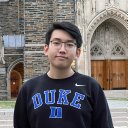
 Eric Qu
· 8 previous affiliations
- Lawrence Berkeley National LaboratorySince 2025
- Research Assistant · Since 2025
- Nvidia (United States)Since 2026
- Research Intern · Since 2026
- Current
- International Computer Science InstituteSince 2023
- PhD student · Since 2023
- Meta (United States)2024–2025
- Visiting Researcher · 2024–2025
- Microsoft (United States)2022–2023
- Intern · 2022–2023
- Duke University2019–2023
- Undergrad student · 2019–2023
- Duke Kunshan University2019–2023
- Undergrad student · 2019–2023
Research Overview
Eric Qu focuses on AI for science, specifically developing scalable machine learning interatomic potentials and advancing non-Euclidean deep learning. His trajectory spans foundational work in hyperbolic neural networks and sequence modeling to the design of efficient, attention-based architectures for atomistic simulation. Currently, he investigates methods for improving the speed, accuracy, and physical smoothness of molecular models across diverse chemical domains.
Research Trajectory
Early in his career, Qu's research focused heavily on the area of Numerical Stability in Non-Euclidean Deep Learning and the broader direction of Deep Learning on Hyperbolic Manifolds. In 2022, he introduced a hybrid generative framework in Hyperbolic Neural Networks for Molecular Generation designed to model hierarchical data structures like molecules and trees. A persistent challenge in this domain is the numerical instability that occurs during training. To address this, he developed a novel layer detailed in Lorentz Direct Concatenation for Stable Training in Hyperbolic Neural Networks, which provided a more stable alternative to existing tangent-space concatenation methods. This foundational improvement enabled the training of deeper, more complex hyperbolic models, leading to the design of a specialized hyperbolic autoencoder for generative modeling in Autoencoding Hyperbolic Representation for Adversarial Generation.
Expanding his work in geometric deep learning, Qu contributed to the research direction of Adaptive Geometric Primitives for Neural Shape Representation by developing novel convolution layers for non-Euclidean spaces. Hyperbolic Convolution via Kernel Point Aggregation introduced HKConv, a layer that utilizes fixed kernel points to extract local geometric patterns from hierarchical data, bridging a gap between Euclidean convolutional networks and hyperbolic geometry. This concept was further formalized and generalized in Hyperbolic Kernel Convolution: A Generic Framework, demonstrating strong performance across node and graph classification tasks by effectively capturing local geometric patterns that previous hyperbolic networks missed.
Parallel to his geometric research, Qu investigated the fundamental properties of sequence data. In Data Continuity Matters: Improving Sequence Modeling with Lipschitz Regularizer, he analyzed how data continuity affects the performance of deep models, contributing to the area of Spectral Bias and the Frequency Principle in Neural Networks. Continuing with sequential data, he explored the research direction of Scaling Subsequence Search and Motif Discovery in Time Series. In CNN Kernels Can Be the Best Shapelets, he and his collaborators mathematically demonstrated that time-series shapelets—interpretable sub-sequences used for classification—are equivalent to specific convolutional neural network configurations. This insight yielded ShapeConv, a novel and interpretable layer that allows for the direct injection of human domain expertise into time-series models.
More recently, Qu's trajectory has shifted toward AI for science, specifically advancing the research direction of Foundation Models for Atomistic Simulation. In The Importance of Being Scalable: Improving the Speed and Accuracy of Neural Network Interatomic Potentials Across Chemical Domains, he challenged the prevailing reliance on hard-coded physical symmetries in neural network interatomic potentials (NNIPs). By prioritizing scalable architectures and optimized attention mechanisms over complex physical constraints, this work achieved significant improvements in both computational speed and predictive accuracy.
Building on this scalable approach, A recipe for scalable attention-based ML potentials: unlocking long-range accuracy with all-to-all node attention addressed the "locality trap" in molecular modeling. The work demonstrated how all-to-all node attention can capture long-range interactions, such as electrostatics and dispersion, without requiring explicit, computationally expensive physics-based terms. Finally, to ensure these scalable models remain physically viable for long-term simulations, Qu collaborated on From Evaluation to Design: Using Potential Energy Surface Smoothness Metrics to Guide ML Interatomic Potential Architectures. This research introduced the Bond Smoothness Characterization Test (BSCT) to detect unphysical discontinuities in models and guided the development of MinDScAIP, a Transformer-based potential that balances high accuracy with the physical smoothness necessary for stable molecular dynamics.
Current Directions
The most recent papers in the evidence address the design, scalability, and evaluation of machine learning interatomic potentials (MLIPs) for molecular simulation. Current work investigates how scalable, attention-based architectures can outperform traditional models that rely heavily on hard-coded physical symmetries. A major focus is overcoming the limitations of local message-passing to accurately model long-range interactions—such as electrostatics and dispersion—using all-to-all node attention mechanisms. Additionally, recent research emphasizes the critical importance of physical smoothness in potential energy surfaces, developing new evaluation metrics to ensure that highly accurate, scalable models remain stable and physically realistic during long-term molecular dynamics simulations.
Profile updated
Loading new papers…
Other researchers whose papers cluster into the same research directions — a proxy for overlapping technical interests and shared intellectual neighborhoods.
See something wrong? Report a mistake