

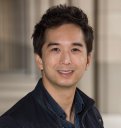
 Eric Nguyen
· 5 previous affiliations
- Radical NumericsSince 2025
- Co-Founder & CEO · Since 2025
- Research Intern · 2025
- Research Intern · 2021
- Research Assistant · 2020
- Cornell University2017–2019
- M.Eng., Computer Science · 2017–2019
Research Overview
Eric Nguyen focuses on the intersection of sequence modeling, hardware-aware algorithm design, and generative genomics. His work addresses the fundamental computational bottlenecks of standard Transformer architectures—specifically their quadratic scaling with sequence length—by developing sub-quadratic operators and optimized GPU kernels. As a researcher at Stanford University and a co-founder of Radical Numerics, Nguyen’s trajectory has moved from the theoretical design of signal-processing-inspired neural operators to the deployment of large-scale foundation models for biological discovery and automated AI research.
Research Trajectory
Nguyen’s research began with a focus on the efficiency gap in sequence modeling, particularly the tension between the expressive power of Transformers and their $O(L^2)$ computational complexity. Early in this period, his work explored Bridging the Efficiency Gap in State Space Models and other alternatives to the attention mechanism. This phase was characterized by the development of the Hyena operator, which replaced the attention matrix with a hierarchy of implicitly parameterized long convolutions and data-controlled gating. This approach aimed to maintain the quality of Transformers while achieving sub-quadratic scaling, a critical requirement for processing long-context data such as high-resolution images or entire genomes.
By 2023, Nguyen’s focus shifted toward the practical implementation of these operators on modern hardware. Recognizing that theoretical complexity does not always translate to wall-clock speedups due to the "memory wall," he contributed to the development of IO-aware algorithms. This involved Operator Fusion for Memory-Bound Deep Learning and leveraging specialized hardware features like Tensor Cores. A significant outcome of this period was the creation of systems that could handle sequences millions of tokens long, enabling the first models capable of processing genomic data at single-nucleotide resolution. This work laid the foundation for Sub-quadratic Architectures for Long-Context Genomics, moving beyond the local "sliding window" constraints of traditional convolutional networks.
In 2024 and 2025, Nguyen’s work evolved toward the scaling and hybridization of these architectures. He participated in the development of Mechanistic Architecture Design (MAD), a framework for predicting the performance of novel architectures at scale using synthetic unit tests. This methodological shift allowed for the creation of "multi-hybrid" models that interleave different operator types—such as attention, gated convolutions, and state-space models—to optimize for both training efficiency and downstream performance. This period also saw the application of these models to large-scale biological problems, culminating in the publication of the Evo model in Science, which utilized these architectural innovations to perform generative tasks across the human genome.
Current Directions
Nguyen’s current research is increasingly focused on the concept of Recursive Self-Improvement (RSI) and automated AI research. Through Radical Numerics, he is investigating how AI systems can be designed to improve their own architectures and training protocols. This involves the Automated Evolution of Hardware Specific GPU Kernels, where the goal is to move away from hand-tuned optimizations toward systems that can automatically generate efficient code for evolving hardware targets.
Additionally, Nguyen continues to work on generative genomics, exploring how foundation models can be used as "co-scientists" to accelerate biological discovery. This includes his involvement with the Co-Scientist team at Google DeepMind, where he works on agents designed for scientific exploration. His ongoing PhD work at Stanford, advised by Steve Baccus and Chris Ré, bridges neurobiology and computer science, seeking to apply deep signal processing and sequence modeling to understand complex biological systems.
Representative Work
HyenaDNA: Long-Range Genomic Sequence Modeling at Single Nucleotide Resolution As the first author of this work, Nguyen introduced a genomic foundation model that addresses the "context bottleneck" in bioinformatics. While previous models were limited by the quadratic scaling of Transformers or the local nature of standard CNNs, HyenaDNA utilizes sub-quadratic implicit convolutions to process sequences up to 1 million tokens. This allows the model to capture long-range regulatory interactions in the genome at single-nucleotide resolution. The paper demonstrates that HyenaDNA is significantly faster to train than standard Transformers while achieving state-of-the-art results on genomic benchmarks.
FlashFFTConv: Efficient Convolutions for Long Sequences with Tensor Cores In this senior-author (PI) capacity, Nguyen led the development of a system designed to optimize long-sequence convolutions on modern GPUs. FlashFFTConv rewrites the Fast Fourier Transform (FFT) as a series of matrix multiplications, allowing it to leverage specialized Tensor Cores that are typically reserved for dense matrix operations. By using "Monarch" matrix decomposition and kernel fusion, the system achieves nearly an 8x speedup over standard PyTorch implementations. This technical advancement was a prerequisite for scaling genomic models to the level of entire human genes.
Systems and Algorithms for Convolutional Multi-Hybrid Language Models at Scale As the second author, Nguyen contributed to the development of StripedHyena 2, a multi-hybrid architecture designed for large-scale language modeling. This work addresses the efficiency bottlenecks of Transformers at the 40-billion parameter scale by co-designing hardware-aware kernels that treat convolutions as matrix multiplications. The research demonstrates that hybridizing specialized convolutional operators with attention can result in significant training speedups (up to 2.9x) compared to highly optimized Transformer baselines, while maintaining or exceeding model quality.
Hyena Hierarchy: Towards Larger Convolutional Language Models Nguyen participated in the design of the Hyena operator, a sub-quadratic neural operator intended as a drop-in replacement for the attention mechanism. The Hyena operator uses a hierarchy of gated long convolutions to match the expressive power of Transformers without the quadratic cost. This work was foundational in demonstrating that attention is not the only mechanism capable of achieving high performance in large-scale language and vision tasks, particularly as sequence lengths increase.
Mechanistic Design and Scaling of Hybrid Architectures In this work, Nguyen contributed to the Mechanistic Architecture Design (MAD) framework. The framework utilizes small-scale synthetic "unit tests"—designed to measure specific capabilities like induction or associative recall—to predict the scaling behavior of hybrid architectures. This methodology was used to develop the architecture for the Evo model, demonstrating that interleaving different layer types can outperform pure Transformer or Mamba-based models across a wide range of parameters and tasks.
Simple Hardware-Efficient Long Convolutions for Sequence Modeling Nguyen contributed to this research which argues that the complex mathematical frameworks of State Space Models (SSMs) can often be replaced by simpler, regularized long convolutions. The paper introduces FLASHBUTTERFLY, an IO-aware algorithm that utilizes hardware-friendly Butterfly decompositions to accelerate these convolutions. This work highlights a recurring theme in Nguyen’s research: the importance of regularizing kernels for smoothness to achieve high performance in sequence modeling tasks while maintaining hardware efficiency.
Profile updated
Loading new papers…
Other researchers whose papers cluster into the same research directions — a proxy for overlapping technical interests and shared intellectual neighborhoods.
See something wrong? Report a mistake