

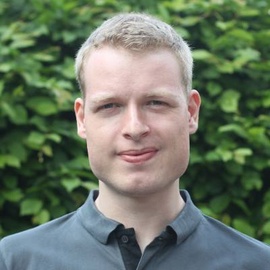
 Eric Heiden
· 4 previous affiliations
- Nvidia (United States)Since 2020
- Researcher · Since 2022
- Intern · 2020–2021
- University of Southern California2017–2022
- PhD student · 2017–2022
- Intern · 2020
- Jet Propulsion Laboratory2018–2019
- Intern · 2018–2019
Research Overview
Eric Heiden focuses on differentiable physics simulation, robot learning, and the reduction of the simulation-to-reality gap in autonomous systems. His trajectory spans early work in motion planning to the development of advanced simulation engines that integrate neural networks and physical laws. Currently, his research addresses multi-modal policy learning and complex, contact-rich manipulation tasks.
Research Trajectory
The early phase of Heiden’s research centered on navigation and path planning for autonomous systems. In 2017, he presented Planning high-speed safe trajectories in confidence-rich maps, establishing a foundation in generating reliable movements in uncertain environments. This interest in robust planning later culminated in Bench-MR: A Motion Planning Benchmark for Wheeled Mobile Robots (2021), an open-source framework designed to evaluate sampling-based motion planning algorithms for nonholonomic systems.
By 2019, his focus shifted toward bridging the gap between simulation and real-world robotics through differentiable physics. He introduced Interactive Differentiable Simulation, a physics engine designed to allow deep learning architectures to efficiently infer the physical properties of rigid-body systems. This work contributed to the broader research area of Optimization through Discontinuous Contact Dynamics, enabling agents to ground their predictions in interpretable, physically meaningful variables rather than opaque latent spaces. Building on the need for robust transfer from simulation to reality, he collaborated on Scaling simulation-to-real transfer by learning a latent space of robot skills (2020), which explored composable skill learning for physical robots.
In 2021, Heiden significantly advanced the integration of neural networks with physics engines. He developed NeuralSim: Augmenting Differentiable Simulators with Neural Networks, a framework that embeds learned models directly into simulation pipelines. This contribution spanned several emerging research directions, including Learning Residual Dynamics via Hybrid Differential Equations, the area of Accelerating Trajectory Optimization for Real-Time Robotic Control, and the field of Accelerating Embodied AI through Neural Policy Distillation.
Simultaneously, he began tackling the highly complex domain of soft material manipulation. He presented DiSECt: A Differentiable Simulation Engine for Autonomous Robotic Cutting (2021), the first differentiable simulator specifically designed for robotic cutting. By enabling gradient-based optimization, DiSECt allowed for the efficient calibration of complex material models and the optimization of cutting trajectories. This work, which he later expanded in the journal article DiSECt: a differentiable simulator for parameter inference and control in robotic cutting (2023), heavily influenced the research direction of Backpropagating Through Physical Laws for System Identification.
Continuing his work on system identification, Heiden explored how simulators could be constructed directly from visual observations. In Learning Articulated Rigid Body Dynamics Simulations From Video (2022), he detailed a pipeline combining inverse rendering with differentiable simulation to infer the kinematic structure and dynamic properties of complex mechanisms from RGB or depth video. That same year, he further formalized his approach to simulation accuracy with Probabilistic Inference of Simulation Parameters via Parallel Differentiable Simulation, leveraging massive GPU parallelism to close the reality gap through Bayesian inference.
In recent years, Heiden has focused on scaling these simulation frameworks to handle increasingly complex, high-dimensional control problems. He participated in the development of Adaptive Horizon Actor-Critic for Policy Learning in Contact-Rich Differentiable Simulation (2024), which addressed the "gradient explosion" problem that occurs when differentiable simulators encounter stiff physical contacts. By dynamically adjusting the rollout horizon, the method successfully scaled to muscle-actuated humanoids with over 150 action dimensions.
Now a Research Scientist at NVIDIA, Heiden contributed to Isaac Lab: A GPU-Accelerated Simulation Framework for Multi-Modal Robot Learning (2025). Serving as the successor to Isaac Gym, this framework provides a high-fidelity environment for training robots at massive scale, significantly advancing the research direction of Zero-Shot Sim-to-Real Transfer for Robotic Control. Concurrently, he has overseen new methodologies in policy learning, including ACGD: Visual Multitask Policy Learning with Asymmetric Critic Guided Distillation (2025) and TopoCut: Learning Multi-Step Cutting with Spectral Rewards and Discrete Diffusion Policies (2025), which enables robots to plan and execute multi-stage cuts on deformable objects across diverse geometries.
Current Directions
The most recent papers in the evidence indicate a strong focus on scaling robotic control for long-horizon, multi-stage tasks and multi-modal policy learning. A primary challenge addressed in this current work is the reliable training of policies in contact-rich environments, where traditional differentiable simulators often struggle with noisy gradients. Recent solutions involve adaptive horizon techniques to bypass gradient explosion during stiff physical contacts, allowing reinforcement learning algorithms to scale to highly complex, high-dimensional systems.
Additionally, recent work investigates advanced manipulation of deformable objects, such as multi-step robotic cutting. This involves combining high-fidelity physics simulators with novel reward structures—such as pose-invariant spectral rewards—and discrete diffusion policies to generalize across varying object geometries. Finally, there is a continued emphasis on massive-scale, GPU-accelerated simulation environments designed to process multi-modal inputs (vision, touch, and proprioception) to achieve zero-shot sim-to-real transfer in a fraction of the traditional training time.
Profile updated
Loading new papers…
Other researchers whose papers cluster into the same research directions — a proxy for overlapping technical interests and shared intellectual neighborhoods.
See something wrong? Report a mistake