

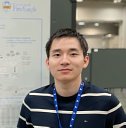
 Erhu He
· 5 previous affiliations
- Samsung Electronics (South Korea)Since 2025
- Machine Learning Engineer · Since 2025
- University of Pittsburgh2019–2025
- PhD student · 2019–2025
- Graduate Student Researcher · 2021–2025
- Teaching Assistant · 2019–2021
- Applied Scientist Intern · 2024
- Researcher Intern · 2023
- University of Colorado Boulder2015–2017
- Master's degree, Computer Science · 2015–2017
Research Overview
Erhu He focuses on the intersection of spatial data science, machine learning fairness, and physics-guided neural networks. This work primarily addresses the challenges of spatial heterogeneity and locational bias in predictive modeling, with applications spanning hydrology, agriculture, and aquatic ecology. By integrating statistical guidance and physical constraints into deep learning architectures, He develops frameworks that maintain predictive accuracy while ensuring equitable performance across diverse geographic regions.
Research Trajectory
The trajectory of this research began with a focus on the fundamental problem of spatial heterogeneity in deep learning. In 2021, work as a second author on A Statistically-Guided Deep Network Transformation and Moderation Framework for Data with Spatial Heterogeneity established a methodology for handling data distributions that vary across space. This early research identified that standard deep learning models often fail when generative processes differ across unknown spatial extents, necessitating a moderation framework that could adapt network transformations to local contexts.
By 2022, this interest in spatial variance evolved into a concentrated investigation of Spatial Fairness for Location-Aware Machine Learning. Recognizing that spatial heterogeneity often leads to implicit model biases—where certain locations receive consistently poorer predictions than others—He began developing frameworks to mitigate these disparities. This period produced foundational work on the "fairness-bias sphere" and bi-level learning frameworks designed to be model-agnostic while remaining statistically robust. These contributions sought to move beyond treating location as a neutral feature, instead viewing it as a potential source of systemic algorithmic bias.
In 2023, the research program expanded to integrate domain-specific physical knowledge into fairness frameworks. This shift addressed the limitation of purely data-driven fairness methods, which often struggle to capture complex physical processes in environmental systems. As a lead author, He applied these concepts to aquatic population dynamics and agricultural yield. By incorporating Bayesian processes and physical laws into neural networks, this work demonstrated that fairness constraints could be maintained even in complex, time-aware scenarios like crop yield prediction across large regions with varying soil and weather properties.
Most recently, from 2024 to 2025, the focus has shifted toward graph-based architectures and Data-Driven Discovery of Adaptive Graph Topologies within river networks. This phase of research addresses how Graph Neural Networks (GNNs) can inadvertently amplify bias through the message-passing process, particularly when aggregating information across heterogeneous river segments. Recent work introduces node-specific graph masking and physics-guided sampling to ensure that predictions of water quality and temperature remain accurate and equitable across locations with different socio-economic attributes.
Current Directions
Current research efforts are directed toward the refinement of fair graph learning and its application to large-scale environmental monitoring. A primary focus is the development of "locational meta-referees" and priority adjustment mechanisms that dynamically manage learning rates to advocate for fair treatment of underrepresented or high-variance locations. This involves exploring how meta-learning can facilitate fast adaptation of fairness constraints in few-shot scenarios.
Additionally, there is an ongoing emphasis on "Knowledge Guided Machine Learning" (KGML). This direction seeks to extract and preserve physics-aware features that are invariant to spatial shifts, ensuring that models remain reliable when deployed in new geographic domains. This work also intersects with sustainability goals, including participation in collaborative projects regarding carbon-neutral optimization in industrial operations through adversarial imitation learning.
Representative Work
A Statistically-Guided Deep Network Transformation and Moderation Framework for Data with Spatial Heterogeneity This 2021 ICDM paper addresses the intrinsic challenge of spatial heterogeneity, where data distributions vary across space at unknown scales. As a key contributor to the moderation framework, He helped develop a method to transform deep networks so they can better mine rich spatial datasets, such as satellite imagery and public health statistics, by accounting for localized generative processes.
Sailing in the location-based fairness-bias sphere In this 2022 first-author paper, He explores the theoretical and practical trade-offs between predictive accuracy and locational fairness. The work establishes a conceptual framework for understanding how location-based biases emerge in machine learning and proposes strategies for navigating the "fairness-bias sphere" in spatial applications.
CGS: Coupled Growth and Survival Model with Cohort Fairness Published in 2023, this work introduces a Bayesian network method for modeling fish population dynamics across connected river systems. As the lead author, He developed a coupled survival-growth model that integrates Bayesian processes into a neural network. The framework significantly reduces the computational time required for complex environmental simulations while ensuring fairness across different fish cohorts.
Physics Guided Neural Networks for Time-Aware Fairness: An Application in Crop Yield Prediction This 2023 paper addresses spatial fairness in the context of agricultural policy. He proposes a physics-guided neural network (PGNN) that models the underlying physical processes of crop growth. The model is designed to prevent biased intervention strategies by ensuring that yield predictions are fair across different geographic regions, even under varying weather and soil conditions.
Fair Graph Learning Using Constraint-Aware Priority Adjustment and Graph Masking in River Networks In this 2024 AAAI paper, He introduces "Fair-Graph," a recurrent neural network designed for large-scale stream networks. The research contributes a novel approach to information aggregation using node-specific graph masks. This method reduces performance disparities in water flow and temperature predictions, particularly in segments where sensor data is noisy or limited.
Physics-Guided Fair Graph Sampling for Water Temperature Prediction in River Networks This 2025 work focuses on the risks of GNNs bringing additional model bias through the aggregation of neighboring node features. As the first author, He proposes a physics-guided sampling method to mitigate biases related to the income and education levels of different locations. The approach ensures that the benefits of high-accuracy water temperature modeling are distributed equitably across diverse communities.
Profile updated
Loading new papers…
Other researchers whose papers cluster into the same research directions — a proxy for overlapping technical interests and shared intellectual neighborhoods.
See something wrong? Report a mistake