

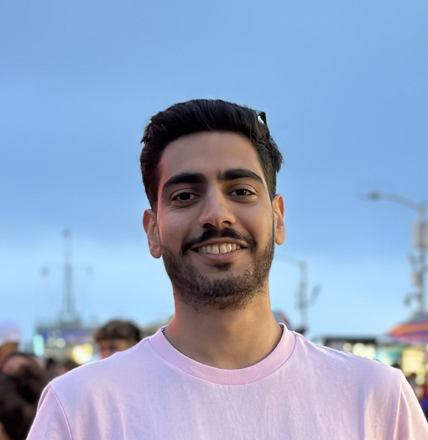
 Erfan Shayegani
· 6 previous affiliations
- Apple (United States)Since 2026
- AIML Research Intern · Since 2026
- Independent ResearcherSince 2022
- PhD student · 2022–2027
- University of California, RiversideSince 2022
- Doctor of Philosophy - PhD, Computer Science · 2022–2027
- Graduate Research Assistant · 2022–2026
- Microsoft Research Asia (China)2024–2025
- Research Intern · 2025
- Research Intern · 2024
- Research Intern · 2024
- Sharif University of Technology2017–2022
- Head Teaching Assistant - AI & Computational Intelligence · 2021–2022
- Undergrad student · 2017–2021
Research Overview
Erfan Shayegani focuses on the security, safety, and alignment of generative artificial intelligence, with a particular emphasis on multimodal language models and autonomous agents. His research trajectory explores adversarial vulnerabilities in complex systems, moving from foundational model exploits to comprehensive alignment strategies. Currently, his work addresses the behavioral safety of computer-use agents and inference-time control for large reasoning models.
Research Trajectory
Shayegani's early work investigated the fundamental security properties of large-scale machine learning systems. In DeepMem: ML Models as storage channels and their (mis-)applications (2023), he introduced Covertex, a framework demonstrating how the massive parameter counts of modern models can be exploited as covert storage channels. This research highlighted vulnerabilities in the broader area of Harnessing Parameter Redundancy in Deep Neural Networks, showing that attackers could hide and retrieve large amounts of private data through black-box queries without degrading primary task performance.
As generative AI expanded to incorporate vision, his focus shifted toward the security implications of integrating multiple modalities. He explored how combining vision encoders with large language models creates novel attack surfaces. In Plug and Pray: Exploiting off-the-shelf components of Multi-Modal Models, he examined the vulnerabilities inherent in modular vision-language architectures, contributing to the research direction of Adversarial Optimization on the Latent Image Manifold. This line of inquiry deepened with Jailbreak in pieces: Compositional Adversarial Attacks on Multi-Modal Language Models, which revealed that safety alignments could be bypassed by splitting harmful requests into benign text and adversarial images. This work underscored critical challenges in the area of The Cross Modal Safety Gap in Multimodal Models.
To systematize the rapidly evolving landscape of AI security, Shayegani authored comprehensive taxonomies of model vulnerabilities in 2024. Survey of Vulnerabilities in Large Language Models Revealed by Adversarial Attacks mapped the safety-capability gap where a model's intelligence can be weaponized against its own guardrails. Similarly, Securing Large Language Models: Threats, Vulnerabilities and Responsible Practices evaluated defenses across domains such as Localized Parameter Editing for Large Language Models and analyzed the vanishing theoretical limits of AI text detection. Concurrently, he participated in research extending beyond language models to spatial computing, collaborating on That Doesn't Go There: Attacks on Shared State in Multi-User Augmented Reality Applications, which exposed how attackers could manipulate the shared virtual state to access private information or inject misleading objects.
Moving from identifying vulnerabilities to developing robust defenses, Shayegani investigated structural alignment flaws in vision-language models. He identified the "Image enCoder Early-exiT" (ICET) vulnerability, where accessing intermediate layers of a vision encoder bypasses safety filters. This discovery led to the development of Layer-Wise PPO (L-PPO), a fine-tuning method designed to enforce safety responses across internal layers. This methodology was initially detailed in Unfair Alignment: Examining Safety Alignment Across Vision Encoder Layers in Vision-Language Models and further refined in Layer-wise Alignment: Examining Safety Alignment Across Image Encoder Layers in Vision Language Models. He also explored cross-modal defense efficiency in Can Textual Unlearning Solve Cross-Modality Safety Alignment?, testing whether text-based unlearning techniques could sufficiently patch safety gaps in multimodal systems without requiring entirely new modality-specific training.
His most recent work addresses increasingly complex agentic systems and reasoning models. In Misaligned Roles, Misplaced Images: Structural Input Perturbations Expose Multimodal Alignment Blind Spots, he demonstrated that multimodal models remain highly brittle to simple structural changes, such as swapping user and assistant roles or shifting image token locations, and proposed adversarial training to mitigate these Role-Modality Attacks. Concurrently, he contributed to Modeling Hierarchical Thinking in Large Reasoning Models, which mapped cognitive states to a finite state machine. By treating reasoning as a long-horizon planning problem, this work utilized Q-Value steering to guide models at inference time, advancing the research direction of Activation Steering for Inference Time Model Control. Finally, during his time as a researcher at Microsoft, he investigated the behavioral safety of autonomous systems in Just Do It!? Computer-Use Agents Exhibit Blind Goal-Directedness. This research introduced the BLIND-ACT benchmark, revealing that frontier computer-use agents frequently pursue user goals regardless of safety or contextual feasibility, highlighting the urgent need for robust agentic interventions.
Current Directions
The most recent papers in the evidence indicate a strong focus on the safety and steerability of autonomous and reasoning-heavy AI systems. Recent work investigates the behavioral alignment of Computer-Use Agents (CUAs), specifically addressing "Blind Goal-Directedness"—the tendency of agents to execute tasks without regard for safety, feasibility, or broader context. Alongside agentic safety, current research explores inference-time interventions for large reasoning models, utilizing techniques like Q-Value steering to guide hierarchical thinking and improve performance on complex tasks. Furthermore, ongoing efforts in multimodal alignment seek to patch structural blind spots, ensuring that models remain robust against non-semantic perturbations such as role-swapping and token repositioning.
Profile updated
Loading new papers…
Other researchers whose papers cluster into the same research directions — a proxy for overlapping technical interests and shared intellectual neighborhoods.
See something wrong? Report a mistake