

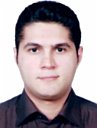
 Erfan Loweimi
· 6 previous affiliations
- University of EdinburghSince 2024
- Research Fellow in Machine Learning · Since 2024
- Research Associate · 2018–2022
- Cisco Systems (United States)Since 2025
- Machine Learning Engineer · Since 2025
- University of Cambridge2022–2024
- Postdoc · 2022–2024
- King's College London2021–2023
- Postdoc · 2021–2023
- University of Sheffield2013–2018
- Doctor of Philosophy (PhD) · 2013–2018
- Amirkabir University of Technology2007–2010
- Master of Science (MSc), Electrical and Electronics Engineering · 2007–2010
Research Overview
Erfan Loweimi focuses on acoustic modeling, speech recognition architectures, and the extraction of robust representations from raw audio waveforms. His trajectory spans the development of interpretable convolutional filters and multi-stream fusion techniques to the optimization of attention mechanisms in sequence models. Most recently, his work investigates the integration of complex spectral components for enhanced multi-stream acoustic modeling.
Research Trajectory
Loweimi’s early work in 2019 addressed foundational challenges in automatic speech recognition (ASR) architectures, particularly concerning sequence length and attention constraints. He participated in the development of Trainable Dynamic Subsampling for End-to-End Speech Recognition, contributing to the area of Exploiting Temporal Redundancy for Efficient Speech Processing. This work proposed a dynamic subsampling recurrent neural network encoder to handle long sequences, noting that static subsampling often retains redundant data or misses relevant acoustic information. Around the same time, he explored attention mechanisms in Windowed Attention Mechanisms for Speech Recognition, introducing a fully-trainable windowed approach to enforce monotonic relationships between input and output sequences, which achieved better performance with significantly smaller window sizes than rule-based methods.
Parallel to these architectural improvements, Loweimi investigated direct waveform modeling and feature normalization. He led research on On Learning Interpretable CNNs with Parametric Modulated Kernel-Based Filters, advancing the broader field of Cochlear Inspired Representations for Robust Machine Listening. Building on SincNet, this work demonstrated that learning filterbanks with modulated kernel-based baseband filters requires fewer parameters and less training data while offering greater interpretability. He also analyzed deep neural networks from a statistical perspective in On the Usefulness of Statistical Normalisation of Bottleneck Features for Speech Recognition, examining how activation functions impact pre-activation densities and showing that bottleneck layer densities can be effectively fitted with a diagonal Gaussian Mixture Model.
Moving into 2020, his focus on raw waveform models deepened. In On the Robustness and Training Dynamics of Raw Waveform Models, he measured the evolution of frequency responses in the first layer of acoustic models across datasets like TIMIT and WSJ to better understand gradient vanishing and filter learning. He then expanded into multi-stream architectures, introducing Raw Sign and Magnitude Spectra for Multi-Head Acoustic Modelling. This research contributed to the research direction of Intermediate Feature Fusion for Multimodal Representation Learning by demonstrating that the sign spectrum encodes vital temporal and source structure, which can be effectively combined with the magnitude spectrum via multi-head convolutional neural networks.
Concurrently, Loweimi collaborated on optimizing Transformer models for speech. In When Can Self-Attention Be Replaced by Feed Forward Layers?, he contributed to the area of Hybrid Architectures for Efficient Long Context Modeling by showing that upper self-attention layers in ASR encoders are often redundant and can be replaced by simpler feed-forward layers to reduce computational complexity. This line of inquiry continued into 2021 with On The Usefulness of Self-Attention for Automatic Speech Recognition with Transformers, which questioned the utility of global sequence views in upper layers given the highly localized, left-to-right nature of acoustic events. To further streamline these models, he co-developed techniques in the area of Preventing Attention Collapse in Deep Architectures through Stochastic Attention Head Removal: A Simple and Effective Method for Improving Transformer Based ASR Models. Observing that many trained attention matrices are close to diagonal, this method randomly drops attention heads during training to create a more robust ensemble at test time.
Returning to acoustic features in 2021, Loweimi continued to push beyond standard magnitude spectra. He investigated the raw short-time phase spectrum in Speech Acoustic Modelling from Raw Phase Spectrum, exploring wrapped, unwrapped, and minimum-phase variants alongside simultaneous deployment of vocal tract and excitation components. He also applied multi-stream fusion to source-filter theory in Speech Acoustic Modelling Using Raw Source and Filter Components. This work advanced the research direction of Decoupling Vocal Excitation from the Vocal Tract Filter, decomposing the raw magnitude spectrum via cepstral liftering and processing the individual streams through bespoke transforms before fusion.
This trajectory culminated in 2023 with Multi-Stream Acoustic Modelling Using Raw Real and Imaginary Parts of the Fourier Transform. Here, he addressed the irreversible information loss inherent in relying solely on magnitude spectra by treating the real and imaginary parts of the Fourier transform as distinct information streams, processing them through separate convolutional networks before combining them at an optimal level of abstraction.
Current Directions
The most recent work in the evidence, dating to 2023, focuses on maximizing the retention of acoustic information through advanced multi-stream modeling. Rather than relying on proxy features derived from magnitude spectra, this current direction investigates the direct use of complex spectral components—specifically the raw real and imaginary parts of the Fourier transform. By processing these components as independent streams, applying separate convolutional pre-processing, and fusing them at optimal levels of abstraction before recurrent post-processing, this research aims to mitigate information loss and improve the underlying speech quality and intelligibility in acoustic models.
Profile updated
Loading new papers…
Other researchers whose papers cluster into the same research directions — a proxy for overlapping technical interests and shared intellectual neighborhoods.
See something wrong? Report a mistake