

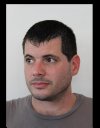
 eran kaufman
· 6 previous affiliations
- Ariel UniversitySince 2015
- Lecturer · Since 2015
- Phd Reseacher & Lecturer · 2016–2021
- Head of the Department of Electrical and Electronic Engineering · Since 2025
- Assistant Professor · Since 2019
- Lecturer · 2020–2025
- Netanya Academic College2020–2025
- Lecturer · 2020–2025
- Postdoctoral Researcher · 2021
- Sela Group2017–2020
- Lecturer and Consultent · 2017–2020
- Tel Aviv University2005–2007
- msc, electric engineering · 2005–2007
Research Overview
Eran Kaufman focuses on geometric machine learning, convex polytope approximation, and cost-sensitive classification. His early work established improved algorithms for learning convex polyhedra with margin guarantees and introduced novel embedding techniques using barycentric coordinates. More recently, his research has expanded into applied speech processing, specifically utilizing synthetic data for word emphasis detection.
Research Trajectory
Eran Kaufman's research trajectory begins with foundational work in geometric machine learning, specifically focusing on the theoretical and algorithmic challenges of learning convex shapes. In 2018, he and his collaborators explored the realizable Probably Approximately Correct (PAC) setting, presenting an improved algorithm in Learning convex polytopes with margin. This work constructed consistent polytopes as an intersection of halfspaces in polynomial time, while also identifying distinct generalizations of margin concepts from hyperplanes to polytopes. This research contributed to the broader areas of Discrete Candidate Sets for Continuous Geometric Optimization and Polytope Approximation for Quantitative Convex Geometry. The theoretical foundations of this approach were later expanded in a 2022 journal publication, Learning Convex Polyhedra With Margin, which further refined the algorithms for quasi-properly learning convex polyhedra with constant-size margins.
Building on his interest in margin-based classification, Kaufman investigated cost-sensitive multiclass classification. In the 2021 paper Apportioned margin approach for cost sensitive large margin classifiers, he participated in developing a framework that shifts margins between classes sharing the same boundary. By dividing the margin according to a prioritization vector, the apportioned margin approach yielded tighter error bounds for critical classes while simultaneously reducing overall out-of-sample error.
During the same period, Kaufman's work in geometric partitioning advanced through the introduction of novel embedding techniques. In Nested Barycentric Coordinate System as an Explicit Feature Map, he and his co-authors demonstrated how barycentric coordinates could transform the complex problem of polytope approximation into a linear classification task within a higher-dimensional, sparse representation. By effectively mapping piecewise linear functions into single linear functions, this method allowed standard linear algorithms to approximate separating polytopes and multiple convex bodies. This contribution intersected with several distinct research directions, including Geometric Learning via Delaunay Simplicial Partitioning, Overcoming the Dimensionality Barrier in Geometric Partitioning, and Eliminating Boundary Artifacts in Partitioned Regression Models.
More recently, Kaufman's research has expanded into applied machine learning domains, particularly in speech and audio processing. In 2023, he led work on Using Deepfake Technologies for Word Emphasis Detection. This research represents a shift toward leveraging synthetic media technologies for analytical tasks, contributing to the research direction of Zero-Shot Speaker Adaptation for Neural Text to Speech.
Current Directions
The most recent papers in the evidence indicate a transition in Kaufman's research focus toward applied speech processing and synthetic media. His current work investigates the use of deepfake technologies as analytical tools, specifically for tasks such as word emphasis detection. This direction explores how generative audio models and synthetic speech data can be repurposed to understand and extract nuanced prosodic features from spoken language, aligning with broader challenges in zero-shot speaker adaptation and neural text-to-speech systems.
Profile updated
| Title | Venue | Year |
|---|---|---|
| Near misses analysis (NMA): A new explainable AI approach for model understanding, comparison, debugging and adversarial attack detection | Neurocomputing | 2026 |
| Using Deepfake Technologies for Word Emphasis Detection | Paclic | 2023 |
| Apportioned margin approach for cost sensitive large margin classifiers | Ann. Math. Artif. Intell | 2021 |
| Nested Barycentric Coordinate System as an Explicit Feature Map | AISTATS | 2021 |
| Learning convex polytopes with margin | NeurIPS | 2018 |
Loading new papers…
Other researchers whose papers cluster into the same research directions — a proxy for overlapping technical interests and shared intellectual neighborhoods.
See something wrong? Report a mistake