

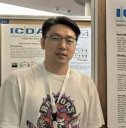
 Enguang Zuo
· 2 previous affiliations
- Tsinghua UniversitySince 2024
- Postdoc · Since 2024
- Xinjiang UniversitySince 2018
- Associate Professor · Since 2024
- PhD student · 2020–2023
- MS student · 2018–2020
Research Overview
Enguang Zuo focuses on anomaly detection in complex data structures, including time series and graph-based representations, as well as computational methods for food computing. Initial collaborative work addressed structural and dynamic anomalies through self-supervised paradigms and masked attention mechanisms. More recently, this focus has expanded to include statistical resampling techniques applied to domain-specific challenges in food computing.
Research Trajectory
In 2023, Zuo contributed as a second author to two distinct projects presented at the IEEE International Conference on Multimedia and Expo (ICME), both centering on advanced anomaly detection methodologies. The first of these, A Masked Attention Network with Query Sparsity Measurement for Time Series Anomaly Detection, addressed the limitations of relying solely on point-wise features and prior knowledge in time series data. The collaborative research introduced a model designed to capture intricate abnormal dynamics by leveraging both pairwise associations and sequence-level information through a specialized anomaly mask mechanism.
Concurrently, Zuo participated in research targeting structural anomalies in graph data. The resulting paper, Rethinking graph anomaly detection: A self-supervised Group Discrimination paradigm with Structure-Aware, proposed a self-supervised approach to explicitly model graph topology changes. By utilizing multi-view structure disturbance, the work transformed the graph anomaly detection problem into a task of discriminating scalar summaries between positive and negative group nodes, aiming to improve computational efficiency over existing self-supervised models.
In 2024, Zuo's collaborative work expanded into domain-specific applications. Continuing as a second author, Zuo contributed to Gaussian distribution resampling via Chebyshev distance for food computing, which explored statistical resampling techniques to address data distribution challenges within this emerging computational field.
Current Directions
The most recent papers in the evidence indicate an expansion toward applied computational methods in specialized domains. Recent work investigates statistical techniques—particularly Gaussian distribution resampling and the application of Chebyshev distance metrics—to solve data processing challenges in food computing. This direction suggests an ongoing interest in adapting core mathematical and statistical algorithms to support interdisciplinary computing applications, building upon a foundational background in complex data representation and analysis.
Profile updated
Loading new papers…
Loading research neighbors…
See something wrong? Report a mistake