

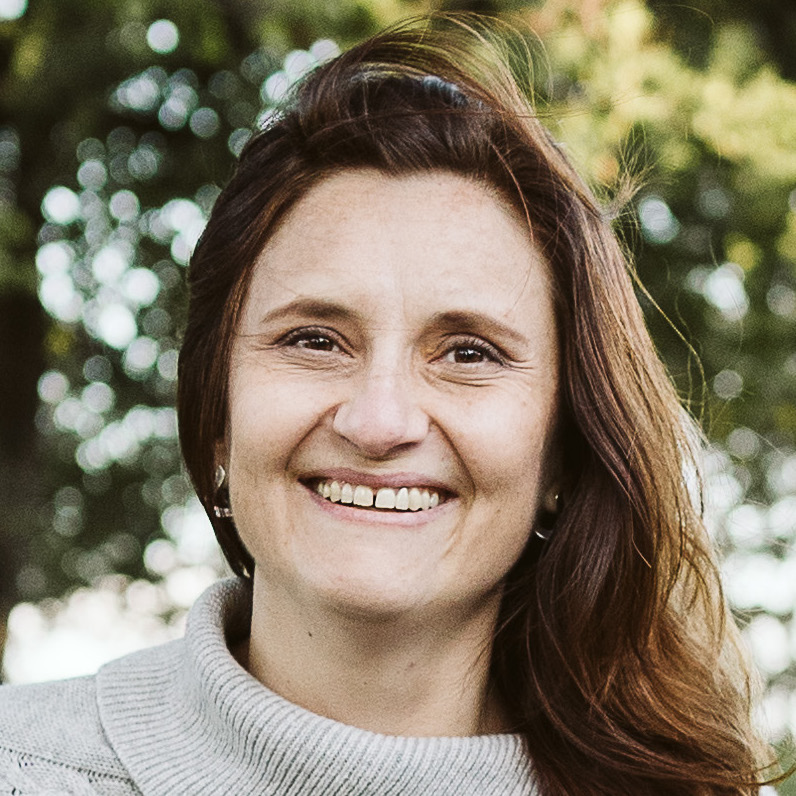
 Elena Zheleva
· 2 previous affiliations
- University of Illinois ChicagoSince 2017
- Associate Professor · Since 2023
- Current
- Assistant Professor · 2017–2023
- University of Maryland, College Park2005–2011
- PhD student · 2005–2011
Research Overview
Elena Zheleva focuses on causal inference in relational data, network interference, and algorithmic fairness in ranking systems. Her early work explored privacy and co-evolution in social networks before shifting toward the complex methodological challenges of estimating causal effects among interconnected units. Currently, her research addresses peer effect estimation, cyclic causal discovery, and the mitigation of position bias in recommendation platforms.
Research Trajectory
The earliest work in the evidence centers on the structural properties and privacy implications of online social networks. In 2009, To join or not to join: the illusion of privacy in social networks with mixed public and private user profiles demonstrated how adversaries could infer sensitive user attributes by exploiting public friendship links and group memberships, mapping the vulnerability to a relational classification problem. Concurrently, Co-evolution of social and affiliation networks introduced generative models to explain how both node-to-node links and group affiliations form simultaneously, revealing that users frequently join groups for reasons independent of their existing friendships.
Following this foundational research on network dynamics, her focus shifted toward the methodological challenges of causal inference in interconnected systems. Causal Inference from Network Data (2021) synthesized the state of the field, outlining the limitations of traditional independent and identically distributed (i.i.d.) assumptions when applied to relational data and detailing experimental designs for measuring influence under network interference.
Building on these principles, her subsequent research tackled increasingly complex relational systems. Learning Relational Causal Models with Cycles through Relational Acyclification (2023) addressed dynamic systems with feedback loops. This work contributed to the research direction of Generalized Separation Criteria for Cyclic Causal Models, providing methods to learn cyclic causal structures from observational relational data where traditional acyclic or i.i.d. assumptions fail. Expanding causal discovery to handle unobserved variables, Relational Causal Discovery with Latent Confounders (2025) introduced the RelFCI algorithm, a sound and complete method for relational data lacking causal sufficiency.
A major theme in her trajectory is the design of network experiments that account for social interference and diffusion. Cascade-Based Randomization for Inferring Causal Effects under Diffusion Interference (2024) tackled biased causal effect estimation caused by interference propagating in multi-hop cascades, leveraging knowledge of seed nodes to improve experimental design. To further optimize network experiments, Estimating Causal Effects in Networks with Cluster-Based Bandits (2025) proposed multi-armed bandit algorithms that operate at the network cluster level, balancing exploration and exploitation to maintain accurate treatment effect estimates while maximizing user rewards. Further exploring online learning, she collaborated on Learning Peer Influence Probabilities with Linear Contextual Bandits (2025), which advanced the broader area of Disentangling Selection and Influence in Social Networks by framing influence learning as a contextual bandit problem and formalizing the trade-off between immediate engagement and accurate influence estimation.
Alongside methodological advances in causal inference, her work frequently examines social dynamics and algorithmic fairness. Bridging or Breaking: Impact of Intergroup Interactions on Religious Polarization (2024) examined how adversarial intergroup discussions on social media affect polarization, using contextualized embeddings to measure group conformity. In the domain of recommendation systems, Fairness of Interaction in Ranking under Position, Selection, and Trust Bias (2025) investigated how uneven item exposure in rankings creates fairness concerns on the supply side. Relatedly, she contributed to Correcting for Position Bias in Learning to Rank: A Control Function Approach (2025), which utilized a two-stage framework to clean corrupted click data using the residuals of the ranking process.
Most recently, her research has focused on formalizing how peer behaviors impact individual outcomes. Exposure Mapping Function Learning for Peer Effect Estimation (2025) moved beyond simple homogeneous influence models to define high-level causal variables summarizing peer treatments. Building on this, Learning Exposure Mapping Functions for Inferring Heterogeneous Peer Effects (2026) introduced a graph neural network framework to automatically learn complex influence patterns from data. This work significantly advanced the research area of Multi-Hop Network Interference in Causal Inference, reducing bias in causal effect estimation compared to manual specification.
Current Directions
The most recent papers in the evidence address the intersection of causal inference, network interference, and algorithmic fairness. A primary focus is the automated learning of exposure mapping functions to accurately estimate heterogeneous peer effects in interconnected systems, moving away from manually specified influence models toward data-driven graph neural network frameworks. Additionally, recent work investigates the mitigation of position and selection biases in learning-to-rank systems to ensure item fairness on online platforms. Finally, ongoing research explores the use of contextual bandits and cluster-based randomization to optimize sequential experiments in networks, balancing the need to learn causal structures with the goal of maximizing user rewards during the testing phase.
Profile updated
Loading new papers…
Other researchers whose papers cluster into the same research directions — a proxy for overlapping technical interests and shared intellectual neighborhoods.
See something wrong? Report a mistake