

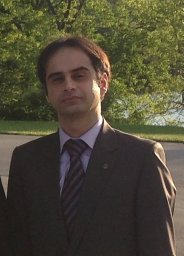
 Ehsan Hosseini-Asl
· 7 previous affiliations
- Nvidia (United States)Since 2023
- Manager of Applied Research · Since 2026
- Senior Deep Learning Scientist · 2023–2026
- SalesForce.com2017–2023
- Senior Research Scientist · 2017–2023
- Salesforce (United States)2017–2023
- Senior Researcher - AI/Deep Learning · 2017–2023
- Captricity2015–2017
- Machine Learning Engineer · 2016–2017
- Machine Learning Software Engineer Intern · 2015–2016
- University of Louisville2012–2016
- PhD student · 2012–2016
- National Iranian Oil Company (Iran)2009–2012
- Project Supervisor - Control Systems · 2009–2012
- Petroleum University of Technology2005–2009
- Master of Science (M.Sc.), Electrical and Electronics Engineering · 2005–2009
Research Overview
Ehsan Hosseini-Asl focuses on deep learning architectures with applications across natural language processing, speech processing, and computer vision. His trajectory spans early work in sparse feature learning and medical image analysis to recent advancements in end-to-end language modeling and few-shot learning. Currently, he investigates sample-efficient models and omni-modal foundation architectures that generalize robustly across diverse tasks.
Research Trajectory
Hosseini-Asl’s early research concentrated on representation learning, matrix factorization, and computer vision. He began by exploring foundational techniques in document analysis, publishing Nonnegative Matrix Factorization for Document Clustering: A Survey in 2014. The following year, he introduced a novel text recognition framework in Similarity-based Text Recognition by Deeply Supervised Siamese Network. By mapping entire text images into a similarity manifold and incorporating an interactive human-in-the-loop voting system, this approach significantly reduced human labeling costs while maintaining low error rates. This work contributed to the broader research direction of Confidence Based Task Routing for Hybrid Intelligence.
In 2016, his focus deepened into sparse representations and their applications in medical imaging. He developed new regularization techniques for neural networks, detailed in Deep Learning of Part-Based Representation of Data Using Sparse Autoencoders With Nonnegativity Constraints. He expanded on this by introducing the Structured Sparse Convolutional Autoencoder, which utilized a combination of $\ell_2$ and $\ell_1$ normalization to force networks to learn interpretable, part-based features while eliminating redundant filters to achieve faster convergence. Applying these representation learning techniques to clinical domains, he developed methods for 3-D Lung Segmentation by Incremental Constrained Nonnegative Matrix Factorization and Alzheimer's disease diagnostics by adaptation of 3D convolutional network. This body of work advanced several specialized areas, including Native 3D Volumetric Feature Extraction, Self-Supervised Reconstruction for 3D Volumetric Representations, and early efforts toward Generalist Foundation Models for Universal Medical Image Representation.
Transitioning toward generative modeling and speech processing, Hosseini-Asl began investigating unsupervised domain adaptation for low-resource environments. In 2018, he developed A Multi-Discriminator CycleGAN for Unsupervised Non-Parallel Speech Domain Adaptation, which employed independent discriminators for different frequency bands to generate highly realistic adapted spectrograms. Building on this architecture, he proposed Augmented Cyclic Adversarial Learning for Low Resource Domain Adaptation to better map between data-rich and data-poor domains. By improving cycle-consistency constraints beyond simple reconstruction, this research contributed to the area of Preventing Discriminator Overfitting in Low Data Generative Training.
Around 2019, his research shifted significantly toward natural language processing, with a particular emphasis on conversational AI and task-oriented dialogue. He collaborated on the development of TRADE, detailed in Transferable Multi-Domain State Generator for Task-Oriented Dialogue Systems. By using a copy mechanism to generate dialogue states directly from conversation history, the model achieved zero-shot learning capabilities for tracking user goals in new domains, advancing the research direction of Open-Vocabulary Dialogue State Tracking via Sequence Generation. He subsequently introduced a unified approach to conversational agents in A Simple Language Model for Task-Oriented Dialogue (SimpleTOD). Instead of relying on dedicated models for understanding, action decision, and response generation, SimpleTOD recast all sub-tasks into a single sequence prediction problem, allowing the system to fully leverage pre-trained causal language models like GPT-2.
Continuing his work in NLP, he guided research on model reliability, culminating in Joint Energy-based Model Training for Better Calibrated Natural Language Understanding Models (2021). This work demonstrated that energy-based model training via noise contrastive estimation could significantly improve the calibration of pretrained text encoders without sacrificing accuracy. He also explored sample-efficient NLP applications, developing A Generative Language Model for Few-shot Aspect-Based Sentiment Analysis in 2022. Most recently, he participated in a large-scale collaboration to build OmniVinci: Enhancing Architecture and Data for Omni-Modal Understanding LLM (2026), an open-source foundation model designed to perceive and reason across vision, audio, and text simultaneously through novel architectural alignments and a massive multimodal dataset.
Current Directions
The most recent papers in the evidence indicate a focus on scaling and unifying multimodal foundation models, alongside ongoing efforts to improve sample efficiency in natural language processing. Recent work investigates how to seamlessly align vision, audio, and text within a single architecture, enabling models to perform simultaneous perception and reasoning across modalities while drastically reducing the required number of training tokens. Additionally, his recent NLP research addresses few-shot learning paradigms, exploring how generative language models can be adapted for complex, domain-specific tasks—such as aspect-based sentiment analysis—when training data is severely limited.
Profile updated
Loading new papers…
Other researchers whose papers cluster into the same research directions — a proxy for overlapping technical interests and shared intellectual neighborhoods.
See something wrong? Report a mistake