

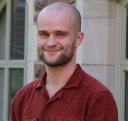
 Edward P. Chandler
· 3 previous affiliations
- University of Wisconsin–MadisonSince 2026
- Graduate Student Researcher · 2026–2028
- Washington University in St. Louis2019–2025
- Graduate Student Researcher · 2023–2025
- Undergraduate Research Assistant · 2020–2023
- Undergrad student · 2019–2023
- Teaching Assistant · 2020
- Intern · 2025
Research Overview
Edward P. Chandler works on the intersection of mathematical optimization and computational imaging, with a particular focus on the reliability of Beyond Hand-Crafted Regularization in Inverse Problems. His research addresses the theoretical and practical challenges that arise when deep-learning-based priors are applied to data that differs from their training distribution. By developing methods for Convergence Guarantees for Inexact Subproblem Optimization, Chandler contributes to the stability and performance of iterative reconstruction algorithms in non-ideal settings.
The available research corpus for Chandler is currently concentrated in the period between 2024 and 2026. During this time, his work has transitioned from the theoretical analysis of established Plug-and-Play (PnP) frameworks to the development of diagnostic tools for modern diffusion-based generative priors. A recurring concern across these projects is the "prior mismatch" problem—the performance degradation that occurs when the statistical properties of the test data do not align with the training data of the underlying machine learning model.
Research Trajectory
Chandler’s early contributions in the corpus focus on the Alternating Direction Method of Multipliers (ADMM) variant of the Plug-and-Play framework. In 2024, he participated in research that sought to provide a rigorous foundation for PnP-ADMM when operating under distribution shifts. This work is situated within the broader context of Kurdyka Łojasiewicz Convergence Analysis in Non Convex Optimization, as deep denoisers used as priors typically do not satisfy the convexity requirements of classical optimization theory. By establishing explicit error bounds for PnP-ADMM in the presence of prior mismatch, this research provided a theoretical justification for domain adaptation strategies in imaging.
This period of work also intersects with Linearized Proximal Algorithms for Efficient Optimization. The research explored how the computational burden of solving inverse problems could be managed while maintaining the convergence guarantees necessary for reliable scientific and medical imaging. Chandler’s role in these collaborative projects involved the analysis of how small amounts of target-domain data—as few as four images—could be used to adapt a pre-trained denoiser, thereby closing the performance gap caused by distribution shift.
By 2026, Chandler’s focus shifted toward diffusion models, which have emerged as a dominant class of priors for inverse problems. Recognizing that the practical utility of these models is often limited by the lack of clean ground-truth data at test time, his work moved toward unsupervised methods for identifying and quantifying distribution shifts. This represents a move from analyzing the consequences of shift (convergence analysis) to developing diagnostic tools (measurement frameworks) that operate using only corrupted measurements. This trajectory suggests an increasing interest in the deployment of generative models in "blind" settings where the characteristics of the noise or the underlying signal are not fully known a priori.
Current Directions
Chandler’s current research efforts are directed toward the development of flexible frameworks for model selection and shift detection in inverse problems. A primary challenge in this domain is that traditional metrics for distribution shift require access to clean test images, which are unavailable in real-world reconstruction tasks. Chandler’s recent work addresses this by proposing methods that utilize candidate diffusion model scores and corrupted test measurements to identify the most appropriate prior for a given task.
This direction emphasizes the practical robustness of imaging pipelines. By enabling principled model selection without ground truth, this work facilitates the use of large-scale pre-trained models in specialized domains where clean data is scarce. The methodology relies on the mathematical properties of diffusion scores to estimate the alignment between a model and the observed data, providing a path toward more autonomous and reliable computational imaging systems.
Representative Work
The following papers represent the core of Chandler's research contributions as documented in the current corpus.
In Prior Mismatch and Adaptation in PnP-ADMM with a Nonconvex Convergence Analysis, Chandler contributed to a collaborative effort (as third author) to analyze the Plug-and-Play ADMM algorithm. The study addresses the gap between the idealized assumption of perfectly matched priors and the reality of distribution shift in imaging tasks. The authors provide a nonconvex convergence analysis that establishes how error bounds behave when the denoiser is not perfectly suited to the data. Furthermore, the work demonstrates that simple domain adaptation techniques can effectively mitigate the negative impacts of prior mismatch, providing a bridge between theoretical optimization and practical image reconstruction.
In Measuring Distribution Shifts in Inverse Problems without clean data, Chandler (as second author) played a significant role in developing a framework for quantifying distribution shifts when clean reference data is unavailable. This work is particularly relevant for the application of diffusion models to inverse problems. The proposed framework allows for principled model selection by identifying which diffusion prior best matches the corrupted measurements observed at test time. This contribution is critical for ensuring the reliability of generative priors in sensitive applications where the test-time distribution may deviate significantly from the training set.
The evidence available for Chandler's work is currently limited to these two primary research threads. While the PnP-ADMM research was presented across multiple venues including ICML 2024 and ICLR 2024, it represents a single cohesive body of work regarding the theoretical limits of proximal algorithms under shift. The 2026 work on diffusion models indicates a clear evolution toward more complex generative priors and the practical challenges of unsupervised model assessment.
Profile updated
Loading new papers…
Loading research neighbors…
See something wrong? Report a mistake