

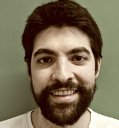
 Eduardo Pérez-Pellitero
· 4 previous affiliations
- Huawei Technologies (China)Since 2019
- Principal Researcher · Since 2019
- Max Planck Society2017–2019
- Postdoc · 2017–2019
- Leibniz University Hannover2013–2017
- PhD student · 2013–2017
- Technicolor2013–2016
- PhD student · 2013–2016
Research Overview
Eduardo Pérez-Pellitero focuses on computational photography, differentiable rendering, and 3D scene representations. His early work addressed image super-resolution and high-dynamic-range imaging, developing robust methods to reconstruct saturated and misaligned visual signals. More recently, his research centers on real-time neural rendering and animatable human avatars, utilizing 3D Gaussian splatting to model complex dynamic scenes and harmonize multi-view appearances.
Research Trajectory
Pérez-Pellitero’s early research investigated the complex mappings between low- and high-resolution image manifolds, with a primary focus on super-resolution techniques. His work in this domain includes Naive Bayes Super-Resolution Forest (2015), which introduced a fast inference algorithm utilizing bimodal clustering trees and a local Naive Bayes formulation to select suitable mapping functions for natural image patches. He subsequently developed PSyCo: Manifold Span Reduction for Super Resolution (2016), a regression-based algorithm that collapsed variations induced by dihedral group transforms and antipodality into a single primitive, thereby simplifying the ill-posed problem of discovering mappings between resolution manifolds.
In the following years, his focus expanded into computational photography and image signal processing, particularly addressing the challenges of high-dynamic-range (HDR) imaging. He played a central role in organizing community benchmarks, detailing the state of the field in the NTIRE 2021 Challenge on High Dynamic Range Imaging: Dataset, Methods and Results and the subsequent NTIRE 2022 Challenge on High Dynamic Range Imaging: Methods and Results. These efforts helped consolidate the area of Overcoming Sensor Saturation and Dynamic Range Clipping, evaluating methods that estimate HDR images from low-dynamic-range observations suffering from under- or over-exposure and inter-frame motion. Concurrently, he contributed to the research direction of Deghosting Multi Exposure Images in Dynamic Scenes by developing FlexHDR: Modeling Alignment and Exposure Uncertainties for Flexible HDR Imaging (2022). This technique explicitly models alignment and exposure uncertainties to mitigate ghosting artifacts caused by poorly compensated motion. He also explored the broader digital camera pipeline in Model-Based Image Signal Processors via Learnable Dictionaries (2022), bridging the gap between RAW and RGB domains, and later returned to HDR challenges with Self-supervised HDR Imaging from Motion and Exposure Cues (2024).
As a Principal Research Scientist at Huawei Noah's Ark Lab, Pérez-Pellitero’s research shifted toward 3D computer vision, differentiable rendering, and the synthesis of animatable human avatars. He became highly active in the broader field of Accelerating Neural Scene Representations for Real Time Rendering, leveraging 3D Gaussian Splatting (3DGS) to overcome the computational bottlenecks of traditional neural radiance fields. He introduced Human Gaussian Splatting: Real-Time Rendering of Animatable Avatars (2024), which models the human body using a set of Gaussian primitives to achieve real-time, photorealistic rendering from multi-view videos. Extending this approach to facial animation, he developed HeadGaS: Real-Time Animatable Head Avatars via 3D Gaussian Splatting (2024), a hybrid model that blends explicit 3DGS representations with learnable latent features to produce expression-dependent color and opacity.
Alongside avatar rendering, he investigated the physical and kinematic constraints of human interactions. He led the development of FORCE: Dataset and Method for Intuitive Physics Guided Human-object Interaction (2024), a framework that explicitly models physical attributes like object resistance and applied force, advancing work in Contact Constraints for Realistic 3D Human Reconstruction. He also collaborated on NCRF: Neural Contact Radiance Fields for Free-Viewpoint Rendering of Hand-Object Interaction (2024), which optimizes contact points to resolve the heavy mutual occlusions inherent in hand-object manipulation. To address the low-frequency bias and calibration inaccuracies in neural rendering, he introduced RoGUENeRF: A Robust Geometry-Consistent Universal Enhancer for NeRF (2024), a 3D enhancer designed to recover high-frequency details in reconstructed scenes.
His most recent work focuses on optimizing the efficiency, consistency, and data requirements of 3D and 4D scene reconstruction. He developed CoMapGS: Covisibility Map-based Gaussian Splatting for Sparse Novel View Synthesis (2025), which utilizes covisibility maps to identify underrepresented scene regions and apply adaptive supervision in few-shot scenarios. To tackle dynamic scenes from limited data, he introduced ViDAR: Video Diffusion-Aware 4D Reconstruction From Monocular Inputs (2025), leveraging personalized diffusion models to hallucinate high-fidelity supervision for recovering 3D structure and motion from a single video. Pushing the architectural limits of Gaussian splatting, his team presented Off The Grid: Detection of Primitives for Feed-Forward 3D Gaussian Splatting (2025), which discards rigid pixel-aligned grids in favor of detecting primitives at sub-pixel locations, drastically reducing the number of required primitives. Finally, he addressed multi-view inconsistencies with CHROMA: Consistent Harmonization of Multi-View Appearance via Bilateral Grid Prediction (2026), a feed-forward transformer that predicts spatially adaptive bilateral grids to harmonize lighting and color, contributing to areas such as Learning Bilateral Grids for Real-time Image Restoration and Synchronizing Multi-View Diffusion with Cross-View Attention.
Continuing these efforts into 2026, Pérez-Pellitero contributed to Head Anything: Correspondence-Guided Joint Generation of 3D Heads from Few Images, introducing lightweight correspondence-attention adapters that convert single-image priors into joint generators, thereby Mitigating Multi View Inconsistency in Generative 3D Modeling. They also directed the development of WildAnySplat: Feed-Forward 3D Gaussian Splatting in the Wild (2026), a student-teacher framework coupled with bilateral grids and transient masks to reconstruct consistent 3D Gaussians from unconstrained real-world multi-view images without per-scene optimization.
Current Directions
The most recent papers in the evidence address the efficiency, robustness, and consistency of 3D and 4D scene representations, particularly through advancements in feed-forward architectures and diffusion priors. Recent work investigates methods to bypass rigid pixel grids in 3D Gaussian Splatting, detecting primitives at sub-pixel locations to achieve rapid, photorealistic reconstruction with significantly fewer parameters. Additionally, ongoing research focuses on sparse novel view synthesis using covisibility maps to intelligently fill missing geometric details in few-shot scenarios. Another active theme is the harmonization of "in-the-wild" multi-view captures, utilizing spatially adaptive bilateral grids to correct lighting and color inconsistencies in a single feed-forward step. Finally, current efforts explore 4D reconstruction from monocular video, employing personalized diffusion models to generate high-fidelity novel-view supervision that enforces strict geometric consistency across time and space.
Profile updated
Loading new papers…
Other researchers whose papers cluster into the same research directions — a proxy for overlapping technical interests and shared intellectual neighborhoods.
See something wrong? Report a mistake